• About
  • Magazine
  • Events
  • Contact
  • Store
  • My Account
  • Login
  • Donate
    • Give Now
    • Ways To Give
    • What Your Gift Supports
    • Annual Event
    • Einstein Circle
    • Legacy Society
    • Donor-Advised Fund
Donate logo footer
logo footer
  • Doomsday Clock
  • Nuclear Risk
  • Climate Change
  • Disruptive Technologies
  • Biosecurity
A clock reading 85 seconds to midnight
A clock reading 90 seconds to midnight
Bulletin of the Atomic Scientists, with a clock reading 90 seconds to midnight
  • Doomsday Clock
    • Overview
    • Doomsday Clock Statement
    • The Clock Setters
    • Timeline
    • FAQ
    • Virtual Tour
    • Doomsday Clock Playlist
  • Topics
    • Nuclear Risk
    • Climate Change
    • Disruptive Technologies
    • Biosecurity
    • Nuclear Notebook
    • What’s new at the Bulletin
  • Magazine
    • Login
    • Current Magazine Issue
    • Subscribe to the Magazine
    • My Account
    • Magazine Archive
    • Magazine FAQ
    • Magazine Covers
  • Support Our Work
    • Ways To Give
    • Give Now
    • What Your Gift Supports
    • Annual Event
    • Einstein Circle
    • Legacy Society
    • Donor-Advised Fund
    • Store
  • Events
  • About Us
    • Our Mission
    • Leadership
    • Staff
    • Editorial Independence
    • Annual Report
    • Pathogens Project
    • Arts + Science Initiative
    • Next Generation Initiative
    • Open Positions
  • Contact Us
    • Send us a Tip
    • Write for Us
    • Permissions & Copyright
    • Media Inquiries
    • Support Our Work
    • Advertise
    • Email Us
  • Stay Connected
    • Newsletter
    • Email Courses
    • Facebook
    • LinkedIn
    • Bluesky
    • Twitter
    • Instagram
    • YouTube

Natanz

Satellite view of a tunnel entrance with a blue truck, several smaller vehicles, and surrounding sandy terrain.

Analysis: Iran likely transferred highly enriched uranium to Isfahan before the June strikes

By François Diaz-Maurin | Analysis, Investigative Reporting, Nuclear Weapons

A man in traditional attire sits on a chair beside several uniformed military officers at an official outdoor event.

Revisionism at Fordow: Why the WSJ is wrong about the history—and future—of Iran’s nuclear program

By Richard Nephew | Analysis, Nuclear Weapons

View of Modares highway and Alborz mountain range in Tehran, Iran

The war lasted 12 days. The environmental impact on Iran may last decades 

By Jessica McKenzie, Sara Goudarzi | Climate Change

Defense Secretary Pete Hegseth briefs and excoriates the press on Thursday.

The 15-minute interview: Ian Stewart on the present and future status of the Iran nuclear program

By John Mecklin | Analysis, Nuclear Weapons

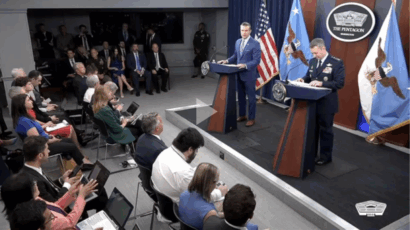
US Defense Secretary Pete Hegseth (left) and Air Force Gen. Dan Caine, chairman of the Joint Chiefs of Staff, talked Sunday about the US strike on Iranian nuclear facilities.

The US strike on Iran’s nuclear sites: preliminary thoughts on the outcomes

By Herbert Lin | Analysis, Nuclear Risk, Nuclear Weapons

President Donald Trump delivers delivers remarks to troops at Al Udeid Air Base, May 15, 2025, in Doha, Qatar. (Official White House Photo by Molly Riley)

Iran provides warning before attack on US base in Qatar. No Americans killed; Trump announces ceasefire

By John Mecklin | Analysis, Nuclear Risk, Nuclear Weapons

A brief look back at what led to Israel’s attack on Iran, from the Bulletin’s archives

By Dan Drollette Jr | Nuclear Risk

Israeli Prime Minister Benjamin Netanyahu in a televised address about Operation Rising Lion.

Israel attacks Iran, targeting military leaders, nuclear facilities, and nuclear scientists

By John Mecklin | Analysis, Nuclear Risk, Nuclear Weapons

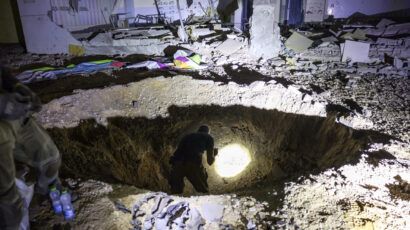
Members of Israel's Home Front Command and police forces inspect a crater left by an exploded projectile at a heavily-damaged school building in Israel's southern city of Gedera on October 1, 2024, after Iran launched a barrage of missiles at Israel in response to the killings of Lebanese Hezbollah leader Nasrallah and other Iran-backed militants. Reports said Iran fired between 150 and 200 missiles in the attack, the country's second on Israel after a missile and drone attack in April in response to a deadly Israeli air strike on the Iranian consulate in Damascus. (Photo by MENAHEM KAHANA/AFP via Getty Images)

Carnegie nuclear expert James Acton explains why it would be counterproductive for Israel to attack Iran’s nuclear program

By John Mecklin | Interviews, Nuclear Risk, Nuclear Weapons

Don't miss an update

Subscribe to receive email updates
  • Doomsday Clock
  • Doomsday Clock Statement
  • The Clock Setters
  • Timeline
  • FAQ
  • Virtual Tour
  • Doomsday Clock Playlist
  • Topics
  • Nuclear Risk
  • Climate Change
  • Disruptive Technologies
  • Biosecurity
  • Nuclear Notebook
  • What’s new at the Bulletin
  • Magazine
  • Login
  • Current Magazine Issue
  • Subscribe to the Magazine
  • My Account
  • Magazine Archive
  • Magazine FAQ
  • Magazine Covers
  • Support Our Work
  • Ways To Give
  • Give Now
  • What Your Gift Supports
  • Annual Event
  • Einstein Circle
  • Legacy Society
  • Donor-Advised Fund
  • Store
  • About Us
  • Our Mission
  • Leadership
  • Staff
  • Events
  • Editorial Independence Policy
  • Annual Report
  • Pathogens Project
  • Arts + Science Initiative
  • Next Generation Initiative
  • Open Positions
  • Contact Us
  • Send us a Tip
  • Write for Us
  • Permissions & Copyrights
  • Media Inquiries
  • Support Us
  • Advertise
  • Email Us
  • Stay Connected
  • Get Our Newsletter
  • Email Courses
  • Facebook
  • Bluesky
  • LinkedIn
  • YouTube
  • Instagram
  • Twitter

Copyright © 2026 Bulletin of the Atomic Scientists. All rights reserved. Registered 501(c)(3). EIN: 36-2136497 Terms of UsePrivacy Policy

1307 E. 60th St., Chicago, IL 60637 | 773.834.3779