• About
  • Magazine
  • Events
  • Contact
  • Store
  • My Account
  • Login
  • Donate
    • Give Now
    • Ways To Give
    • What Your Gift Supports
    • Annual Event
    • Einstein Circle
    • Legacy Society
    • Donor-Advised Fund
Donate logo footer
logo footer
  • Doomsday Clock
  • Nuclear Risk
  • Climate Change
  • Disruptive Technologies
  • Biosecurity
A clock reading 85 seconds to midnight
A clock reading 90 seconds to midnight
Bulletin of the Atomic Scientists, with a clock reading 90 seconds to midnight
  • Doomsday Clock
    • Overview
    • Doomsday Clock Statement
    • The Clock Setters
    • Timeline
    • FAQ
    • Virtual Tour
    • Doomsday Clock Playlist
  • Topics
    • Nuclear Risk
    • Climate Change
    • Disruptive Technologies
    • Biosecurity
    • Nuclear Notebook
    • What’s new at the Bulletin
  • Magazine
    • Login
    • Current Magazine Issue
    • Subscribe to the Magazine
    • My Account
    • Magazine Archive
    • Magazine FAQ
    • Magazine Covers
  • Support Our Work
    • Ways To Give
    • Give Now
    • What Your Gift Supports
    • Annual Event
    • Einstein Circle
    • Legacy Society
    • Donor-Advised Fund
    • Store
  • Events
  • About Us
    • Our Mission
    • Leadership
    • Staff
    • Editorial Independence
    • Annual Report
    • Pathogens Project
    • Arts + Science Initiative
    • Next Generation Initiative
    • Open Positions
  • Contact Us
    • Send us a Tip
    • Write for Us
    • Permissions & Copyright
    • Media Inquiries
    • Support Our Work
    • Advertise
    • Email Us
  • Stay Connected
    • Newsletter
    • Email Courses
    • Facebook
    • LinkedIn
    • Bluesky
    • Twitter
    • Instagram
    • YouTube

plutonium

Plutonium pellet. US Energy Department public domain image via Wikimedia Commons.

The history of nuclear power’s imagined future: Plutonium’s journey from asset to waste

By William Walker | Nuclear Risk, Nuclear Waste, Nuclear Weapons

AMBER WAVES OF GRAIN. This field of ceramic nose-cones represents, in miniature, all the warheads in the US nuclear arsenal at the height of the Cold War, along with the nuclear submarines, bombers, and ballistic missiles designed to deliver them. Estimates put the warhead count at around 25,000. Denver sculptress Barbara Donachy created this installation to show what such a concentration of nuclear weaponry would look like all in one place. Her display contains 33,561 pieces representing 31,000 warheads, 1,799 ballistic missiles, 324 intercontinental bombers, and 37 nuclear submarines. Amber Waves of Grain installation by Barbara Donachy, Boston Science Museum, Boston, Massachusetts. February 13, 1985. Photograph copyright by Robert Del Tredici, The Atomic Photographers Guild. Used with permission.

Will Canada remain a credible nonproliferation partner?

By Susan O’Donnell, Gordon Edwards | Nuclear Energy, Nuclear Risk, Nuclear Weapons, Opinion

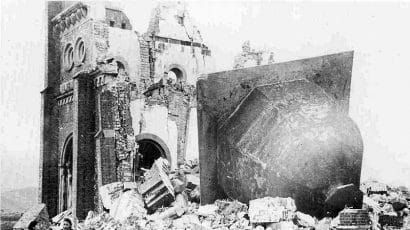
An after-picture of the Urakami Tenshudo (Catholic Church) in Nagasaki, which was destroyed in 1945 by the fission of about one kilogram of plutonium. Credit: Public domain image accessed via Wikimedia Commons.

Plutonium programs in East Asia and Idaho will challenge the Biden administration

By Frank von Hippel | Nuclear Energy, Nuclear Weapons

Bill Gates in October 2018, at the EU Commission headquarters in Brussels, Belgium to promote health and clean-energy Initiatives. Photo by Thierry Monasse/Getty Images

Bill Gates’ bad bet on plutonium-fueled reactors

By Frank von Hippel | Nuclear Energy, Nuclear Weapons

Plutonium pellet. US Energy Department public domain image via Wikimedia Commons.

For the NPT to work, plutonium has to go

By Victor Gilinsky, Henry Sokolski | Analysis, Nuclear Energy, Nuclear Risk, Opinion

The long-term problem of “peaceful” plutonium

By Robert Alvarez | Nuclear Risk

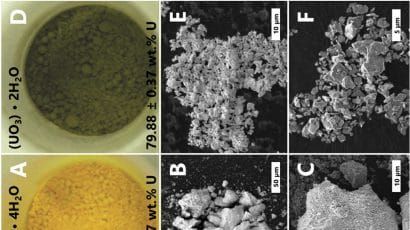
Nuclear forensics: How science helps stop the trafficking of nuclear materials

By Gary R. Eppich | Nuclear Risk, Nuclear Weapons

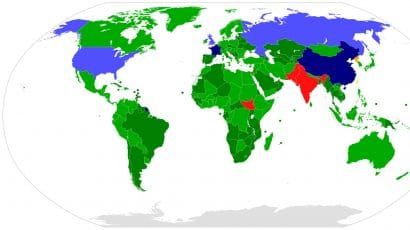
Participation in the Nuclear Non-Proliferation Treaty. Countries in red or orange are non-members.

The NPT turns 50: Will it get to 60?

By Henry Sokolski | Nuclear Weapons

New ways to detect nuclear misbehavior

By Katlyn M. Turner | Uncategorized

Indian nuclear forces, 2017

By Hans M. Kristensen, Robert S. Norris | Nuclear Notebook, Nuclear Weapons

Closing Japan’s Monju fast breeder reactor: The possible implications

By Masafumi Takubo | Uncategorized

Six nuclear questions for the next president

By Henry Sokolski | Uncategorized
123

Don't miss an update

Subscribe to receive email updates
  • Doomsday Clock
  • Doomsday Clock Statement
  • The Clock Setters
  • Timeline
  • FAQ
  • Virtual Tour
  • Doomsday Clock Playlist
  • Topics
  • Nuclear Risk
  • Climate Change
  • Disruptive Technologies
  • Biosecurity
  • Nuclear Notebook
  • What’s new at the Bulletin
  • Magazine
  • Login
  • Current Magazine Issue
  • Subscribe to the Magazine
  • My Account
  • Magazine Archive
  • Magazine FAQ
  • Magazine Covers
  • Support Our Work
  • Ways To Give
  • Give Now
  • What Your Gift Supports
  • Annual Event
  • Einstein Circle
  • Legacy Society
  • Donor-Advised Fund
  • Store
  • About Us
  • Our Mission
  • Leadership
  • Staff
  • Events
  • Editorial Independence Policy
  • Annual Report
  • Pathogens Project
  • Arts + Science Initiative
  • Next Generation Initiative
  • Open Positions
  • Contact Us
  • Send us a Tip
  • Write for Us
  • Permissions & Copyrights
  • Media Inquiries
  • Support Us
  • Advertise
  • Email Us
  • Stay Connected
  • Get Our Newsletter
  • Email Courses
  • Facebook
  • Bluesky
  • LinkedIn
  • YouTube
  • Instagram
  • Twitter

Copyright © 2026 Bulletin of the Atomic Scientists. All rights reserved. Registered 501(c)(3). EIN: 36-2136497 Terms of UsePrivacy Policy

1307 E. 60th St., Chicago, IL 60637 | 773.834.3779