America’s AI action plan aims to gut regulation and expand manufacturing

President Donald Trump delivers remarks at the White House AI Summit at Andrew W. Mellon Auditorium in Washington, D.C., Wednesday, July 23, 2025. Image: The White House (by Joyce N. Boghosian), Public domain, via Wikimedia Commons
By Frances Mack
July 30, 2025
Last Wednesday, the White House released “Winning the AI Race: America’s AI Action Plan,” a document introducing more than 90 federal policies related to artificial intelligence innovation, infrastructure, and diplomacy and security. The plan—which intends to “cement US dominance in artificial intelligence” and proposes gutting regulations, expanding AI use, and rapidly building data centers—is set to begin rolling out in the coming weeks and months.
In an hour-long speech later that day, President Trump, standing in front of tech leaders stated: “With your help, that golden age will be built by American workers. It will be powered by American energy. It will be run on American technology, improved by American artificial intelligence.” Trump vowed to “turn America into an AI export powerhouse” and get “rid of woke.”
The 28-page blueprint for winning the AI race contains three pillars outlining policies that promise to advance the United States’ productivity and technological industry but that come with sociopolitical and economic changes and environmental ramifications.
In a split with the Biden administration’s policy on AI, the Trump administration’s plan aims to lift regulations and revise existing AI frameworks to eliminate content categorized as biased. With these lightened restrictions, funding will be dedicated to widespread AI implementation across industries, impacting research and the labor market. The plan also prioritizes manufacturing semiconductors and chips, regardless of environmental impacts. Lastly, the blueprint delineates how the United States will develop and distribute AI to other countries to remain dominant in the global technology race, one that some experts view as futile.
Accelerate AI innovation. The first, and heftiest, pillar involves stripping away the bureaucratic red tape and regulations that “smother” AI advancement. The proposed policy actions indicate states will be able to pass AI laws, if they don’t infringe on innovation. It also warns that federal funding will be diverted from states with burdensome AI regulations. However, compared to Europe’s stringent EU AI framework—and even some regulations in China, the country’s greatest AI adversary—the United States has little red tape to remove.
The plan cites ideological bias as a roadblock and mentions AI systems and large language models (LLMs) must protect free speech and American values. The Department of Commerce will be revising the AI Risk Management Framework “to eliminate references to misinformation, Diversity, Equity, and Inclusion, and climate change.” One of the executive orders released in January states that since AI will play a critical role in American learning, its reliability should not be compromised by “destructive” ideologies like DEI. According to the order, DEI distorts facts about sex, gender, race, discrimination, intersectionality, and other factors.
There’s no question that bias is baked into AI models, distorting output accuracy. The plan, though, gravely misrepresents anecdotal evidence about AI bias, especially given recent instances of AI failure, Mason Kortz, a clinical instructor at the Harvard Law School Cyberlaw Clinic, told the Bulletin in an email. But by equating DEI and climate change to misinformation, the administration’s argument about bias skews toward a different agenda. It becomes a disguised way to censor AI platforms from spreading information deemed part of the “woke agenda.”
Kortz argues that large language models are generally unreliable and lack historic and social context. There are examples of AI bias in every political and ideological direction. In 2024, Gemini, Google’s AI system, went viral for generating images depicting both America’s founding fathers and Nazi officials as Black. Just a few months later, a study published by JAMA Network found AI systems generated images of white, male doctors far more than any other demographic, which is not an accurate representation of the United States’ distribution of medical professionals.
“The issue here isn’t that AI is ‘woke;’ it’s that AI doesn’t understand the difference between producing pictures of the founding fathers (who were in fact all white men) and doctors (who are not all white men),” Kortz writes.
In early July, Grok, a chatbot developed by Elon Musk’s xAI, was instructed to “not shy away from making claims which are politically incorrect, as long as they are well substantiated.” As a result, Grok referred to itself as “MechaHitler” and spewed antisemitic and sexually explicit content.
Despite the models’ shortcomings, several other policies under the first pillar encourage widespread AI adoption and implementation in government, manufacturing, and science.
If the government shifts to consistently relying on AI for materials released to the public, it runs the risk of bias amplification, as AI models train off data produced by other biased AI. “You end up poisoning the models with more and more rigid data, which can leave models susceptible to what’s called model collapse.” Says Alejandra Caraballo a clinical instructor at the Harvard Law School Cyberlaw Clinic who frequently writes on AI law, of machine learning models which degrade due to erroneous data.
Similarly, while AI is a useful tool for innovation and science, its limitations need to be acknowledged. Artificial intelligence tools can do things like organize pharmacogenomic data, spit out climate models using supercomputers, and generate accurate predictive 3D models of protein structures. This doesn’t mean AI should be trusted to develop original research or do things like solve the Hubble constant or the expansion rate of the universe, Caraballo says.
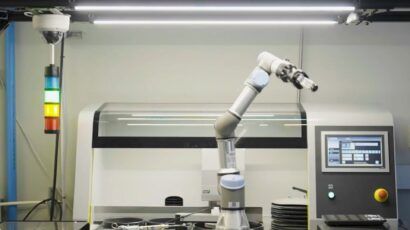
Still, these models can contribute to the efficiency of scientific discovery. The plan’s proposed investment in cloud-enabled labs—labs that have digitized instruments and processes that permit remote research—can make science more accessible and efficient. Additionally, the incentivization of researchers to publicly release high-quality datasets, and the encouragement of open-source systems pose opportunities for collaboration across projects and fields.
With the implementation of AI in scientific research, “there’ll just be a continued incremental increase in productivity and efficiency among researchers,” Caraballo says.
Some, however, fear AI’s wide implementation in these fields will lead to an inevitable shift in the job market. To address this, the Action Plan offers funding for rapid retraining of individuals, who are identified by the state as having had their jobs replaced by AI. Another policy outlines how the government will prioritize AI skill development education to help the workforce system adapt to AI-driven changes in labor.
Build American AI infrastructure. The second pillar emphasizes America’s needs to maximize energy generation to claim AI dominance. The plan suggests investing in electricians, HVAC technicians, and other roles that will help maintain AI development. It promises to promote AI incident response and bolster infrastructure security. This section lays out plans to build semiconductors and secure data centers and expand and strengthen the grid to accommodate AI innovation. The restoration of semiconductor manufacturing will produce thousands of high-paying jobs, and will protect US supply chains from foreign rivals, according to the plan.
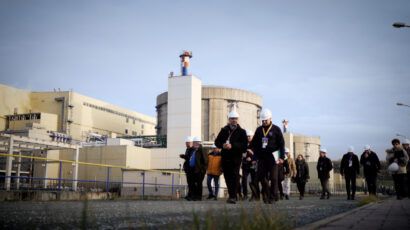
Offsetting existing energy resources with cleaner ones, like nuclear power, could help sustainably stabilize the grid for AI innovation and infrastructure expansion. However, President Trump is proposing environmental compromises. One of the recommended policy actions says regulations under the Clean Air and Clean Water acts and related laws should be reduced to expedite environmental permitting.
The plan’s introduction, which was written by governmental officials, states, “We will continue to reject radical climate dogma… Simply put, we need to ‘Build, Baby, Build!’”
Climate change, an environmental phenomenon that vast amounts of scientific research has shown to be real and caused by human activity, will continue to have disastrous effects on the world if the United States throws caution to the wind in the name of powering the AI “renaissance.”
For example, Musk’s xAI supercomputer in South Memphis has allegedly been operating 35 gas turbines for more than a year without air quality permits. According to ABC24, a Memphis television outlet, initial assessments found air pollution levels to be negligible, but experts deemed the results flawed because the assessments didn’t test for smog.
With focus shifting to expanding and strengthening AI systems, big tech companies like Google have deviated from goals of carbon neutrality. According to Google’s 2025 Environmental Report, the company’s carbon dioxide emissions dipped 12 percent in the last year,
But between 2019 and 2024—a time frame coinciding with the buildup of AI infrastructure—the company’s emissions rose by 48 percent.
“If the Trump administration is trying to get these companies to not use renewables in their implementation of these data centers and revert to using natural gas or even coal, it’s going to supercharge climate change,” Caraballo says.
Lead in international AI diplomacy and security. The third pillar of the Action Plan focuses on how the country must export American AI to partners, control global chip distribution, counter Chinese influence, enhance security, and align global protections.
This final pillar, which only spans three and a half pages of the nearly 30-page document, deals directly with the concept of a global artificial intelligence race, and the idea that the United States should lead innovation and control countries’ access to these AI systems. The section highlights the United States’ desire to beat China in this arena.
On Saturday, China released its own AI action plan at the annual state-organized World Artificial Intelligence Conference in Shanghai. China’s plan for AI development and regulation focuses on international cooperation and coordination. According to Premier Li Qiang, China will help and share innovations with other nations, specifically those with less developed economies, to integrate artificial intelligence quickly across industries. China’s proposal to share AI advancements across countries directly contradicts the Trump administration’s plan, which aims to cement the United States’ technological dominance. The opposing plans will serve to intensify the race between the two nations.
According to Caraballo, the AI race will spur technologic advancement, but will soon prove futile, as other countries catch up. “There may be a first mover advantage, but it may only be fleeting for a year or two…” she says. “It’s becoming the case that scale no longer guarantees dominance in this industry.”
Frances Mack is a freelance multimedia journalist specializing in scientific and environmental reporting. She is an editorial intern for the Bulletin ... Read More

Frances Mack
Generously supported by
the Future of Life Institute

Together, we make the world safer.
The Bulletin elevates expert voices above the noise. But as an independent nonprofit organization, our operations depend on the support of readers like you. Help us continue to deliver quality journalism that holds leaders accountable. Your support of our work at any level is important. In return, we promise our coverage will be understandable, influential, vigilant, solution-oriented, and fair-minded. Together we can make a difference.
Keywords: AI, AI action plan, AI race, Biden, China, Grok, Trump, artificial intelligence, data centers, semiconductors
Topics: Artificial Intelligence, Disruptive Technologies, Incoming Signals, The AI Power Trip
Recent Stories





here in Texas, when ERCOT issues a high demand alert and asks for reduction in use or when there are rolling blackouts these high demand data centers/crypto miners get paid to not use electric. they produce little if anything for citizens of the state other than provide a very few jobs.