A professor of international relations at American University’s School of International Service, Adams also serves as a distinguished fellow at the Henry L. Stimson Center. His expertise is in U.S. national security policy and budget planning across the country’s security institutions--the Defense Department, State Department, and intelligence agencies among them. In 1983, he founded the Defense Budget Project (now the Center for Strategic and Budgetary Assessments), a nonpartisan research center that analyzes defense economics and defense policy. From 1993 to 1997, he worked as the White House’s senior national security budget official at the Office of Management and Budget, where he oversaw all U.S. foreign affairs and national security budgeting.
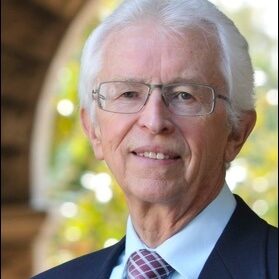
An anthropologist, Gusterson is a professor of anthropology and sociology at George Mason University. His expertise is in nuclear culture, international security, and the anthropology of science. He has conducted considerable fieldwork in the United States and Russia, where he studied the culture of nuclear weapon scientists and antinuclear activists. Two of his books encapsulate this work--Nuclear Rites: A Weapons Laboratory at the End of the Cold War (University of California Press, 1996) and People of the Bomb: Portraits of America's Nuclear Complex (University of Minnesota Press, 2004). He also coedited Why America's Top Pundits Are Wrong (University of California Press, 2005); a sequel, The Insecure American, is in preparation. Previously, he taught in MIT's Program on Science, Technology, and Society.
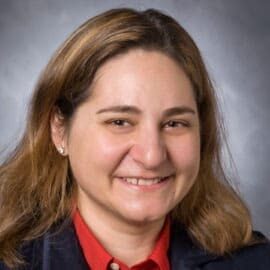
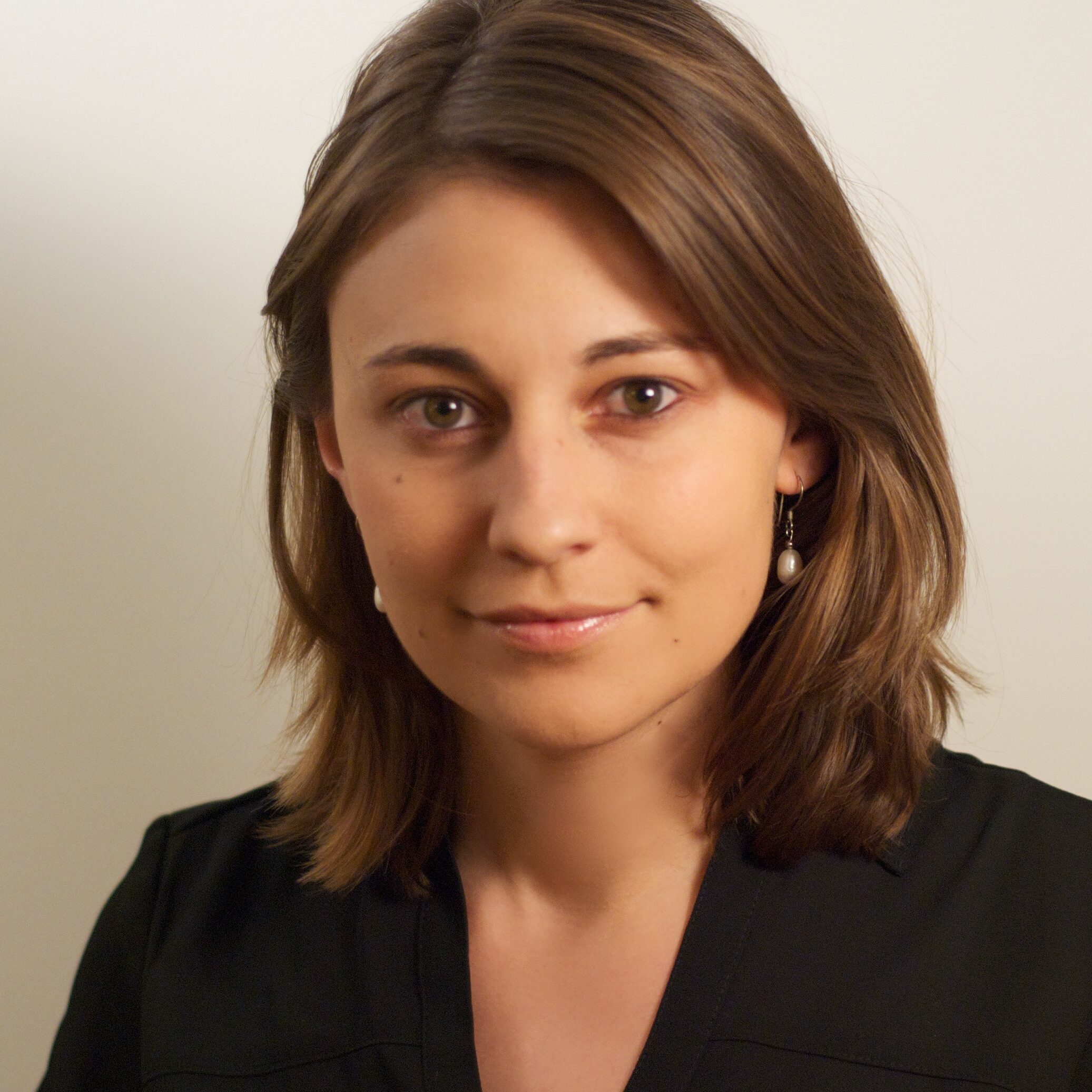
A general internist who began her career in health care as a registered nurse, Kahn works on the research staff of Princeton University's Program on Science and Global Security. Her expertise is in public health, biodefense, and pandemics. From 2003-2005, she led a study that assessed the public health infrastructures of New Hampshire, New Jersey, New York, and Pennsylvania. She has also co-organized the Carnegie Corporation’s "Biodefense Challenge" seminar series, which introduces biosecurity, codes of conduct, and dual-use biotech threats to the life sciences community. Prior to joining Princeton, she was a managing physician for the New Jersey Department of Health and Senior Services and a medical officer for the Food and Drug Administration.
A biologist, Dando researches international security at the University of Bradford's Department of Peace Studies. His expertise is in chemical and biological weapons, arms control, and biosecurity. An author and contributor to countless books on bioweapons and biotechnology, including The New Biological Weapons: Threat, Proliferation, and Control (Lynne Rienner Publishers, 2001), Dando’s recent interests include how the ongoing revolution in the life sciences might open up possibilities for new forms of biological weapons. Prior to working at the University of Bradford, Dando held a Ministry of Defence funded fellowship in operational research at the University of Sussex. Since 2002, he has travelled extensively, focusing on the in-depth national implementation of the Biological and Toxin Weapons Convention.
A physicist trained at the Moscow Institute of Physics and Technology, Podvig works as a research associate at Stanford University's Center for International Security and Cooperation. His expertise is in the Russian nuclear arsenal, U.S.-Russian relations, and nonproliferation. In 1995, he headed the Russian Strategic Nuclear Forces Research Project, editing the project’s eponymous book, which provides an overview of the Soviet and Russian strategic forces and the technical capabilities of Russia's strategic weapon systems. His blog, "Russian Strategic Nuclear Forces," updates this information in real time.
Growing crops resistant to drought and disease sounds like a good idea, but the companies promoting such crops need to ensure that they're safe.
The renewed call for a nuclear-weapon-free world is coming from an unlikely source--former policy elites.
States had the chance to combat the potential of novel, "nonlethal" chemical weapons, but tragically decided to wait until next time.
A new cabinet department dedicated exclusively to development will not cure what ails Washington’s foreign aid programs.
Treaties such as the Biological and Toxin Weapons Convention should find ways to involve scientists in more meaningful ways.
In theory, the idea of providing fuel for new nuclear power plants seems like a good way to stem weapons proliferation. But then there are the practicalities.
Achieving global cooperation in biosecurity oversight requires an international organization with legitimacy and a solid reputation.
This week a cadre of activists gathered in Washington to articulate their concerns about the latest U.S. attempt to reorganize its nuclear weapons complex.
The Pentagon continues to ask for endless defense funding with little regard for the damage inflated budgets will do down the road.
The key to preventing the misuse of biological research is making scientists aware of the risks, and the Royal Netherlands Academy of Arts and Sciences is doing just that.