Trump’s ‘a whole civilization will die’ threat against Iran exploits long-standing ambiguity over what Washington considers legal in war
By Ali Alkis, Ludovica Castelli | Analysis | April 7, 2026
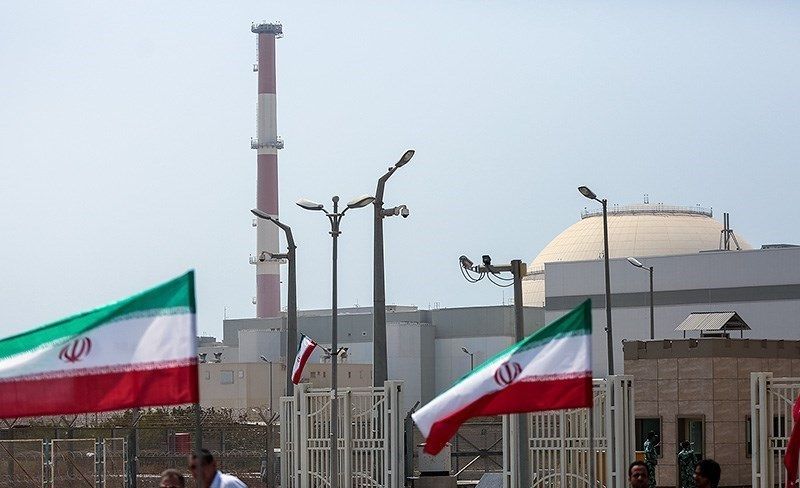 The Bushehr nuclear power plant with its dome-shaped reactor building in the background. On April 4, a suspected Israeli attack reportedly killed an Iranian guard near the Bushehr nuclear plant and forced the evacuation of Russian personnel who work at the plant. (Credit: Hossein Ostovar / Tasnim News Agency, CC BY 4.0, via Wikimedia Commons)
Listen to this article:
Listen to this article
--:--
This audio was generated using an automated voice. Learn more.
President Donald Trump announced a five-day pause on planned US military strikes against Iranian energy and nuclear infrastructure last month, explicitly conditioning the halt on the success of ongoing diplomatic talks. Trump later extended the deadline to Monday night and now to Tuesday night, threatening that it “will be Power Plant Day, and Bridge Day, all wrapped up in one, in Iran.” He followed up Tuesday morning with another social media post that says “a whole civilization will die tonight, never to be brought back again” if Iran does not make a deal amenable to the United States.
These threats effectively weaponize the ambiguity in international law surrounding the protection of civilian infrastructure, including nuclear facilities, leveraging the imminent threat of catastrophic attacks in an extreme attempt at geopolitical extortion over Iran’s closure of the Strait of Hormuz.
This calculated brinkmanship is not an isolated incident; it follows a similarly alarming shift regarding the conflict in Europe. On March 5, for the first time since the start of the war in Ukraine, the United States joined Russia and China in voting against a resolution—the seventh of its kind—by the board of governors of the International Atomic Energy Agency (IAEA) condemning attacks on Ukraine’s power infrastructure. The text of that resolution reaffirmed that such attacks on infrastructure for the off-site power supply of nuclear power plants, including at the Zaporizhzhia nuclear power plant, “represent a direct threat to nuclear safety and security.”
Two weeks later, the Wall Street Journal reported that US military officials suggested military actions against nuclear facilities could be considered legitimate if such targets contribute to the war effort and collateral damage remains limited.
These developments unfold within a broader context marked by a significant—and deeply troubling—erosion of international humanitarian law. They also reflect in a stark and unfiltered way a longer-term change in the US position on the physical protection of nuclear installations during armed conflict.
A conditional, ambiguous immunity. In the aftermath of World War II, the need to limit the risks associated with attacks on civilian infrastructure became apparent. In 1956, the International Committee of the Red Cross played a pioneering role by introducing a draft rule that would have given immunity from military attack, on jus in bello or International Humanitarian Law grounds, to installations—including dams, dikes, and nuclear power plants—whose destruction could create catastrophic hazards. This normative impulse was only formalized in 1977 with the adoption of Article 56 of Additional Protocol I to the Geneva Conventions and Article 15 of Additional Protocol II. Both provisions include “nuclear electrical generating stations” among the installations afforded special protection.
From the outset, negotiations revealed a structural tension between humanitarian concerns and military necessity. The United States adopted a strongly critical stance: President Ronald Reagan famously described Protocol I as “fundamentally and irreconcilably flawed,” arguing that the United States could not “allow other nations of the world, however numerous, to impose upon us and our allies and friends an unacceptable and thoroughly distasteful price for joining a convention drawn to advance the laws of war.” For Washington, the provision suffered from two core shortcomings: an excessive emphasis on humanitarian considerations at the expense of operational requirements, and a degree of redundancy vis-à-vis existing customary principles such as proportionality and precaution. A Defense Department working group went so far as to label the article “unacceptable” in its original form, stressing the need to preserve operational flexibility for military forces.
In practice, the final text of Article 56 largely reflected this position. The category of protected objects was narrowed, and a logic of conditional protection was explicitly introduced: If such installations qualify as military objectives under Article 52, they may be attacked, provided that the operation does not trigger a massive release of radiation or other catastrophic environmental hazards or cause severe civilian casualties. But protection ceases if the installation is used in a regular, significant, and direct manner in support of military operations. In such circumstances, even attacks likely to produce severe effects may be deemed lawful if they constitute the only means to terminate that military support.
In other words, this framework effectively preserves the military option against civilian facilities. European positions, while less forceful, did not substantially diverge from this logic. France and the United Kingdom, for instance, made clear that they could not grant absolute protection to installations contributing to an adversary’s war effort, committing to take all feasible precautions to limit harm to civilians and to subject any such attacks to high-level authorization.
A key conclusion follows: The protection of nuclear power plants has never amounted to an absolute prohibition against attacks on them. Rather, it has been conceived from the outset as limited, conditional, and inherently ambiguous. It is precisely this structural ambiguity that helps explain more recent developments in the US position in Iran.
Bushehr as a military target. Since the start of the war with Iran, several civilian and military officials of the Trump administration—including notably US Ambassador to the UN Mike Waltz, who said he “would never take anything off the table for the president”—suggested that nuclear infrastructure could be considered legitimate targets under certain circumstances, particularly when embedded in broader systems perceived as dual-use.
One piece of nuclear infrastructure in particular, the Bushehr nuclear power plant, would bring significant risks if targeted. The facility hosts an operating Russian-built VVER light-water reactor of 915 megawatt-electric power output, with two more under construction. The plant is connected to the off-site grid through multiple high-voltage lines that are critical to the reactor’s safety. The operating reactor is enclosed within a reinforced concrete containment building designed to withstand internal pressure to prevent the release of radioactive material and external impacts, including aircraft crashes. But such structures may not withstand military strikes.
Beyond the risk of a deliberate or inadvertent strike, such as the April 4 suspected Israeli attack that reportedly killed an Iranian guard near the Bushehr nuclear plant and forced the evacuation of Russian personnel, the disruption of external power supply or cooling systems would pose a significant threat to the integrity of the plant. (On Monday, the IAEA confirmed the impacts of military strikes near Bushehr, but said that the plant itself was not damaged.)
In extreme scenarios, such disruptions could lead to a reactor core meltdown and hydrogen explosions, as seen at Fukushima in 2011. At Bushehr, the plant’s ultimate heat sink (an essential safety function of removing the radioactive decay heat generated by the fuel inside a shutdown reactor or spent fuel storage pool) is the Persian Gulf. This reduces the likelihood of losing the final cooling source compared to other cases, such as at the Zaporizhzhia nuclear power plant in Ukraine. But the IAEA warns that the plant’s water supply could still be compromised in various ways.
Additional risks stem from the presence on-site of both fresh and spent fuel. The latter—stored inside the reactor core and in spent fuel pools—contains highly hazardous radioisotopes produced during the fission reactions. If those isotopes were released at scale, they would result in severe, widespread, and long-lasting health and environmental consequences.
Weaponizing ambiguity. These technical vulnerabilities give the issue clear legal significance. The risks associated with a potential attack on Bushehr raise concrete questions about the capacity of the existing international legal framework to prevent radiological and chemical releases. Article 56 remains the primary—and essentially the only—legal instrument specifically aimed at the physical protection of nuclear power plants in armed conflict. While other conventions and guidelines help protect them, a comprehensive legal framework that categorically prohibits attacks on such facilities remains lacking.
This results in a dual risk of an already grave danger of a radiological incident with transboundary consequences, doubled with the possibility that such risks may be deliberately instrumentalized for coercive purposes. The latter dynamic is now well established with Russia’s manipulation of radiological risk at Zaporizhzhia, which has increasingly become a tool of strategic pressure in its war against Ukraine over the past four years. The same behavior of nuclear piracy and calculated brinkmanship is currently being used by the US administration over Iran’s energy infrastructure.
On the day of the strikes near Bushehr, Iranian Foreign Minister Abbas Araghchi warned that continued attacks on the nuclear plant could trigger “radioactive fallout [that] will end life” in capitals of the Gulf, “not Tehran.” Araghchi’s statement illustrates how threats of transboundary radiological events are now being openly wielded as a deterrent mechanism.
And Bushehr is not alone. The four-unit Barakah nuclear power plant in the United Arab Emirates—which sits on the other side of the Gulf and that Iran-backed Houthis threatened to target—further amplifies these concerns. These threats bring renewed attention to the risks of further deploying nuclear energy in the region. They, in turn, raise questions about how to ensure the right to the peaceful use of nuclear energy and the challenges to the instrument that underpins it: the Nuclear Non-Proliferation Treaty (NPT).
From rhetoric to kinetic reality. Last June, during the 12-day war, the ambiguity surrounding Article 56 on the conditional protection of nuclear facilities ceased being theoretical when coordinated US and Israeli strikes were conducted against Iran’s main nuclear sites at Natanz, Fordow, Isfahan, and Parchin-Taleghan 2. The attacking coalition unequivocally asserted that these facilities constituted legitimate military objectives, stripping them of any presumed humanitarian immunity and claiming that military strikes constituted the only means by which Iran’s uranium-enrichment and weapon-design capabilities could be neutralized. (The US administration’s assertions that Iran’s nuclear-weapon capacity constituted an imminent threat and that the June strikes have obliterated such capacity have since been disputed.)
This doctrinal precedent paved the way for the renewed escalations into 2026. On March 21, Natanz was struck once again in a US-Israeli strike, and earlier that month, Israel’s Defense Forces reportedly destroyed a purportedly relocated nuclear weapons-development site at Minzadehei, north-east of Tehran.
In stark defiance of Trump’s announcement of a pause, Israel continued its military action against Iranian nuclear facilities. On March 24, the Israeli Air Force is suspected of targeting the immediate vicinity of the Bushehr nuclear plant. Three days later, on March 27, Israeli forces executed direct kinetic strikes on both the Shahid Khondab heavy water reactor at Arak and the Ardakan uranium yellowcake production facility. The recent coordination of the Israeli Defense Forces and Russia to evacuate Rosatom technicians from Bushehr—just as the plant was under a second attack—shows how Israel is carefully calibrating its escalation management, isolating Iran’s nuclear vulnerability from broader superpower conflict.
That the IAEA and Iranian authorities confirmed that they did not detect an increase in off-site radiation levels suggests that the attackers carefully calibrated their strikes to meet the legal requirements of Protocol I. The 1977 framework contains a critical loophole: It strips civilian protection from a facility if it supports the enemy’s war effort, provided the attack can be executed without causing a massive radiation leak. By successfully preventing a catastrophic radiological release during the strike against a nuclear facility, the attackers effectively weaponized this exact legal ambiguity.
The ensuing escalatory spiral exposes the fatal flaw of such a sanitized view of nuclear targeting. In immediate retaliation, Iranian ballistic missiles struck communities adjacent to Israel’s Dimona nuclear research center—the facility that Israel historically used to produce plutonium in support of its nuclear-weapon program—shattering buildings and injuring over 180 civilians between March 21 and 22. (Earlier, an Iranian news agency had reported that Iran may target the Dimona nuclear site itself.) While Iran notably refrained from adopting scorched-earth tactics, the retaliatory strikes near Dimona vividly illustrate the ultimate consequence of normalizing attacks on nuclear sites.
The US administration’s narrative on attacks against Iran’s nuclear power plants—however fundamentally irreconcilable with humanitarianism and the spirit of the NPT—fits within a broader and persistent prioritization of military imperatives over humanitarian principles. And Washington has not been alone in sustaining this balance. From the negotiations of the 1977 Additional Protocols to the present, a consistent pattern has emerged; it consists of the rejection of the absolute prohibition of attacks against energy infrastructure in favor of preserving operational discretion. Seen in this light, the attacks near the Bushehr power plant appear less an exception than a point of convergence, in which strategic calculation and legal interpretation jointly reshape the boundaries of permissible force against highly sensitive targets.
President Trump’s latest ultimatum promising massive infrastructure strikes on Tuesday night confirms that the international community may face a stark, kinetic escalation in the war in Iran. Should diplomatic efforts collapse and more military strikes follow, the ambiguities within Article 56 risk being forcefully exposed and further normalized. Still, even a successful round of talks carries troubling implications: It would demonstrate that explicitly threatening civilian nuclear facilities can serve as an effective instrument of military coercion.
Whether or not the war in Iran ultimately leads to catastrophic radiological consequences in the region, the template for nuclear piracy is now firmly in place, having been transposed from Ukraine to the Middle East. Without decisive action to close the loopholes in the Geneva Conventions, the growing acceptance of nuclear facilities as legitimate military targets will only intensify, edging the world closer to an avoidable nuclear catastrophe.
Together, we make the world safer.
The Bulletin elevates expert voices above the noise. But as an independent nonprofit organization, our operations depend on the support of readers like you. Help us continue to deliver quality journalism that holds leaders accountable. Your support of our work at any level is important. In return, we promise our coverage will be understandable, influential, vigilant, solution-oriented, and fair-minded. Together we can make a difference.
Keywords: Bushehr nuclear power plant, Donald Trump, IAEA, Iran, Iran war, NPT, Trump administration, US attacks Iran, nuclear safety
Topics: Analysis, Nuclear Risk


Ludovica Castelli
Ludovica Castelli (Ph.D.) is Project Manager of the EU Non-Proliferation and Disarmament Consortium Project at the Istituto Affari Internazionali ... Read More











well, it seems that what Usa considers legal is what Usa wants. No matter how many rules you write if the stronger player can simply declare that they don’t apply to it. Hope that tonight at least the atomic bomb taboo will stay in place.
The statement that “a whole civilization will die tonight, never to be produced again” was deeply unsettling. It made me feel worse than I did as a boy during the Cuban Missile Crisis. What makes it especially disturbing is the way it treats unimaginable human loss as if it were merely a dramatic flourish, rather than the eradication of millions of individual (human) lives, each with their own families, histories, aspirations, and futures. Its curtness feels careless and emotionally detached, stripped of any sense of empathy or moral gravity. Equally troubling is how such language normalizes the idea of total destruction,… Read more »
well said.
Nuclear fallout gets caught up in air currents traveling around the earth and will harm humans, animals, agriculture, waterways, every life form as we know it.
I’m aghast at how nonchalant our government is about the possibility of ending life on our planet.
I find it unfortunate that no one seems to notice the elephant in the room. That Iran is trying to develop nuclear weapons when they agreed not to. Attempting to place blame solely on the United States is ludicrous when looked at through rational and logical viewpoints. It’s simply amazes me that whenever something happens everyone looks to the United States for money to fix it. But when the United States is targeted or threatened where the bad guy if we stand up for our rights.
We already have bans on wars of aggression – if those were enforced, these details are mute points. But no ban or international law has any enforcement mechanism.
Bravo Ludovica and Ali. Well explained
best
Trump’s implication of his use of nuclear weapons in Iran is beyond insanity. He must be removed from office before he destroys our democratic republic.
Reagan and Gorbachov started a regime of nuclear arms reduction and a return to sanity from the MAD (Mutual Assured Destruction) policy. Trump has brought the existential threat of nuclear self destruction roaring back.
I greatly fear the threat of nuclear proliferation by some rouge nation getting nukes and starting WW3.
He must not be allowed to have control of nuclear weapons.