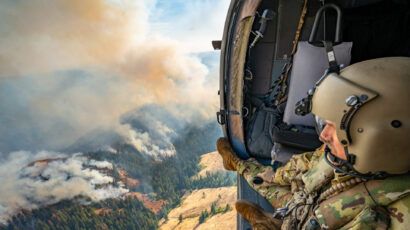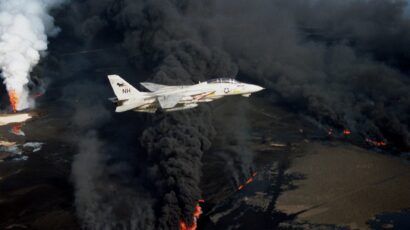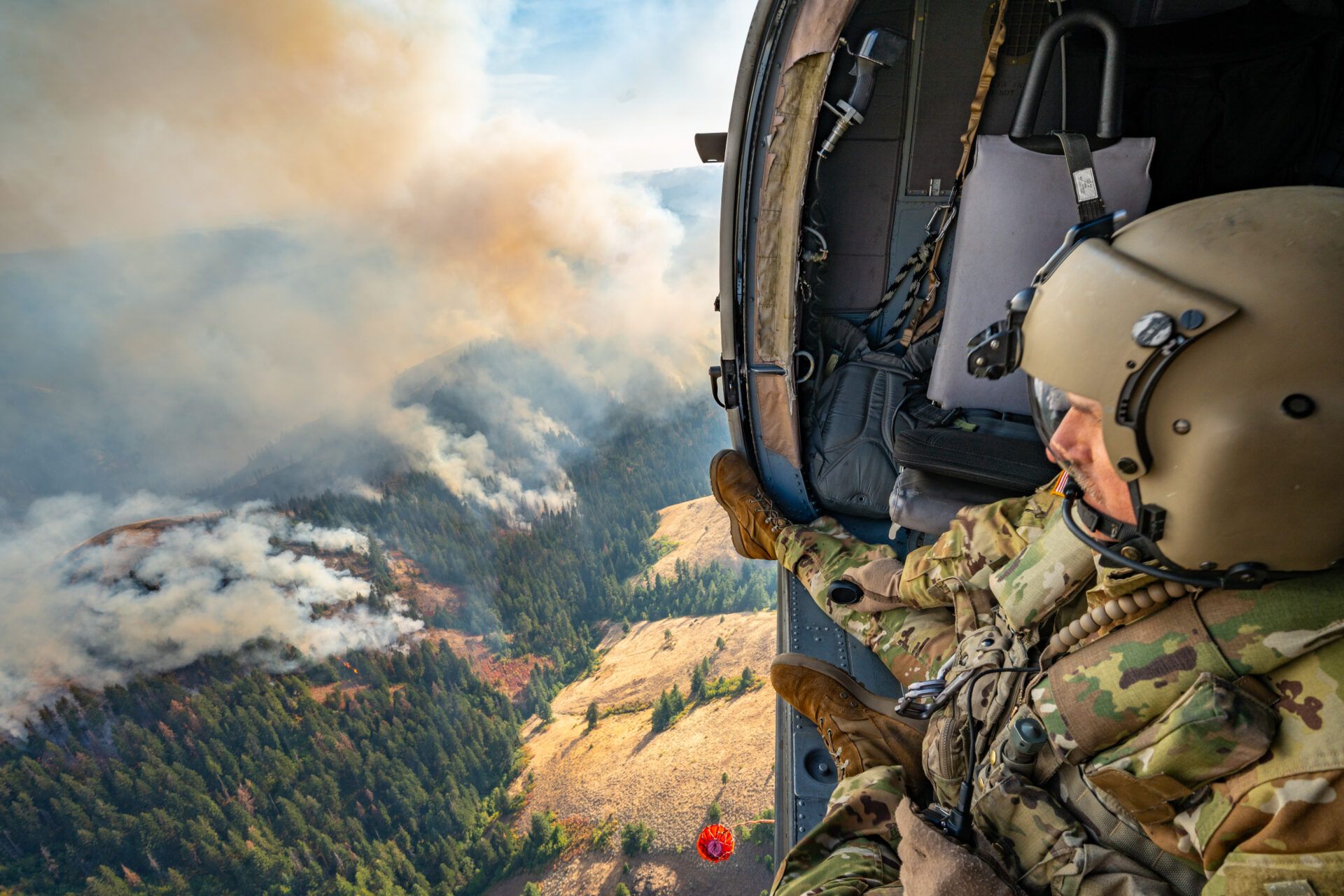
The US military has a long, complicated relationship with climate change. Beginning in the mid-1950s, it paid for research into greenhouse gases and the many ways global warming could make operations more difficult and less predictable. As early as the 1990s, the Navy began raising piers to protect its ports and working to make its facilities more resilient to frequent flooding. In 2007, Sherri Goodman, the Pentagon’s first Chief Environmental Officer, coined the phrase “threat multiplier” to convey the idea that climate change could exacerbate geopolitical instability and other security risks. All branches of the military are currently preparing for more humanitarian rescue relief work as environmental emergencies multiply.
But even while it’s adapting for this hot new world, with its emergencies and imminent threats, the military has largely sidestepped its role in creating the climate crisis. For decades, the military has been a significant contributor to global warming, but there is no full accounting of military and war-related emissions. Military industrial emissions are also high, and the global volume and value of arms transfers has grown rapidly over the past half-decade. And then of course, by destroying infrastructure and the environment, war itself contributes to global warming.
The argument that climate change is a threat multiplier short circuits the causal chain: War and military buildups are climate change multipliers. And, while it is true that the climate is warming at an accelerating rate and that the window for preventing the worst outcomes is closing, the national security establishment’s impulse—to focus on national security threats that may or may not be caused by climate change—may make us less secure because it increases military emissions and siphons resources from emissions reduction, the energy transition, and adaptation.
“More serious than most people tend to believe”
In November 1959, Edward Teller, the father of the hydrogen bomb, told petroleum executives that the world would soon need other sources of energy because fossil fuels were “contaminating the atmosphere.”
It has been calculated that a temperature rise corresponding to a 10 per cent increase in carbon dioxide will be sufficient to melt the icecap and submerge New York. All the coastal cities would be covered, and since a considerable percentage of the human race lives in coastal regions, I think that this chemical contamination is more serious than most people tend to believe.
In testimony before the House Committee on Appropriations in 1956, Roger Revelle—the noted climate change scientist and former naval officer—recommended researching how carbon dioxide emissions could “cause a remarkable change in the climate.” But even then, the priority was on military security and great power competition. As warming continued, Revelle said:
the Arctic Ocean will become navigable and … then the Russian Arctic coastline will be really quite free for shipping…. This would have the effect, if it does happen, of changing the character of the Russians opposed to ourselves. We are now the greatest maritime nation on the earth. … If the Russian coastline increases by something like 2,000 miles or so, the Russians will become a great maritime nation.
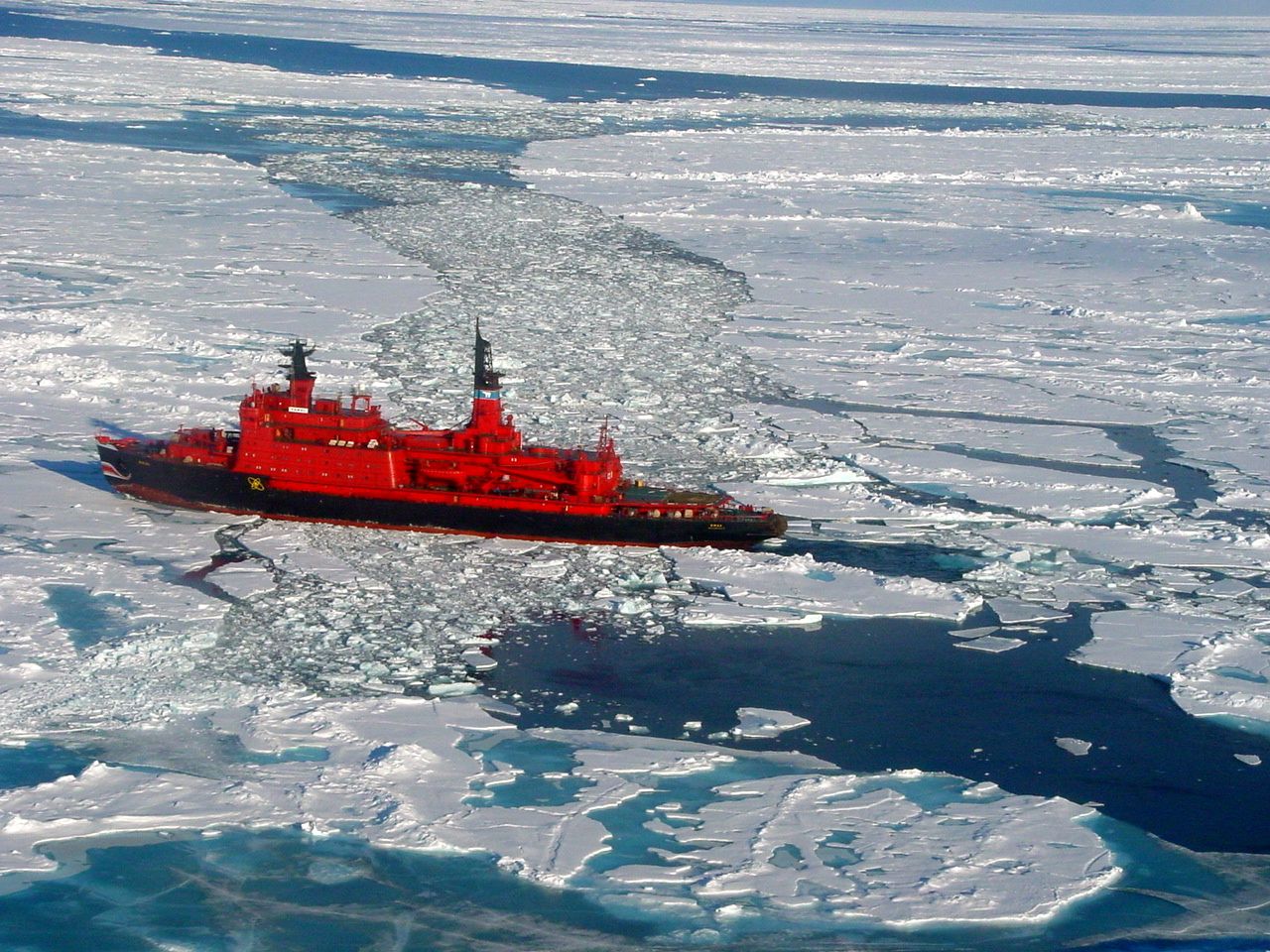
While many were debating in the 1990s whether climate change was a “hoax,” the military was considering the implications of global warming for their operations. Military forces depend on a functioning ecosystem. A 1990 Naval War College study by Terry P. Kelley described “significant effects” of global warming for the military, including how changes in the salinity, chemistry, and temperature of water would affect acoustic characteristics of oceans, impacting sonar performance. Indeed, the Navy was already conducting research on how the speed of sound in water increases as the temperature rises.
Kelley also described how high winds, greater turbulence, and changes in ocean currents and the shape and underwater character of coastlines would affect operations. Sea level rise would expand the reach of shallow water and potentially “extend some target beaches 100 km inland,” potentially requiring alterations to amphibious assault equipment and tactics. Arguing that the effects of climate change would be greatest for the Navy, Kelley recommended that the Navy develop a long-term plan to reduce its infrastructure and facilities and redesign its bases and ships to deal with likely challenges. Like Revelle, Kelley foresaw potential opportunities for navigation with Arctic ice melting, but he also noted the potential for boundary tensions to become “severe” in areas where climate change caused drought and flooding and stressed the ability of people to have fresh water or grow food.
Although the Office of Naval Research funded much of the early climate change research, the Defense Department successfully pushed to omit most reporting of military emissions from global climate agreements like the Kyoto Protocol.
The Defense Department knew it was the United States’ largest petroleum user and said so. It also knew that its emissions would come under scrutiny if they were known, and that pursuing preeminence was emissions-intensive and undermined global climate goals.

Climate change as threat multiplier? Not so fast
While environmental stress can increase tension, academic analyses have not shown a strong or direct causal link between climate change and armed conflict.
Nevertheless, the threat multiplier frame remains dominant and essentially unquestioned. In 2021, the Department of Homeland Security argued that climate change was “reshaping the risk landscape” and predicted a “global increase in natural disasters will … drive up the number and severity of humanitarian crises” with what it called “sweeping implications for regional and border security and core national security interests.” More ominously, the department also predicted that “revisionist nations will seek to exploit climate change induced instability to erode the rules-based order that is central to the security and prosperity of the United States and its allies.” NATO and the UN Security Council have also adopted the framing of climate change as a threat multiplier.
In his introduction to the 2024 “Department of Defense Climate Adaptation Plan, 2024-27,” Secretary of Defense Lloyd Austin wrote that climate change posed strategic risks:
Climate change fundamentally alters the conditions that shape military operations at home and around the world. At the same time, climate change is reshaping our strategic interests. As changes in the physical environment create the opportunity for well-prepared forces to secure a competitive advantage, deter aggression, and protect the United States and its interests, the Department of Defense (DOD) must both understand and adapt to the ways in which extreme weather and climate change affect our readiness and capabilities.
In the same report, the Defense Department, asserted as fact its assumption that climate change “continues to increase the demand … for military operations at home and around the world.” The frame is how “missions and operations are adversely impacted by climate change through amplifying operational demands on the force, degrading installations, infrastructure, and systems, and increasing health risks to Service members.” The focus is on adaptation and technical fixes.
The US national security establishment prioritizes the short term over all else: the operational challenges caused by climate change, the expenses of adaptation and repair, the race for resources, and the potential that climate change will cause war. As the United States 2021 National Intelligence Estimate said, “The current pace of transition to low- or zero-emission clean energy sources is not fast enough to avoid temperatures rising above the Paris goal of 1.5˚C.” That report predicted increasingly serious consequences for human security and increased risks to US national security. And it bolded their conclusion that, “The increasing physical effects of climate change are likely to exacerbate cross-border geopolitical flashpoints as states take steps to secure their interests.”
Echoing the predictions of the 1950s and 1990s, the report asserts that the melting of sea ice in the Arctic will amplify “strategic competition” over resources in the region.
Elsewhere, as temperatures rise and more extreme effects manifest, there is a growing risk of conflict over water and migration, particularly after 2030, and an increasing chance that countries will unilaterally test and deploy large-scale solar geoengineering—creating a new area of geopolitical disputes.
The US national security community’s approach to climate has not only been mirrored by NATO but amplified by private organizations such as the International Military Council on Climate Security, which produces an annual World Climate and Security Report. These doomsday scenarios often ignore the necessity of emissions reductions and capacity building. They are lifeboat and drawbridge approaches to security on the assumption that it is already too late.
The figures below, from the 2022 Department of Defense Climate Risk Analysis, illustrates the assessment that climate change will lead to conflict and increased demand for the military to perform humanitarian missions.
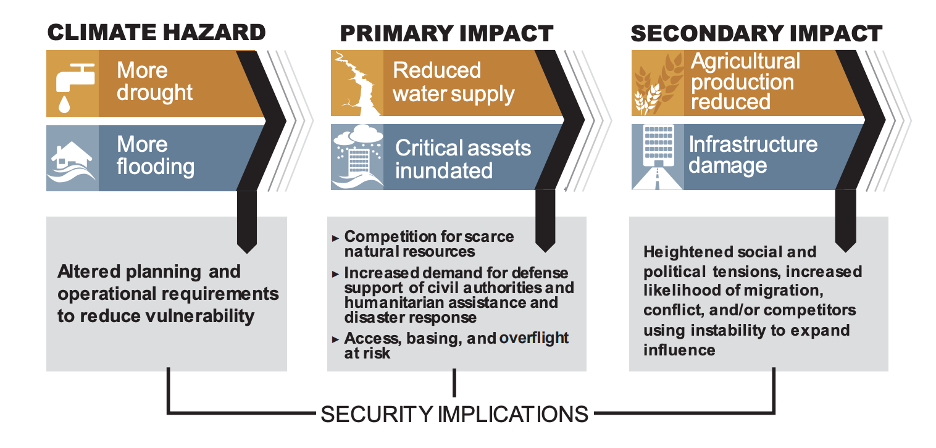
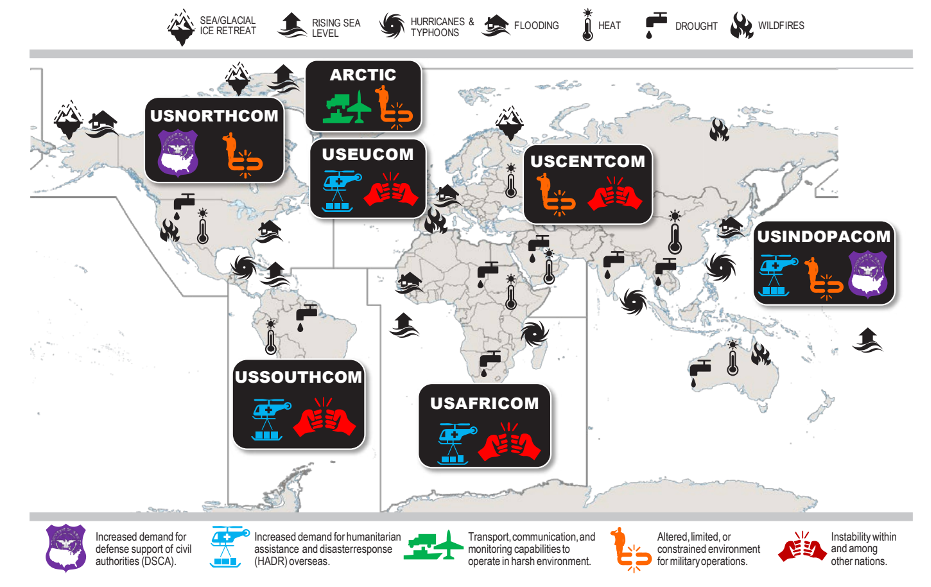
But none of these potential future paths to instability and conflict are a necessary consequence of climate change. Many of the potential causes of instability are unlikely or can be avoided. Negotiations, diplomacy, adaptation, and emissions reductions can all help to reduce the likelihood of these nightmare scenarios.
The national security establishment recognizes the short-term impacts of climate change—the operational challenges, the expenses of adaptation and repair, the race for resources, and the possibility it will cause increased tension and war. This strategic and military policy response to climate change is practical in some tactical respects, but it is shortsighted and potentially counterproductive because it does not attend to Earth systems or the role of the military, military industry, and war as significant contributors to climate change.
Ripple effects
While adaptation is prudent, an ounce of prevention in the form of military and military industrial emissions reduction is essential to the cure. Justifying more military spending because climate change might cause insecurity is potentially counterproductive.
Although the United States is not directly causally responsible for the military and military industrial emissions of every other country, because it is so militarily powerful, it does have a large share of responsibility for the strategies and procurement other countries, as they respond to US actions by increasing their own spending. For decades, the United States has advocated for increasing the military spending and procurement of NATO countries. The Stockholm International Peace Research Institute documented a 41 percent increase in global military spending from 2016 through 2025; Germany’s military spending alone grew 118 percent between 2016 and 2025. Of course, since 2022, Russia’s aggression against Ukraine has also been an important driver of NATO military mobilization.
Similarly, the dynamic of action-and-reaction in the Asia-Pacific region has driven up not only military spending but likely also military emissions. China’s military spending and military modernization have significantly increased in recent years—62 percent between 2016 and 2025 according to the Stockholm International Peace Research Institute. US allies in the Indo-Pacific region are both dependent on US forces and responsive to calls for more arms and mobilization to deter China. Canada has committed to purchasing 12 submarines that are capable of being deployed to defend Taiwan. Taiwan’s military spending has increased 59 percent during this same period. To the extent that the United States and its allies appear threatening, US doctrine, presence, and modernization plans also drive the emissions of its potential adversaries, including China.
Several NATO countries have said they will reduce military emissions. But even emissions reductions from increased energy efficiency and the transition to renewable energy may be offset by military mobilization. For instance, Stuart Parkinson tracked 20 NATO member’s plans for emissions reduction. He found that even countries that reduced their military emissions a great deal, Germany and UK, had achieved a good portion of those reductions because the entire country had decarbonized its national grid.
As military spending and mobilization grow, research shows that a state’s overall energy consumption tends to increase as military mobilization and military industrialization shape the economies of states toward high emission activities and technologies.
Several academic and think tank analyses show that increased military spending—which is associated with more operations, more war, and more purchases of military equipment—increases military and military-industrial emissions. Because this sector is so reliant on fossil fuels, rising military spending jeopardizes climate targets.
More recently, military spending has boosted greenhouse gas emissions in the civilian sector by its demand for artificial intelligence and quantum computing, an energy hungry sector of the economy. Like the internet, AI has been both paid for and then used by the US military. The Defense Department announced in May 2026 that its AI use had increased 1,775 percent over the past calendar year. The Defense Department, which says that it will be an “AI-first” fighting force, has forged agreements with SpaceX, OpenAI, Google, NVIDIA, Microsoft, Amazon Web Services, and Reflection to use their capabilities for warfighting and other applications. But this military funding for AI has also shaped the research and the demand for artificial intelligence in the larger economy, boosting AI energy use overall.

The US approach is tactical, not strategic
Under the Bush, Obama, first Trump, and Biden administrations, the military took pains to emphasize that emissions reductions were a side effect of its efforts to improve efficiency and resiliency. At points, the blindness to the urgency of global warming and the necessity for deep reductions in emissions ostensibly changed during the Obama and Biden administrations.
In October 2021, Secretary of Defense Austin said, “To keep the nation secure, we must tackle the existential threat of climate change.” But months before that, when President Biden unveiled his administration’s “whole-of-government” approach to climate change in April 2021, committing the government to radical reductions in emissions, Biden’s order exempted the military from the order. On the other hand, the Biden administration’s 2022 National Security Strategy ranked climate change as a top tier concern—“the greatest and potentially existential for all nations.”
Then Trump returned to office, and his administration’s National Security Strategy said, “We reject the disastrous ‘climate change’ and ‘Net Zero’ ideologies that have so greatly harmed Europe, threaten the United States, and subsidize our adversaries.” The US military’s plans for emissions reductions set during the Biden administration were abandoned in 2025.
The Defense Department’s climate strategy putters along, even under the Trump administration, because it is tied to the Pentagon’s goals of increasing efficiency and bolstering resilience. However, the result is relatively modest emissions reductions, from, for instance, improving the efficiency of tactical vehicles, adding renewable energy at installations, and disaster proofing.
A strategy of piecemeal adaptation and technical fixes may address some problems in the short term. But these responses will be both expensive and ineffective in the long run if emissions from the entire military and military industry are not dramatically reduced. The United States’ military emissions are larger than most country’s total annual emissions from all sources.
The United States cannot continue the business of national security as usual. Marginal adaptations such as switching to LED lighting on surface ships or raising piers will not significantly decrease energy use or prevent flood damage at naval stations. Even big contracts for renewable energy and microgrids at bases cannot offset the emissions of military operations, military industry, and war. Fighting for oil itself increases emissions.
The US strategy in the Arctic illustrates the folly of the threat multiplier frame.
Yes, as the Arctic, the fastest warming region in the world, continues to heat up there will be less sea ice, more precipitation, and decreasing salinity. Warming does cause glacier melt and the opening of the Arctic has and will continue to change the operating environment of the US Navy. And yes, the deterrent capabilities of US submarines, the most secure leg of the nuclear triad, and the US ability to track adversary subs depend on well-functioning sonar.
The technical difficulties posed by climate change for antisubmarine warfare have only become more apparent. A recent study noted that in the North Atlantic and Western Pacific, “the range of detection through underwater acoustics is contracting due to climate change.” All of this can be true, and yet the national security response may still be ill-conceived. These are challenges for military operations. Those can be met. What cannot be solved, but only prevented, is the global consequences of Arctic warming. Rushing to increase the capability to defend resources in the Arctic that may not be at risk increases emissions.
Tactical and technical fixes are inadequate because the more important problem in the Arctic, for example, is not anti-submarine warfare, responding to floods and fires as permafrost thaws, or possible competition over resources, but the ways that the ecological impacts of warming will affect humanity’s ability to survive.
New research indicates the Arctic ice sheet melt, which will cause the slowing of the Atlantic Meridional Overturning Circuit and lead to significant cooling and decreased rainfall in Europe and North America, may be occurring much faster than initially projected.
As defense planners ratchet up their attention to the operational challenges posed by a warmer world, there is little recognition that the military itself is an important driver of emissions and therefore climate change. The US and its allies have not reconsidered their missions and larger strategies in the light of ecological reality.

Preeminence won’t matter if we don’t survive
When governments focus on climate change as a threat multiplier or militaries stress operational challenges due to climate change, their actions tend to increase emissions if they continue their missions as usual or even invest more in military preparedness.
The US national security establishment is certainly not focused on climate change. Rather, it is focused on projecting US power in the Middle East and Asia. At its core, and no matter the administration, a national security strategy that seeks American preeminence risks much more than US global status.
Protecting American preeminence is not functional, if it ever was. Significant military emissions reductions can only come from reducing the overall size of the military, which is only possible if the US changes its military doctrine and force structure.
“Both-and” thinking, where the US and its allies continue to rely on military force, will not work to keep America on top. In fact, it is increasingly clear that the US pursuit of military preeminence directly and indirectly sacrifices environmental security and is part of the behavior that risks the survival of everyone on the planet. When NATO marches to the US tune, increasing its military spending, armed forces, and arms industries, its members also sacrifice their own security.