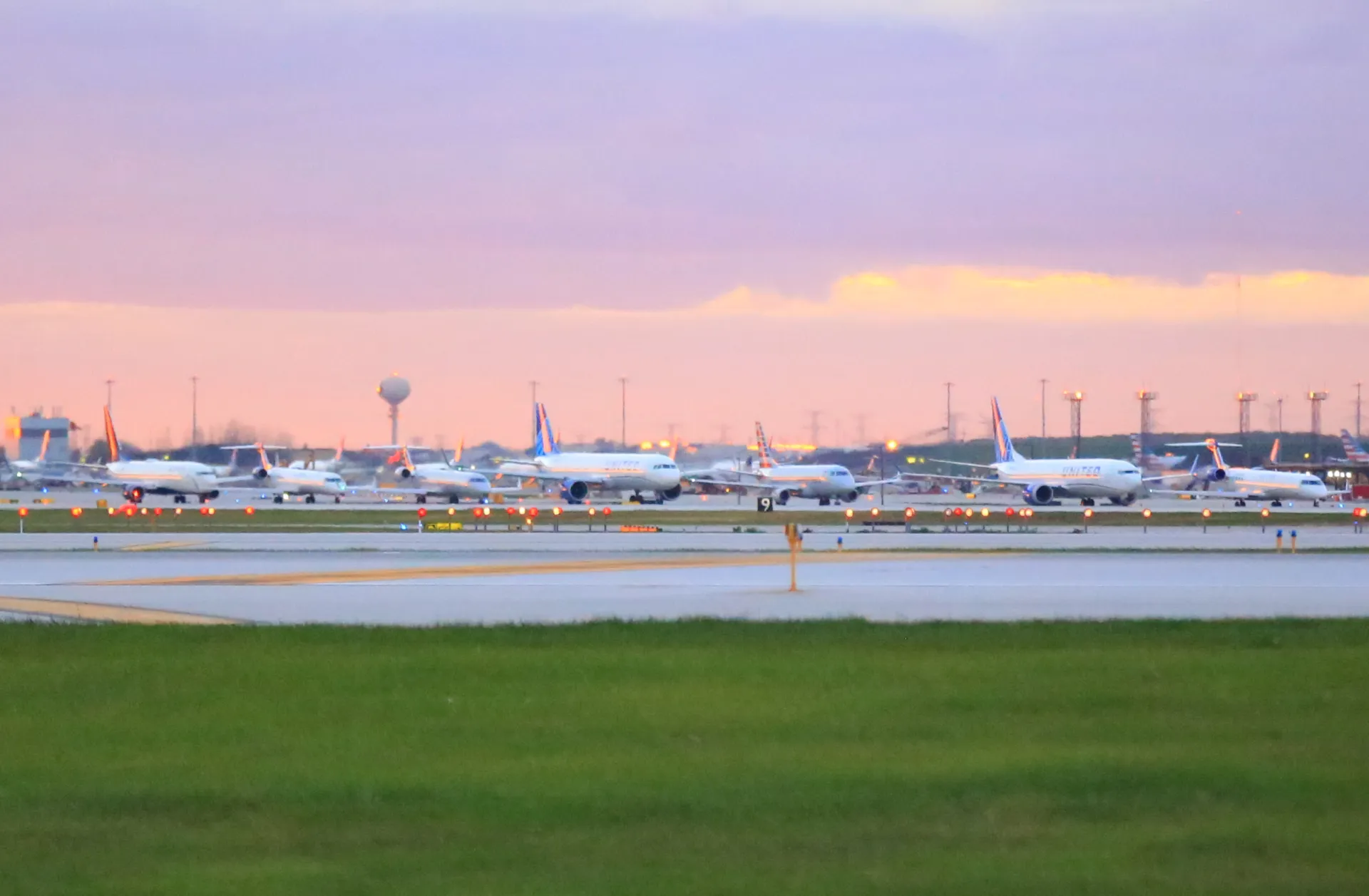
Last Friday, the Federal Aviation Administration (FAA) issued a national ground stop that lasted nearly five hours and stranded hundreds of thousands of passengers. The agency indicated that a malfunctioning router and replacement of an old copper wire flooded the system with data, causing enough concern to halt all flights.
Both Secretary of Transportation Sean Duffy and President Trump blamed the age of the infrastructure underlying the aviation network for the problems. But aviation expert David Woods says that the introduction of the AI-powered air traffic management platform known as SMART, which rolled out on September 21 in the Washington D.C. area and expanded nationwide on November 10 was what led to the problem.
In this interview Woods, professor emeritus in Department of Integrated Systems Engineering at the Ohio State University, explains how the thus far provided explanations are essentially fantastical and that what went wrong is the result of a fundamental breakdown of safety culture and safe engineering practices.
The resulting interview has been edited for length and clarity.

Sara Goudarzi: What happened that led the FAA to issue a national ground stop last Friday?
David Woods: It was an infrastructure outage. But the key isn’t the infrastructure outage; it’s the processes that went on that led to the infrastructure outage that are really at the heart of the matter. Infrastructure is multiple networks of software and hardware that allow us to have valuable and critical services, whether it’s air transportation or the digital tools we use.
The pressure to move fast and get quick financial results has bypassed the normal kinds of processes for checking and stress testing when we deploy and upgrade these infrastructure services, which are always a combination of legacy components, as well as upgrades. These systems—like aviation, healthcare, and digital services—all depend on processes that must be updated over time. So, the integration of upgrades is perfectly normal. The systems don’t exist in a primitive state and in a modern state. That not how any of this works.
The go fast and the willingness to break things is the problem. Because if you go slower, it costs more. If you go slower, you might find something that indicates you have to modify the system, so it’s more expensive. [Those in charge] have this inordinate belief that new technology can be deployed quickly because it’s just so much better, and anything that creates difficulties can be fixed later. Well, the events on Thursday with Microsoft and Friday with the ground stop showed the fantasy of that thinking. So, we’re really dealing with a human organizational failure which bypassed prudent testing, especially stress testing.
Goudarzi: Are you saying what happened is due to how quickly the new air traffic management platform was introduced into the system?
Woods: Yes, and it’s important to parallel Thursday’s Microsoft outage and Friday’s ground stop. Let’s take Friday: They wanted to upgrade air traffic services with predictive analytic tools. The tool seemed to run when tested by itself. Then they roll it out in the D.C. area. Everything seemed okay. Now, there were concerns by many parties saying, “Wait, that’s not thorough enough testing to go to full-scale utilization of the new algorithms.” But they go forward. Predictive tools need a lot of data to do their computations, especially when things are changing or traffic is high. It sends a lot of data. What happened is they didn’t stress test at full scale, and so all of a sudden, the data overloaded different aspects of the infrastructure.
Now, think about what happened on Thursday: the same dynamic. We can go fast and get quick benefits. Microsoft internally says they’re selling AI to others. They should use their own AI. They have a massive cutback in personnel as they transfer to AI-based operations. They end up with several things going wrong at the same time that, in and of themselves, should’ve been okay to handle, but the combination and the interactions and the traffic on their network as they service people all over the world at scale led to a collapse of their tools, including ones they would use to figure out what went wrong. As many joked on the internet, they can’t ask Copilot to help them recover from an outage when Copilot is down.
So that circular dependency illustrates the complexity of these net layers of software that carry out these wonderful capabilities at national and international scale. In both cases, it’s this inordinate confidence that the latest technology can be rushed forward, and consequences of failure, outages, or actual harm to people are not going to happen.
Goudarzi: Can you talk about the platform they introduced into the system and explain what it does?
Woods: What they introduced is this SMART system that’s advertised as having AI. Let’s take the jargon away. It’s a predictive analytic system that uses lots of data, so you can be more efficient in organizing flight paths around the country to minimize delays. This is software that should provide some fuel and time savings. So, it’s a good thing to work on.
But you’re introducing a major upgrade into an ongoing operating system. In these kinds of networks that provide complex and valued services at scale, you must be careful as you bring new capabilities onboard because you have to operate at the same time that you’re upgrading. That’s why we do stress testing. A widespread common understanding across engineers who run these things is that you can’t stress test enough to match the complexities the real world will throw at your system.
The willingness to tolerate breaking things along the way is the core issue that drove both the Microsoft outage and the FAA air traffic outage.
Goudarzi: When was SMART introduced into the aviation system?
Woods: It was introduced in the D.C. area a few weeks ago and then nationally last Tuesday.
I was surprised by Friday’s events in part because I thought the industry and airlines had expressed enough concerns about the new predictive analytics and how it would work in the real world—real airplanes moving around and real weather and extra loads like the upcoming holiday. So, I thought that [industry] had convinced the people at the FAA to do more extensive testing, and instead [officials] had this inordinate self-confidence that new technology will just work well, glitches will be minor, and they can just go forward. The willingness to tolerate breaking things along the way is the core issue that drove both the Microsoft outage and the FAA air traffic outage.
Goudarzi: They were, however, two separate events. Or were they related?
Woods: They could have been related. In fact, that’s one of the issues here. In these networks, it’s very hard to know what kinds of problems in one place might affect other things that seem very different. It’s like a detective story. The lead detective always says, “I don’t believe in coincidences.” So as soon as I heard about the outage on Friday, I went “wait a minute, all the Microsoft products are down.” Then I thought “it was probably more likely that some aspect of Microsoft products had interacted with something in aviation than it was a cyber-attack, for example.”
But it’s most likely the standard kind of infrastructure outage that we see and have documented for a long time. It’s important for people to understand we know how to operate these systems and upgrade them in real time while they provide services at scale. We just started skipping steps—not doing cross checks, not doing the stress testing, and not building out a contingency plan when the rollout of new capabilities does not work as intended.
We can argue about the details of this or that aspect of the hardware or software, or the details that are different in the Microsoft case versus the aviation case, but at the heart of it, it is the same thing: We sidestepped standard good practice in systems engineering, software engineering, and network engineering. The root cause of both events is engineering malpractice.
Goudarzi: Former Secretary of Transportation Pete Buttigieg said that he was surprised this happened because “the system has many redundancies in it, so that normally, if there’s one point of failure, something else can catch it.” Is that true in this case?
Woods: There are two points to what you’re bringing up: The first is, we have upgraded the air traffic system in this country many times before. We have done minor upgrades, and we’ve done major ones. Some colleagues and I were involved in a large-scale improvement. What was interesting is people were advocating the software could do it all by itself, and instead, we finally got through to everyone, and they went with air traffic human controllers and supervisors working together with more advanced software to improve the ability to handle traffic.
What was different this time was the inordinate faith in the automation, the software by itself would do something without working effectively with people. They didn’t interact with air traffic controllers. They didn’t interact with the airline sufficiently. In principle, it could be great, but they didn’t integrate it with other things, so they got overconfident and were underprepared.
Goudarzi: So, it’s not about having redundancies?
Woods: The issue isn’t redundancy; it’s resilience. What I just ran through tells me it’s not simple: This component failed; therefore this would have backed it up. It’s about the interaction of all these components as the stress on the system changes naturally, and how it changes sometimes due to other events or to small failures of the system that we normally can handle. Things break all the time, and a resilient system rides through them and continues to provide the critical services or only have minor impact.
The resilience of the system requires planning on how you do upgrades, how you back off when stress is getting too high and you see early signs of parts of it start to underperform, and how you intervene before the system goes all the way to a collapse. In this case, they rolled this out without sufficient stress testing and ended up adding enough internal stress of all this data flowing around to do the predictive analytics, combined with the kind of variability of data traffic in the normal system, to overload parts. Once a part starts to get overloaded, it starts to cascade to others, and then you get this combination of one degradation that produces more degradation, and then at some point the combined effect of all of this takes down the system.
Now a resilient system recognizes and responds early to prevent that from happening. A resilient system has ways to roll back when an upgrade doesn’t work as intended. None of those factors of resilience were deployed in this situation. So, the failure to provide resilience during these kinds of upgrades is at the heart of the matter.
Goudarzi: Secretary Duffy said the culprit was “incredibly old air traffic control systems,” and the introduction of new technology into that old system overwhelmed it. President Trump blamed it on “very, very old equipment that had a heart attack.”
Woods: There are many aspects to bringing up what the politicians have said. The first is they’ve done no work to understand the details of how the overload or the cascade happened. That is part of the normal after-action review that we go through. People like me and others who I’ve trained do these after-action reviews to understand the event, what actions were taken successfully, what actions could have been taken to avoid an outage, and how we recover quickly from that outage to restore the vital services? They haven’t done any of that work. They’re just saying things that deflect blame for the outage, the disruption, and the costs associated with it.
Second, is the excuse that the system has old parts. So what? All systems have legacy components. All systems have a mixture of heterogeneous vintages of technology. All of them have different versions of software. It’s running seven days a week, 365 days. You have to take that running system and inject new capabilities, and there’s processes for doing that. So, the statement is completely divorced from reality. In the real world, we’re constantly upgrading and modifying.
Goudarzi: Will the $50 million that Secretary Duffy is requesting fix this problem?
Woods: Money is needed but not sufficient. We need to be investing. But it takes the appropriate processes run by the professionals to use the money effectively. Just saying, “I can build a better software package to do one piece of the job and then throw it into the mix without doing much of the necessary systems integration,” is not going to go very well.
Now, what goes with this is another facet, which is the quick nonsensical statements: “Oh, it was a router, a single router. It was a copper cable.” All these different things that are being thrown out are excuses. What these statements indicate is an upper management that is so afraid of looking bad that they aren’t pausing to investigate, to empower the professionals who look at this. In an aviation accident, we have the National Transportation Safety Board, expert professionals who collect the evidence and don’t jump to a conclusion and say whatever.
Here, we have this cavalier thing from non-experts going, “well, it must have been this, and it must have been that.” It’s all about looking good. That is the opposite of how aviation became safe. Aviation became safe because we looked hard and honestly when things went wrong.
Goudarzi: That relates to my next question because there seems to be more aviation incidents over the last couple years. A day after the ground stop a Copa Airlines and a UPS jet collided on a taxiway in Miami. What, in your opinion, is going on?
Woods: My colleagues and I have been warning that the culture of safety that made aviation travel so safe, so productive, so much a part of modern life, is at risk. That doesn’t mean it’s gone. But we’re seeing that the factors that produce an ultra-safe system are being eroded.
I still get on airplanes. I feel like it’s going to be okay because I trust the professionals who really run the system. But they’re putting a bigger burden on these professionals—the air traffic controllers, the air traffic supervisors, the pilots, the airline dispatch—to do their jobs extremely well.
There’s a lesson from the last 45 years of research that every wave of new technology works better and doesn’t have as many failures if you preserve the experience, and grow the experience and expertise, of the people who run the system. When you cut the experience and expertise, the new technology turns out to have new vulnerabilities and failure modes, which offset and undermine the benefits from deploying the new technology. Every time we rush new technology and skip the due diligence steps that are part of prudent, humble systems safety software engineering, we end up with a system that’s less resilient and more brittle.
Sara: So, is aviation safety just as much a product of culture as it is of equipment and technology?
Woods: Yes, and culture can be very vague and very amorphous. In this failure, and the one at Microsoft, they cut their experienced people too fast before they really understood what the new technology could do. All of these are examples of a culture being driven by the pressure to go faster and cheaper.
Goudarzi: What can be done to prevent this from happening again? And should people feel safe flying right now?
Woods: We don’t really have good technical information of how the professionals are looking at the integration of the predictive analytics. Are they learning from it? And the answer is, I don’t know because all I hear is this smoke and mirrors about blaming things that are irrelevant to how these large-scale complex systems succeed and sometimes break. So, I don’t have a lot of confidence in them. What I do have confidence in is the aviation professionals. They have helped and continue to make aviation a super safe and effective form of transportation. And I think in the aftermath of this event, people are looking to those professionals at the airlines, the air traffic centers, and on the flight deck to make sure that everything continues to go well. What we’re worried about is the upper management of the national system: There’s no learning culture in the way this has been handled.






Leave a Reply