Our Mission
The Bulletin of the Atomic Scientists equips the public, policymakers, and scientists with the information needed to reduce human-made threats to our existence.
Founded by scientists and engineers of the Manhattan Project in the wake of the atomic bombings of Hiroshima and Nagasaki, the Bulletin has been alerting humanity to the danger of nuclear catastrophe since December 1945. The Bulletin now focuses on all human-caused existential threats: nuclear risk, climate change, and disruptive technologies, including biosecurity and artificial intelligence.
As an independent nonprofit media outlet, the Bulletin publishes articles digitally in two formats: on our open-access website, which has more than 500,000 readers each month, and in our bimonthly subscription magazine, available in 7,500 libraries around the world.
Our authors include the world’s leading experts in their fields who work with the Bulletin editors to provide accessible, authoritative articles for policymakers and the public alike. We also host the iconic Doomsday Clock to inform the public about how close we are to destroying our world with dangerous technologies of our own making. Finally, we organize regular online and in-person events to connect our readers with experts to discuss Bulletin content and react to current events.

From the President & CEO
Alexandra Bell
When I first took the reins here at the Bulletin, I felt the weight of this organization’s history and a profound sense of duty. My amazing predecessors strengthened the organization and grew the publication’s readership exponentially. I have spent the last year working to build on their efforts and to expand the reach and influence of this venerable institution. My time here has only reinforced my view that the Bulletin is truly unique in scope and purpose. If it did not exist, you would need to create it.
From the Editor-in-Chief
John Mecklin
Over the course of 2025 the Bulletin published an extraordinary range of first-rate journalism in response to an extraordinary year, in the United States and around the world. The highlights alone would fill up several editor’s letters.
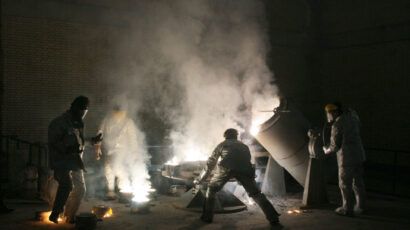
As is usual in times of international conflict or crisis, our readership surged in the two weeks of Israeli and American attacks on Iranian nuclear facilities in June. In fact, two articles about that conflict made the year’s most-read list, “The United States may destroy the Fordow enrichment plant. It won’t make the Iranian nuclear threat go away,” by Richard Nephew received some 430,000 views and Ed Lyman’s “Iran can still build nuclear weapons without further enrichment. Only diplomacy will stop it,” garnered 74,000 views.

A year in review
Nuclear Risk
Back to the Future Atomic Age
In many ways, 2025 resembled Back to the Future, the 1985 film in which an eccentric scientist inadvertently sends his friend back to 1955. Many nuclear developments pointed in the direction of increased risk and instability, reminding us of the dangers of the Cold War–or perhaps that the stability of the post-Cold War era is ending. The United States announced it would build its Golden Dome missile defense system. Israel attacked Iran, targeting military leaders, nuclear facilities, and nuclear scientists. Finally, just months after Japan commemorated the 80th anniversaries of the Hiroshima and Nagasaki bombings, the Prime Minister of Japan told reporters that Japan “should possess nuclear weapons.”
Nuclear threats are back on the front page of many newspapers and making their way back into public discourse. In Hollywood, film directors are again tackling nuclear weapons dynamics in a plethora of new and upcoming releases, including A House of Dynamite. The world is likely entering a new nuclear age, but whether or not our future is marked by a new multi-actor arms race will depend entirely on the choices made in the months and years ahead.



Climate Change
A year of attacks on climate science
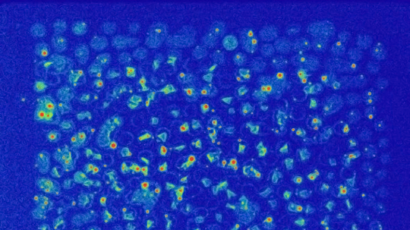
One of the defining themes of 2025, and certainly one most pertinent to climate reporting, was “attacks on science and expertise.” The new US administration cut funding, which threatens the US’ global scientific leadership, removed valuable resources from US government websites (although volunteers developed unofficial versions), and refused to acknowledge the security threats posed by climate change in the National Security Strategy, to name a few. These actions, coupled with a lack of leadership to manage these challenges, have served to increase global climate risks.
Bulletin authors also covered other fascinating areas, including how archaeologists, environmentalists, and energy developers are clashing over the best way to steward ecosystems into the future; wildfires from Athens to California; the environmental impact of the war in Iran; and how scientific reticence is limiting the public's understanding of the speed of climate change.




Disruptive Technologies
How Big Tech is redefining governance and the economy
Big Tech’s influence on, and integration with, US governmental bodies and other sectors of society became abundantly clear this year. From Elon Musk’s DOGE team, which gained access to government databases that stored personal information of millions of people, to AI-assisted surveillance programs, to using Silicon Valley’s “move fast and break things” ethos, large technology corporations with enormous power and influence are permeating global governance structures.
While that reality is concerning, elected leaders and citizens can develop norms, policies, and guardrails to protect societal and democratic values. Here are several pieces that explore the artificial intelligence revolution, and the expanding influence of powerful technology companies.




Biosecurity
A veneer of health that masks an ideology that experts say courts disaster
In 2025, the new US administration made a remarkable course change in public health, supporting an ideology that experts say is courting a health disaster. The Bulletin’s biosecurity reporting closely covered these actions, while also publishing stories on pandemic preparedness and the threats posed by accidents involving pathogens and deliberate misuse of the life sciences. The Bulletin has also been following developments related to “mirror life”, including publishing an article on the dangers of engineering so-called “mirror bacteria,” life forms that are built on the mirror-image of the biomolecules used by life on Earth.




Magazine
Commemorating 80 years
The Bulletin of the Atomic Scientists published its first issue in December 1945, and to celebrate our 80th anniversary, we published a print issue in December 2025, the first since 2008. Entitled “The Bulletin Looks to the Future,” this edition featured top experts of varied perspectives and generations offering views on the future of our four primary coverage areas—nuclear risk, climate change, biological threats, and other disruptive technologies, including artificial intelligence.
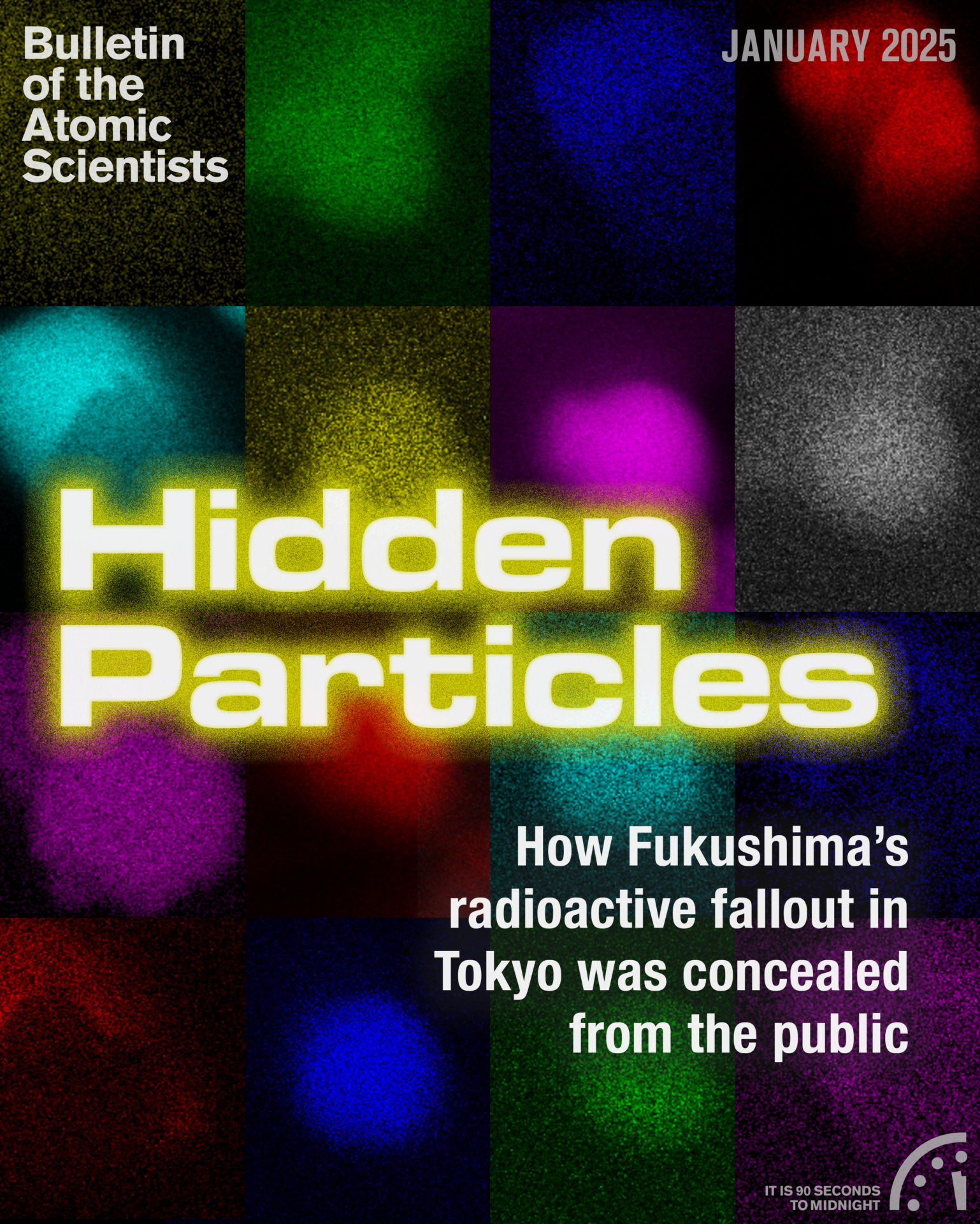
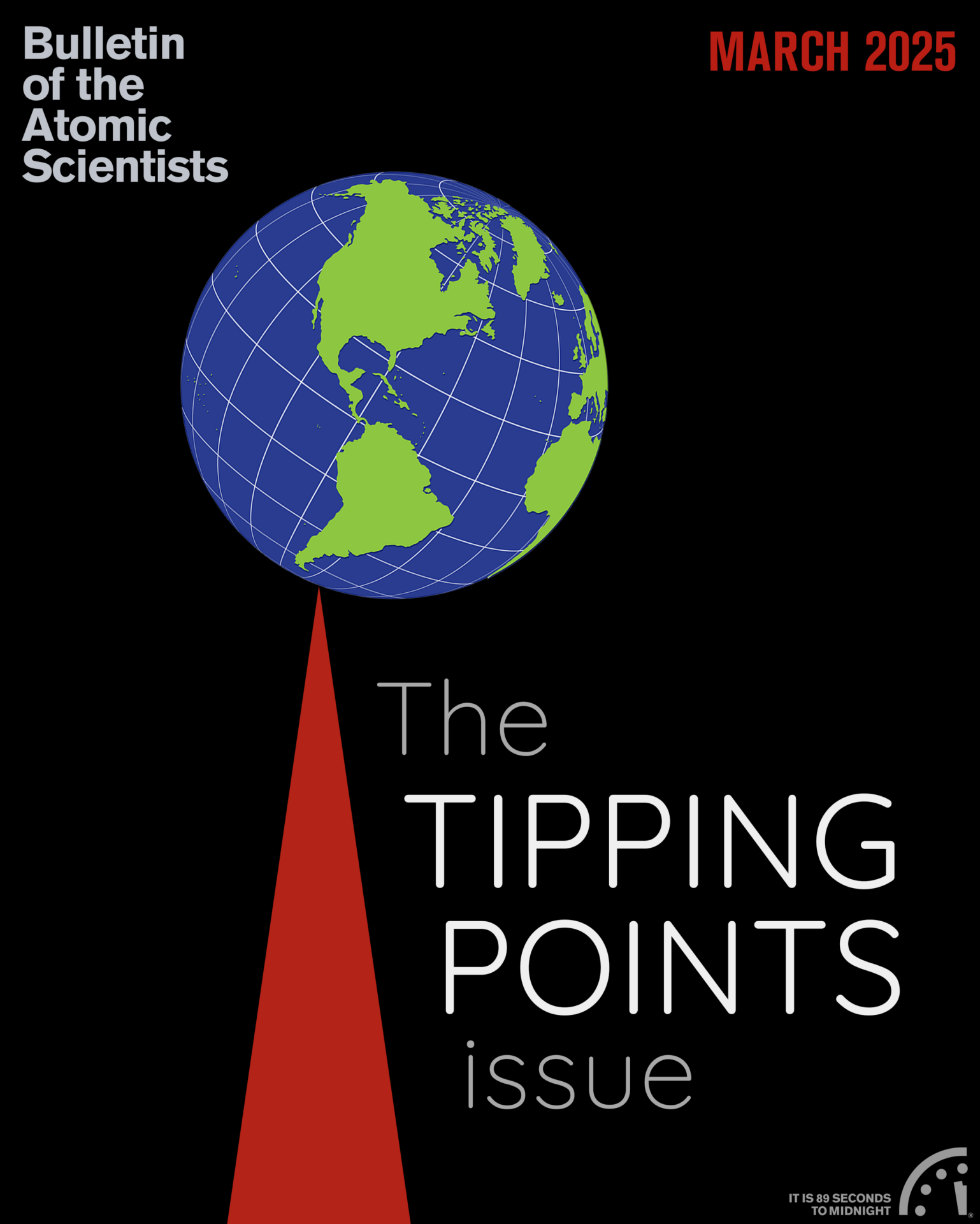
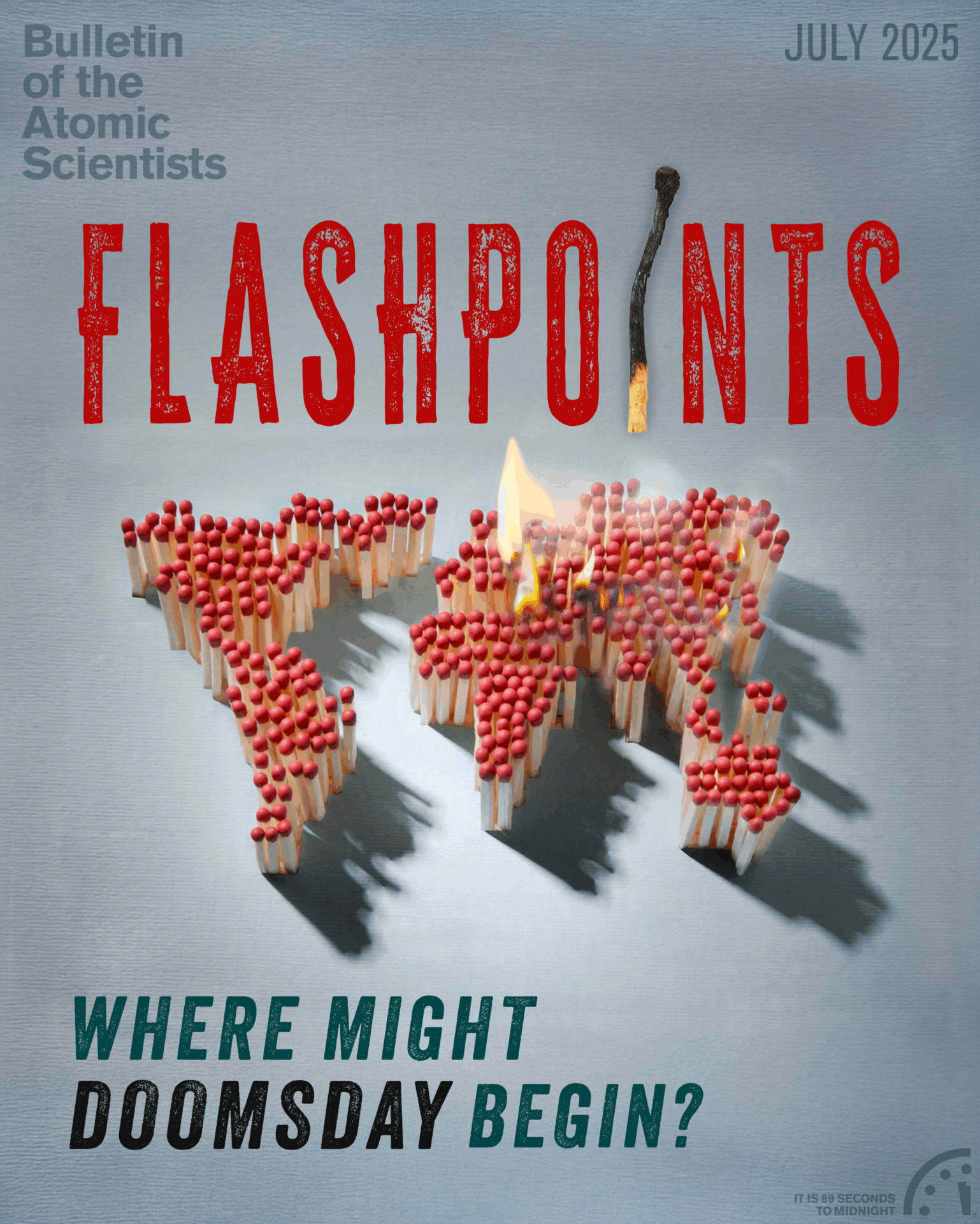
Other 2025 issues explored nuclear materials (January), environmental tipping points (March), pandemics (May), geopolitical flashpoints (July), and the impact of the Trump administration on global order (September). While exploring these themes, the issues covered an array of topics, including solar power, the effect of DOGE cuts on medical research, Russian trolls, cyberstorms, newly found research results from Fukushima, the possibility of annexing Greenland, autocracy and academia, and civilization itself.



Programs & Events
Engaging our community
The Bulletin hosts webinars, convenings, and other events throughout the year to provide an opportunity for supporters to learn from and interact with our writers, noteworthy scientists, and other experts to discuss issues and debate solutions. In 2025, we set (and met) a goal of hosting one webinar per month focused on article content or current events. As a result, we grew the number of programs by 160%. The Bulletin posts most of these events on YouTube, and collectively, they had more than 55k views, 16 times more than the number of views in 2024.

How we might stop (or start) the next pandemic

Beyond the Threshold: The Urgency of Climate Change

Your Data and Your Truth in the AI Era

Kronos Quartet Concert — Nobel Laureate Assembly Declaration for the Prevention of Nuclear War

Experts React: Netflix’s 'A House of Dynamite'
Statistics
Together, we will turn back the Clock
0%
of our website audience is under the age of 35
0M
was contributed to the Bulletin in 2025
0K+
engagements on social media in 20251m 0s
average time spent on the website per active user0+
supporters subscribe to the Bulletin magazine$0K
in magazine revenue in 20250
countries and territories represented among Bulletin website users
0M
reached by Bulletin journalism in 20250K+
subscribe to the Bulletin newsletter0K+
watched Bulletin virtual events in 20250
libraries around the world offer Bulletin content0+
Bulletin articles published each yearMore than 0%
increase in views on our YouTube channel
2025 Rieser Award Recipient
Ethan Beaty
The Bulletin was delighted to announce Ethan Beaty as the 2025 Leonard M. Rieser Award recipient for his September piece, “AI misinformation is threatening emergency communications. Here’s how to fix that.”
“In a textbook example of explanatory journalism, Ethan Beaty lays out how artificial intelligence-generated misinformation has hampered emergency response in a variety of settings—including May 2025 hostilities between India and Pakistan, when a phony audio clip of a Pakistani commander declaring a nuclear alert increased the possibility of nuclear war,” Bulletin Editor-in-Chief John Mecklin said. “Beyond its compelling descriptions of the dangers AI-enhanced misinformation has created during natural and military emergencies, Beaty’s piece lays out a compelling and thoughtful array of actions that governments and social media platforms can take to reduce those threats. The combination of deft, concise explanation and practical solutions exemplifies the type of well-argued and distinctive prose that the Rieser Award is meant to honor.”
Learn more about Leonard M. Riesner and the Bulletin’s Voices of Tomorrow Program.
Doomsday Clock Announcement
Amplifying the Clock Statement
The Bulletin’s Doomsday Clock serves as an important tool to frame conversations around catastrophic risk, and options for reducing those risks. News outlets around the world cover the Clock’s movement. Even before the 2026 announcement, both Popular Mechanics and The Chicago Tribune covered the Doomsday Clock to raise awareness about how it is set and the need for the renewal of New START, respectively. The announcement consistently increases interest in Bulletin content and programs, leading to increased newsletter signups and social media followers.
The Bulletin also engages advocacy organizations about the Doomsday Clock before the announcement to share outreach materials and provide ideas about using the Doomsday Clock in their work. The efforts paid off with social posts, email campaigns, blogs, op-eds, and LTEs from groups including Ploughshares, Council for a Livable World, Center for Arms Control and Non-Proliferation, Arms Control Association, ICAN, Back from the Brink, Nuclear Threat Initiative, Future of Life Institute, Campaign for Nuclear Disarmament, and Physicians for Social Responsibility.
0
first month earned-media stories0
first month YouTube views0
first month various Doomsday Clock pageviewsWorldwide media sampling

Conversations Before Midnight
Debating the nature of AI and its potential impacts on our collective future
Each year, the Bulletin hosts Conversations Before Midnight, an important forum for solutions-focused dialogue with community leaders in science, policy, business, and philanthropy on the defining challenges of our time: nuclear risk, climate change, and disruptive technologies.
This year’s event, held on November 12, reflected on the Bulletin’s 80-year history and explored artificial intelligence as an existential risk. The discussion featured Blaise Agüera y Arcas (Vice President and Fellow at Google and founder of Paradigms of Intelligence), Jann Tallinn (founding engineer of Skype and Kazaa and member of the Bulletin’s Board of Sponsors), and Collin Van Son (the Bulletin’s 2024 Leonard M. Rieser Award winner). Each shared their thoughts and predictions, both positive and negative, on how AI impacts our society, environment, workforce, creativity, and global security.
The evening raised more than $235,000 to support the Bulletin’s independent, trusted journalism and programming.
2025 Sponsors
Platinum
Governor Jerry Brown and Anne Gust Brown
Lee Francis and Michelle Gittler
Gold Sponsors
The Crown Family

David Kuhlman and Martha Esch
Donald Maclean

William and Eleanor Revelle
Joan and James Shapiro
Silver Sponsors
John and Carol Balkcom
Alvin H. Baum Family Fund
Kennette Benedict and Robert Michael
Robert LoPrete and David Germaine
Steve Ramsey and Ann Jones
Richard and Ellen Sandor Family Foundation
Bronze Sponsors
Alexandra Bell
Misho Ceko and Tara Swords
Mary Patricia Dougherty
Stephanie Woodson
In Memoriam
Reflecting on the legacies of scientists who helped protect our world

David Baltimore, Bulletin Board of Sponsors member
During his 87 years, David Baltimore advanced the fight against cancer and HIV and made numerous other contributions to science. In 1975, Baltimore won a Nobel Prize for discovering that information from cells flowed from RNA to DNA, when previously it was thought that the information only went in the opposite direction. Overturning this so-called “central dogma” was a major step forward in molecular biology and proved vital in our understanding of retroviruses and viruses. This research is critical in the treatment of many diseases and is used in various cutting-edge treatments.
An academic and policy leader, he served as president of two leading universities, a member of the National Academy of Sciences and the National Academy of Medicine, and president of the American Association for the Advancement of Science. He co-chaired the National Academy of Sciences committee on a National Strategy for AIDS in the 1980s and led the National Institutes of Health AIDS Vaccine Research Committee in the 1990s. As a member of the Bulletin’s Board of Sponsors, he helped grow the Bulletin’s capacity and commitment to covering biosecurity issues.
David Relman, a member of the Bulletin’s Science and Security Board, said, “He took seriously the role that scientists must play in articulating the societal, ethical, and legal implications of their work. As part of this commitment, he led many community-building efforts that brought together natural scientists, social scientists, and legal scholars and practitioners to address challenges at the interface of science, law, and ethics. I was fortunate to be included in some of these efforts. David was an empathetic, forward-leaning, great listener and big thinker, looking for practical solutions to societal problems.”

Philanthropy–strengthening public trust in science
Robert Socolow is a professor emeritus in the Department of Mechanical and Aerospace Engineering at Princeton University and a longtime member of the Bulletin’s Science and Security Board (SASB). Dr. Socolow earned his Ph.D. from Harvard University, with a focus on theoretical high-energy physics. We spoke with him about why rigorous science remains essential to humanity’s future and why he continues to invest his expertise, time, and resources in advancing the Bulletin’s mission.

With gratitude
For our generous donors
The Bulletin of the Atomic Scientists is profoundly thankful for our donor community—people who believe that science must serve humanity. Your generosity has sustained the Bulletin since 1945.
We offer our heartfelt gratitude to the board leaders, individuals, and institutions who supported us between January 1, 2024, and December 30, 2025.
Financial Overview
Financial position discussion and analysis
Thanks to the dedication and generosity of our donors and supporters, the Bulletin is proud to share an overview of our finances and to report that we are in a secure, stable position as we continue our vital mission.
We are deeply grateful to the individuals, corporations, and foundations whose generosity makes our work possible. In 2025, cash and in-kind contributions totaled nearly $2.8 million, sustaining the Bulletin’s mission-critical journalism and programming. This philanthropic support is the cornerstone of everything we do, enabling us to remain an independent, trusted voice on the issues that matter most.
We are also pleased to report that our independent auditors, Miller Cooper LLP, have once again issued an “unmodified” opinion, the highest assurance level available, reflecting our commitment to rigorous financial stewardship. The complete audited financial statements for the fiscal year ended June 30, 2025, as well as the annual 990 informational tax filing, are available upon request.
The Bulletin’s financial position remains strong. We carefully steward the resources entrusted to us: the majority of our assets are invested for long-term impact, bolstered by multi-year grants and board-approved reserves that ensure we can weather an unpredictable funding environment. The Bulletin invests in a conservative portfolio of assets across numerous investment classes that support growth and generate income for operations. These balances provide operating stability in an uneven revenue environment.
Looking ahead, we are expanding our programmatic work on existential risks—and your continued support is central to that growth. The Bulletin’s Board of Governors, Science and Security Board, as well as the Advancement, Marketing/Communications, and Finance Committees are working collaboratively to broaden our reach and ensure the Bulletin remains an independent, trusted source of scientific insight for decades to come.
If you have any questions about this report or need additional financial information, please feel free to contact the Bulletin at [email protected].
None of this would be possible without you. We sincerely thank you for your generous, sustained commitment to the Bulletin’s mission. Your support is what keeps us independent and hopeful about the future.
Sincerely,
Alexandra Bell
