Follow our Iran coverage

DIGITAL MAGAZINE

May 2026

DIGITAL MAGAZINE

May 2026

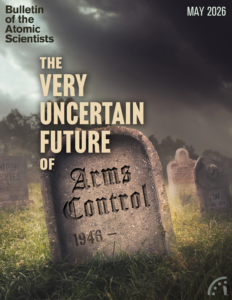
Cover design by Thomas Gaulkin
Source art by fegregory/depositphotos.com

white doves in flight against background of blue sky

Introduction: Arms control is dead. Long live arms control

No one knows for sure what will follow the demise of the arms control architecture built over the last six decades. But here are some strong possibilities.
white doves in flight against background of blue sky

Introduction: Arms control is dead. Long live arms control

No one knows for sure what will follow the demise of the arms control architecture built over the last six decades. But here are some strong possibilities.

Tom Nichols on the arms control process, in the second Trump era

Self-described as “old-school about the Constitution,” Atlantic columnist Tom Nichols delves into the tumultuous current political situation in the United States and its impact on US foreign policy, and what that means for the prospects for new nuclear arms control agreements. In this interview, Nichols gives his opinion on these and many other topics, and whether the world can return to what he terms the “golden age of arms control” when Ronald Reagan and Mikhail Gorbachev were at the helm.
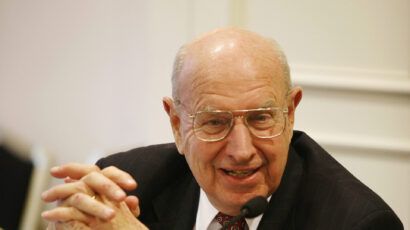
Thomas Pickering portrait

The potential for a new Iran agreement and the future of nuclear arms control: Interview with Thomas Pickering

What happened behind the scenes in the lead up to the 2015 Iran Deal, what could happen now, and what it portends for nuclear arms reduction.
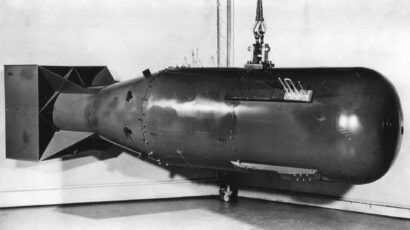
atomic bomb of Little Boy design

The past and future of deterrence is arms control

Conducting nuclear deterrence is far riskier without formal arms control frameworks, but the work of calibration, communication, and adjustment must continue.
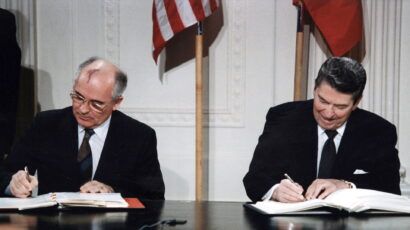
Reagan and Gorbachev signing INF treaty

“Arms control is not about making agreements with your friends”—Interview with Jane Vaynman

Arms control in a post-Trump administration world, and under conditions of considerable technological change, would be very much a work in progress. But this is not the only time in history where profound technological and social changes have occurred. The goal now is to do the thinking—about what arms control should look like, and for what threats—so that when conditions do shift, we’re positioned to act on them.
Treaty of Paris oil painting

Former assistant secretary Mallory Stewart on informal limits, behavioral arms control, and risk reduction

Mallory Stewart, former US assistant secretary for arms control, on what forms and mechanisms of risk reduction can maintain strategic stability in a multipolar world. Stewart describes the challenges posed by the new threats from emerging technologies, and how much the lost expertise in the US administration may affect the capacity of the United States to design and develop treaties.
world's oldest treaty

Arms control, risk reduction, and the art of the possible

Over the past four to five decades, the world has become used to having nuclear arms control treaties and the limitations they impose on countries’ arsenals. By limiting vertical proliferation and its destabilizing effects, they have made everyone safer. However, in the process, it has been forgotten that the nuclear arms control regime—like the interwar naval arms control regime before it—was created as a reaction to a costly arms race, not because the United States and the Soviet Union simply had admirable foresight.
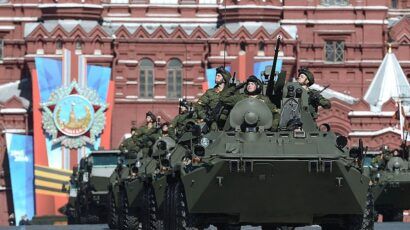
St Basil Cathedral, Red Square, Moscow, Russia

The view from Moscow: The future of nuclear arms control exists, but the path is hard

The future of arms control in a multipolar, post-New START world: Are multilateral arms treaties even possible?
Mao portrait at Tiananmen Square, Beijing, China

Washington should pursue trilateral arms control

The expiration of New START has left the world without enforceable constraints on nuclear arsenals for the first time since the 1970s. Three developments define today’s environment: the collapse of bilateral US-Russia agreements; intensifying great power rivalry; and the emergence of China as a third nuclear superpower projected to reach 1,500 warheads by 2035. Together, these shifts render traditional bilateral arms control frameworks structurally inadequate.
Colt revolver

Beyond managed rivalry: The non-nuclear-weapon state perspective on the future of arms control

Non-nuclear weapon states should support immediate risk-reduction and verification measures without romanticizing arms control—while resisting efforts to detach such measures from longer-term disarmament obligations.
a constellation of Earth-observing satellites

The emerging AI battlespace: Counter-AI threats to AI-powered satellite remote sensing analysis

Satellite remote sensing is increasingly recognized as a critical tool for arms control and nonproliferation missions. Recently, there has been growing interest in leveraging artificial intelligence (AI) and machine learning to enhance analytical efficiency. However, this integration introduces significant risks due to the susceptibility of AI models to counter-AI attacks that may compromise their accuracy, reliability, and security.
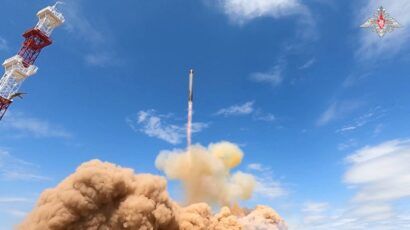
A rocket launches into a blue sky, leaving behind a trail of smoke and dust. A red and white launch tower stands on the left.

Russian nuclear weapons, 2026

Russia's nuclear modernization program has faced significant challenges and delays. We estimate that Russia now possesses about 4,400 nuclear warheads.

Tom Nichols on the arms control process, in the second Trump era

Self-described as “old-school about the Constitution,” Atlantic columnist Tom Nichols delves into the tumultuous current political situation in the United States and its impact on US foreign policy, and what that means for the prospects for new nuclear arms control agreements. In this interview, Nichols gives his opinion on these and many other topics, and whether the world can return to what he terms the “golden age of arms control” when Ronald Reagan and Mikhail Gorbachev were at the helm.
Thomas Pickering portrait

The potential for a new Iran agreement and the future of nuclear arms control: Interview with Thomas Pickering

What happened behind the scenes in the lead up to the 2015 Iran Deal, what could happen now, and what it portends for nuclear arms reduction.
atomic bomb of Little Boy design

The past and future of deterrence is arms control

Conducting nuclear deterrence is far riskier without formal arms control frameworks, but the work of calibration, communication, and adjustment must continue.
Reagan and Gorbachev signing INF treaty

“Arms control is not about making agreements with your friends”—Interview with Jane Vaynman

Arms control in a post-Trump administration world, and under conditions of considerable technological change, would be very much a work in progress. But this is not the only time in history where profound technological and social changes have occurred. The goal now is to do the thinking—about what arms control should look like, and for what threats—so that when conditions do shift, we’re positioned to act on them.
Treaty of Paris oil painting

Former assistant secretary Mallory Stewart on informal limits, behavioral arms control, and risk reduction

Mallory Stewart, former US assistant secretary for arms control, on what forms and mechanisms of risk reduction can maintain strategic stability in a multipolar world. Stewart describes the challenges posed by the new threats from emerging technologies, and how much the lost expertise in the US administration may affect the capacity of the United States to design and develop treaties.
world's oldest treaty

Arms control, risk reduction, and the art of the possible

Over the past four to five decades, the world has become used to having nuclear arms control treaties and the limitations they impose on countries’ arsenals. By limiting vertical proliferation and its destabilizing effects, they have made everyone safer. However, in the process, it has been forgotten that the nuclear arms control regime—like the interwar naval arms control regime before it—was created as a reaction to a costly arms race, not because the United States and the Soviet Union simply had admirable foresight.
St Basil Cathedral, Red Square, Moscow, Russia

The view from Moscow: The future of nuclear arms control exists, but the path is hard

The future of arms control in a multipolar, post-New START world: Are multilateral arms treaties even possible?
Mao portrait at Tiananmen Square, Beijing, China

Washington should pursue trilateral arms control

The expiration of New START has left the world without enforceable constraints on nuclear arsenals for the first time since the 1970s. Three developments define today’s environment: the collapse of bilateral US-Russia agreements; intensifying great power rivalry; and the emergence of China as a third nuclear superpower projected to reach 1,500 warheads by 2035. Together, these shifts render traditional bilateral arms control frameworks structurally inadequate.
Colt revolver

Beyond managed rivalry: The non-nuclear-weapon state perspective on the future of arms control

Non-nuclear weapon states should support immediate risk-reduction and verification measures without romanticizing arms control—while resisting efforts to detach such measures from longer-term disarmament obligations.
a constellation of Earth-observing satellites

The emerging AI battlespace: Counter-AI threats to AI-powered satellite remote sensing analysis

Satellite remote sensing is increasingly recognized as a critical tool for arms control and nonproliferation missions. Recently, there has been growing interest in leveraging artificial intelligence (AI) and machine learning to enhance analytical efficiency. However, this integration introduces significant risks due to the susceptibility of AI models to counter-AI attacks that may compromise their accuracy, reliability, and security.
A rocket launches into a blue sky, leaving behind a trail of smoke and dust. A red and white launch tower stands on the left.

Russian nuclear weapons, 2026

Russia's nuclear modernization program has faced significant challenges and delays. We estimate that Russia now possesses about 4,400 nuclear warheads.

Cover design by Thomas Gaulkin
Source art by fegregory/depositphotos.com

Subscribe now

We've relaunched the Bulletin's award-winning digital magazine. Get access to every issue and our archive going back to 1945.
Magazine archive

May 2025 cover of the Bulletin of the Atomic Scientists, featuring an illustration of the Earth wearing a surgical mask above the headline 'How to Stop the Next Pandemic'.
Albert Einstein in Washington, D.C., between 1921 and 1923. Harris & Ewing, photographers. Courtesy of the Library of Congress. https://www.loc.gov/pictures/item/2016885961/

Premium subscribers can read the complete Bulletin of the Atomic Scientists’ archive, which contains every article published since our founding in 1945.

This archive was created in honor of John A. Simpson, one of the Bulletin’s principal founders and a longtime member of its Board of Sponsors. This searchable archive provides exclusive online access to original interviews and commentary by luminaries like Albert Einstein, J. Robert Oppenheimer, Ruth Adams, John F. Kennedy, Stephen Hawking, Christine Todd Whitman, US Secretary of Defense William J. Perry, and multiple Nobel laureates.