Deny, delay, downplay: How governments hide climate change intelligence
By Rachel Santarsiero | Article | February 23, 2026
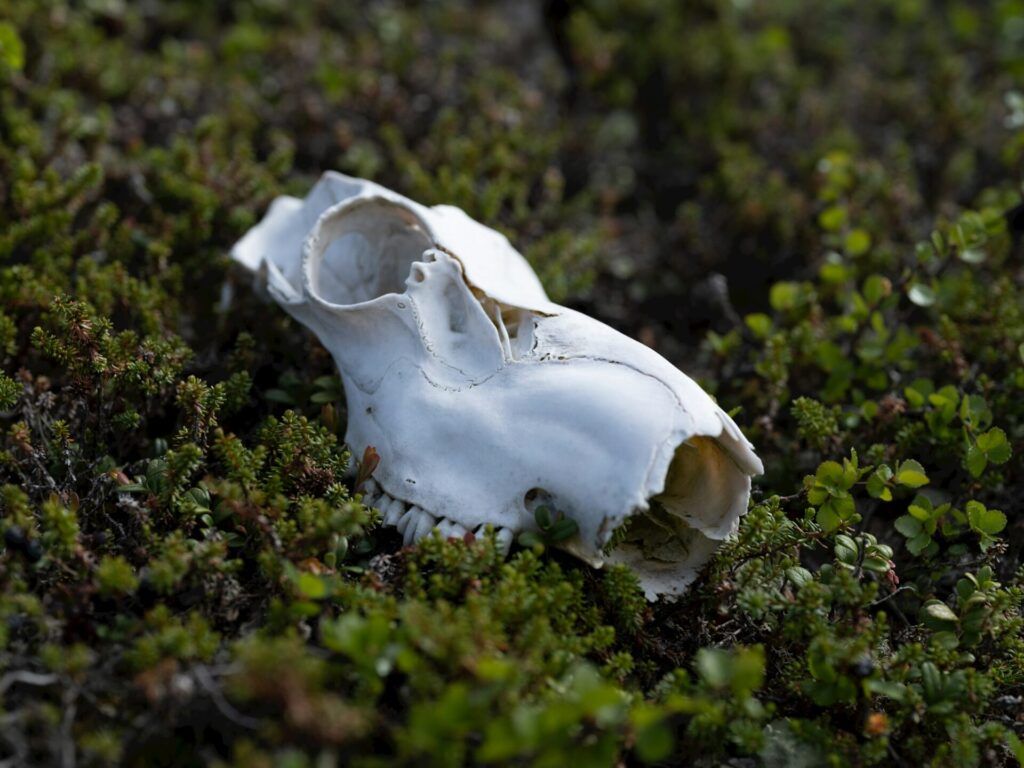 Rod Schoonover, a former US intelligence official at the State Department’s Bureau of Intelligence and Research and former chair of the National Intelligence Council, said the UK assessment “should be lauded” for its focus on biodiversity loss and ecosystem collapse. (Photo by Svein Sund on Unsplash)
Last month, the United Kingdom issued a warning that global biodiversity loss and ecosystem collapse could threaten the island nation’s national security, and indeed its very prosperity. According to a national security assessment commissioned by the UK Department of Environment, Food and Rural Affairs, or DEFRA, there is a high likelihood that “every critical ecosystem is on a pathway to collapse,” a cascading effect that could have major implications for the nation’s food security.
But the 14-page report, entitled “Global Biodiversity Loss, Ecosystem Collapse and National Security,” made headlines, not just for its alarming contents, but for its omissions.
The assessment, which The Times and The Guardian reported was put together with the help of the intelligence coalition that oversees spy agencies MI5 and MI6, was originally slated to be published in the fall of 2025, but was held by Downing Street for being “too negative.” It wasn’t until Green Alliance, an environmental think tank, filed a Freedom of Information request for the report that DEFRA posted the assessment to its website at all, although notably without the government pomp of a press release or public announcement.
The day after the landmark report hit DEFRA’s website, The Times reported it had seen an internal, unabridged version of the assessment that included warnings much graver than the public-facing report: overwhelming mass migration to Europe, increasingly polarized and populist politics in the UK, NATO conflicts over collapsing food production in Russia and Ukraine, and escalating tensions between China, India, and Pakistan that could potentially lead to nuclear war.
The UK media slammed its government for covering up the existence of the unabridged version, and for delaying the publication of the assessment in the first place. But the government responded to the public criticism with a shrug. “The assessment was developed through cross-government analytical and clearance processes, including consideration of how and when it should be published,” a DEFRA spokesperson told me over email. “It is being published now following the completion of those processes in line with the Government’s commitment to transparency and informed decision-making.”
Western governments have a track record of suppressing climate change intelligence assessments. Take the US spy community, for example. Despite decades of tracking and analyzing national security risks posed by climate change and making many of those intelligence products publicly available, the Office of the Director of Intelligence insists that it must keep a 2008 National Intelligence Assessment on the “National Security Implications of Global Climate Change to 2030” classified. Former intelligence officials have testified publicly about the report, cited the report in literature, and supported calls for the report’s declassification, to no avail. After almost two decades, the report remains classified to this day at the confidential level, the lowest level of national security secrecy.
More recently, in 2022, Australia’s Prime Minister Anthony Albanese asked the nation’s most senior intelligence chief Andrew Shearer to personally lead a review of security threats posed by the climate crisis. Months later, Albanese refused to release the report or even say when it had been completed. Defense spokesperson for Australia’s Green Party David Shoebridge dubbed the Aussie government the “cult of secrecy in Canberra.” Since then, Albanese has continued to reject calls to make “even a saniti[z]ed version of the assessment public.”
Considering this pattern of climate denialism and suppression within the Global North intelligence apparatus, this most recent incident for the Brits could be more complicated still.
In an interview, Rod Schoonover, a former US intelligence official at the State Department’s Bureau of Intelligence and Research and former chair of the National Intelligence Council, said the UK assessment “should be lauded” for its focus on biodiversity loss and ecosystem collapse. To him, climate change security risks are (appropriately) receiving long overdue attention, but less is being given to the destabilization of Earth systems. “I was very heartened…to see an official voice like the UK take on ecological security, which is broadening and needs to be taken seriously,” Schoonover said. “I would love to see other nations follow suit.”
Schoonover, the co-founder of the Ecosecurity Council and adjunct professor at the School of Foreign Service at Georgetown University, was “gratified” to see his own 2021 report on ecological security cited in the UK’s assessment. That report, “The Security Threat That Binds Us,” calls out global ecological disruption as “the 21st Century’s most underappreciated security threat.”
Ecological disruption is almost impossibly complicated and interconnected: Fundamental changes to Earth systems caused by humans are triggering rapid and potentially irreversible transformations to the composition of the atmosphere, overloaded and depleted soils, toxified and acidified oceans, and reconfigured freshwater systems, to name just a few impacts. The biosphere, which encompasses all of Earth’s living humans, creatures, plants, and microorganisms, is destabilizing rapidly and unraveling “the ecological fabric on which human society depends.” These kinds of changes are inextricably linked to ecological security—an umbrella approach to human, national, and global security that follows such chaotic disruption.
Former intelligence officials like Schoonover and Erin Sikorsky, a career-CIA official and now director of the Center for Climate Security, have been vocal critics of past US intelligence reports that ignore or downplay the cascading set of risk factors posed by climate change and Earth system collapse. Reports like the 2019 Worldwide Threat Assessment, for example, buries any mention of ecological disruption “towards the back of the document,” and even the 2021 National Intelligence Estimate on Climate Change, published under Biden, “undersells” the risk.
In many ways, the abridged UK assessment from January sets itself apart by embracing the complex security threats posed by ecosystem collapse. “Nature underpins our security, prosperity, and resilience and understanding the threats we face from biodiversity loss is crucial to meeting them head on,” DEFRA’s spokesperson told me. “Understanding the security risks arising from biodiversity loss and ecosystem degradation is critical to strengthening the UK’s long-term resilience…The findings of this report will inform the action we take to prepare for the future.”
But the rigor of the DEFRA assessment doesn’t negate its bungled rollout, nor the public backlash that ensued. “Any pull back from transparency is a mistake from any government,” Schoonover said. “It’s certainly not good in this environment.” Of course, there are perfectly legitimate reasons for keeping classified intelligence classified, such as protecting genuine national security concerns or not wanting to identify specific sources and methods used in intelligence gathering. To put this in perspective, the Office of the Director of National Intelligence creates both a classified and unclassified version of its Annual Threat Assessment. However, Schoonover believes the citizens of the United Kingdom “have every right to petition their government” over its lack of transparency.
“I suspect that the intelligence community did not make the determination that this [report] should not go forward. It feels like [it came from] someone higher up,” he says, alluding to the political forces at No. 10 Downing Street. “The UK document seems political…Maybe it’s less about the suppression of information and…more about wan[ting] to avoid embarrassment.”
Here, Schoonover pulls at an important thread: It’s been well documented that intelligence agencies will sometimes withhold information to shield themselves from public shaming or awkwardness. The still-classified 2008 National Intelligence Council report is a perfect example of this phenomenon. In a 2021 Bulletin article, Thomas Fingar, the chair of the council at that time, stated that report “was kept classified because the United States didn’t want ambassadors from countries identified as especially vulnerable to climate change to start calling and asking for resources to help with mitigation and adaptation earlier than they would otherwise.”
A similar instinct could very well be at play in the United Kingdom right now, with some outlets reporting that the prime minister may be withholding the unabridged DEFRA report to avoid public criticism that the government isn’t doing enough to stave off the worst effects of biodiversity loss and ecosystem collapse.
Unfortunately, any political motivations behind the decision to delay or withhold the unabridged biodiversity report are happening against a backdrop of failed global environmental commitments. Nations are pulling back on emission reductions targets or missing them altogether, countries are flouting contributions to global climate change funds for developing countries, and the United States has withdrawn from the landmark Paris Agreement for a second time, and abandoned the overarching diplomatic infrastructure of the United Nations Framework Convention on Climate Change.
When nations with well-resourced intelligence gathering services, like the United Kingdom and Australia, choose to shield their citizens from the very real impacts of planetary warming and ecological disruption, they risk aligning themselves with climate denialism efforts like those occurring in the United States, such as current National Intelligence Director Tulsi Gabbard’s decision to excise any mention of climate change from the spy community’s most recent Annual Threat Assessment.
“The job of the intelligence community is to assess risk and issue advanced warning. If you artificially put blinders on, you are artificially narrowing the threat landscape,” said Schoonover. “The security doctrine that [The Trump] administration is really leaning into is…intentionally ignorant,” he adds. “It’s destabilizing the security community and making the security community more political.”
In response to the distorted security doctrine’s impact on the public, Schoonover concludes with an existential question of his own: “American Citizens who are buried in mudslides in North Carolina, or the people whose houses, livelihoods, and shelters were burnt in the mountains of Los Angelos County by wildfires. Do they not deserve consideration in the Annual Threat Assessment? It begs the question, whose security are we talking about?”
Perhaps other countries like the United Kingdom can heed his warning, even if the United States won’t right now.
Together, we make the world safer.
The Bulletin elevates expert voices above the noise. But as an independent nonprofit organization, our operations depend on the support of readers like you. Help us continue to deliver quality journalism that holds leaders accountable. Your support of our work at any level is important. In return, we promise our coverage will be understandable, influential, vigilant, solution-oriented, and fair-minded. Together we can make a difference.
Get alerts about this thread
0 Comments
Oldest

Rachel Santarsiero
Rachel Santarsiero is the director of the National Security Archive’s Climate Change Transparency Project in Washington, D.C., where she gets US ... Read More