Trump spending billions to keep coal alive and kill clean energy
By Dharna Noor | Analysis | July 17, 2026
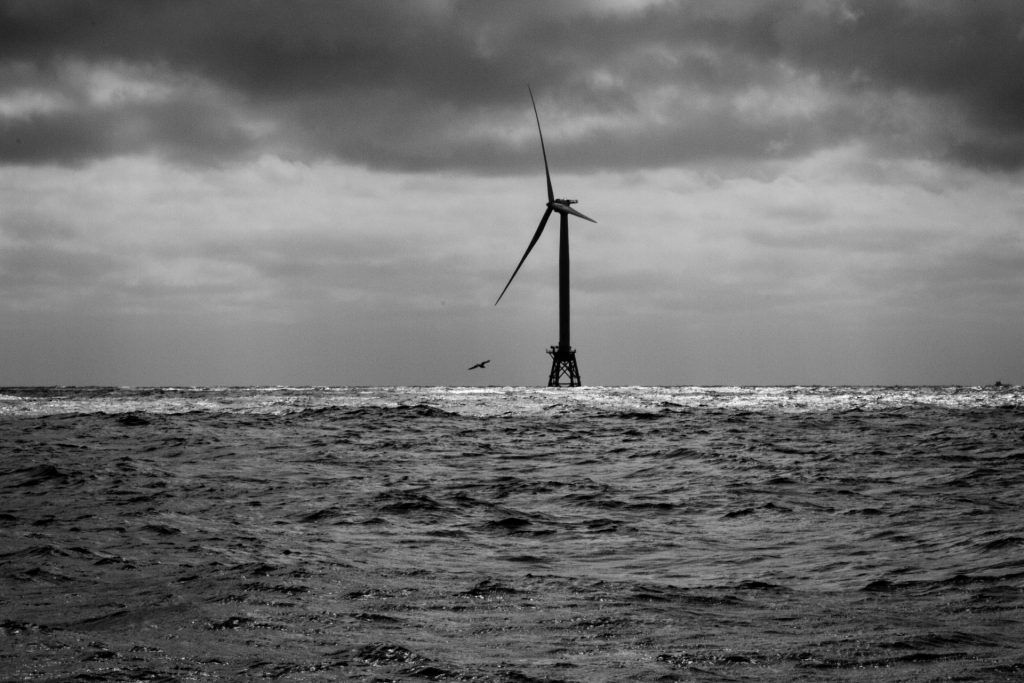 Block Island Wind Farm, the first offshore wind farm in the United States. (Photo by Gary Norton / US Dept of Energy)
Editor’s note: This story was originally published by The Guardian. It appears here as part of the Climate Desk collaboration.
The Trump administration has directly spent $2.7 billion of taxpayer money on its crusade against wind power while pouring $1.125 billion into boosting coal, which critics say is pushing up Americans’ bills.
They say the moves are evidence that the president aims to serve fossil-fuel companies like those which donated record sums to his presidential campaign, rather than the working-class Americans to whom he pledged to lower energy bills and other costs.
“Trump is getting Americans coming and going,” said Jay Inslee, the former governor of Washington state and a Trump detractor. “He’s forcing higher power bills on them by blocking clean energy, then he’s fattening the wallets of his cronies—all with billions of our tax dollars.”
The Department of the Interior has, since March, struck four deals with energy companies, paying them to cancel a total of eight offshore wind projects and pledge to invest in fossil-fuel power. The first such agreement was announced in March with the French energy company TotalEnergies, sparking a lawsuit from seven Democratic-controlled states that alleged it was an illegal use of taxpayer money.
The latest deal with Duke Energy was announced late last month.

The president has derided wind energy as “ugly” and “disgusting”, and called efforts to slash planet-warming pollution a “scam”. Previous administrations have canceled or delayed energy projects via permitting, litigation or regulatory changes, but there is no precedent for the federal government directly paying developers to relinquish legally acquired offshore wind leases, said Jenny Rowland-Shea, senior director for conservation policy at the liberal thinktank the Center for American Progress.
“They are trying to snuff out an entire form of energy,” she said. “And it’s at a time when the United States needs more energy … as people’s rates are going up for electricity, as we see datacenters gobbling up more energy.”
As it has worked to suppress offshore wind, which experts say should be a key part of any climate plan, the Trump administration has bolstered coal, the dirtiest and most expensive fossil fuel. In September, the Department of Energy announced it would spend $625 million to “expand and extend the life of” coal-fired power plants, allocating $350 million to “modernize” coal plants, $175 million to fund coal projects powering rural communities, and $50 million to upgrade wastewater management systems to extend coal plants’ lifespans.
Last month, the agency also set aside up to $500 million from the Defense Production Act to “expand and reinvigorate” the capacity of 13 coal plants, and to help build a coal export terminal in Oakland, California. A week later, the department announced an additional $3.6 million to “refurbish or retrofit” nine existing coal plants.
In an email, an energy department spokesperson, Ben Dietderich, said the administration is “proud” of its efforts to boost coal.
“Before President Trump ended the Green New Scam, taxpayers paid the bill for trillions of dollars of so-called green energy energy subsidies,” Dietderich wrote, saying this resulted in the “premature shutdown” of fossil fuel plants, higher energy costs and increased blackout risk.
“It’s worth noting that states with their own anti-coal and gas policies experienced the highest price increases during that time period,” he said.
There is evidence that renewables can lower energy costs.
Reached for comment, a White House spokesperson, Taylor Rogers, said officials were “not spending taxpayer dollars on these deals”.
“The administration is returning the money that companies bid on offshore wind projects that are unable to be built due to national security concerns, and those companies are voluntarily redirecting those returned bid amounts to energy projects that will provide affordable, reliable, and secure energy for American families and businesses,” she said. “The reality is that the Biden administration lured companies into these projects with the promise of millions of taxpayer dollars in subsidies to make these offshore wind projects viable.”
But money from energy leases on public lands and waters goes into public accounts, said Rowland-Shea.
“They can use the word return, but they are paying the companies not to produce this energy or to give taxpayers what was promised,” she said. The Biden administration indeed made subsidies available for offshore wind, but fossil fuels have long been subsidized by federal administrations, she noted.
The Guardian has also contacted the Interior Department for comment.

Together, we make the world safer.
The Bulletin elevates expert voices above the noise. But as an independent nonprofit organization, our operations depend on the support of readers like you. Help us continue to deliver quality journalism that holds leaders accountable. Your support of our work at any level is important. In return, we promise our coverage will be understandable, influential, vigilant, solution-oriented, and fair-minded. Together we can make a difference.
Keywords: Trump, climate change, climate crisis, global warming, offshore wind, renewables, wind power
Topics: Climate Change
Get alerts about this thread
0 Comments
Oldest

Dharna Noor
Dharna Noor is a fossil fuels and climate reporter at The Guardian US. ... Read More