Editor’s note: This is part of an “experts comment” series on the expiration of New START.
With the New Strategic Arms Reduction Treaty (New START) expiring this week, remedial measures can be adopted that would significantly benefit global strategic stability. These include the United States and Russia announcing their de facto adherence to the treaty’s central numerical limits. But this measure may not necessarily be realized.
The United States withdrew from the Anti-Ballistic Missile Treaty in 2001 and from the Intermediate-Range Nuclear Forces Treaty in 2019. After these decisions, the United States and Russia did not agree upon substantive remedial measures regarding the two treaties. It is also likely to be extremely difficult to agree on remedial measures after New START expires.
Efforts to control nuclear arms, either bilaterally or multilaterally, are facing unprecedented challenges. This is not merely an issue of individual treaties; it stems from a range of causes. Nuclear powers must now consider broader and more audacious initiatives to advance arms control.
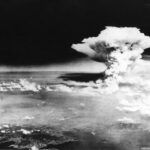
First, global discussions and education efforts must be promoted to raise awareness of the dangers of nuclear war and to restore a sense of urgency to the issue of nuclear arms control. Some decision-makers have too casually withdrawn from existing agreements, and these decisions only increase the risk of nuclear war further. The Bulletin’s Clock now stands at 85 seconds to midnight, which signals the extreme danger of the current moment. The international arms control community must, therefore, research and communicate about the severe consequences of nuclear war to build momentum.
In late 2024, the UN General Assembly decided to set up an independent Scientific Panel on the Effects of Nuclear War. The panel is expected to produce a report that explains the broad physical effects and societal consequences of nuclear war on different scales. More such efforts are needed to better educate decision-makers about the risks and consequences of nuclear war, which will make them more willing to adopt an approach of arms control to address security issues. These efforts should also raise awareness among the public of the dangers of nuclear war, so that arms control policies gain wider support.
A greater emphasis should also be placed on the economic rationale for arms control. Unlike an arms race, arms control reduces costs, thereby conserving resources and fostering economic development. As economic competition becomes a growing priority, reducing military spending can be considered a compelling justification for arms control—whether this comes through international treaties or voluntary restraint.
The international arms control community should work on more persuasive arguments to help the public and policymakers understand how arms races waste resources. This, too, will help build momentum for arms control.
In addition, nations must be encouraged to cooperate and coordinate with each other to better address the security challenges posed by non-state actors. Traditionally, arms control focused on coordinating military relations between sovereign states to alleviate security dilemmas. But after nuclear terrorism became a major concern for the international community in the early 2000s, nations worldwide launched multiple initiatives to establish new nuclear security mechanisms, including the UN 1540 Committee, the International Convention for the Suppression of Acts of Nuclear Terrorism, and the Nuclear Security Summits. Nuclear powers have since then engaged in extensive cooperation on this issue. In 2018, for instance, they and other nations set aside their disagreements and collaborated to successfully remove the last known piece of highly enriched uranium from Nigeria.
Emerging technologies, including cyber technology and artificial intelligence, could interact with nuclear weapons and increase the risk of nuclear war even further. Within these technological domains, even individual technicians and laboratories can carry out activities that could have implications for international security. Here, too, the international community must develop cooperative frameworks to govern the actions of non-state actors and prevent them from using emerging technologies to increase the risk of nuclear conflict. Such cooperation would not only guard against new nuclear risks but also foster mutual trust and strengthen communication channels necessary in any crisis.
As international arms control faces serious difficulties, the community of experts and advisors must not only consider remedial measures but also take more fundamental and comprehensive initiatives to create momentum in nuclear arms control.
Together, we make the world safer.
The Bulletin elevates expert voices above the noise. But as an independent nonprofit organization, our operations depend on the support of readers like you. Help us continue to deliver quality journalism that holds leaders accountable. Your support of our work at any level is important. In return, we promise our coverage will be understandable, influential, vigilant, solution-oriented, and fair-minded. Together we can make a difference.
Keywords: China, New START, New START expires, Russia, United States, arms control
Topics: Nuclear Weapons
Get alerts about this thread
0 Comments
Oldest