Emergency brakes: How to limit temperatures long before the last resort of geoengineering
By Paul Bledsoe | Opinion | May 3, 2026
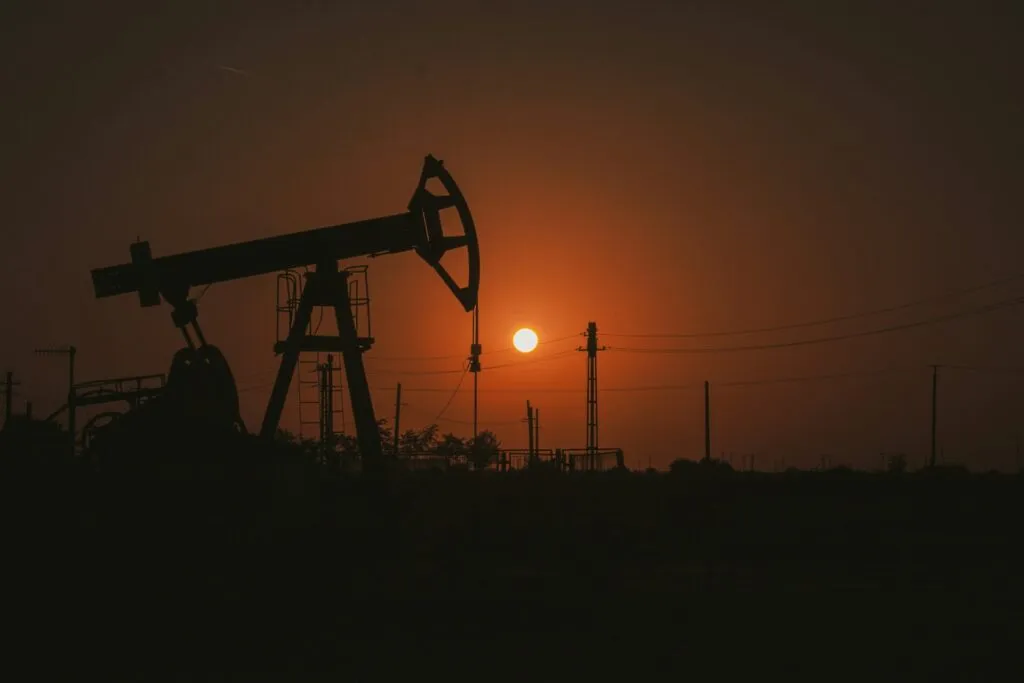 Substantially reducing emissions of methane and other super pollutants, along with carbon dioxide, can help avoid the worst of climatic tipping points without the risks and unforeseen consequences that geoengineering will almost inevitably entail. (Photo by Mihai 👑 on Unsplash)
Listen to this article:
Listen to this article
--:--
This audio was generated using an automated voice. Learn more.
As global temperatures climb relentlessly past 1.5 degrees Celsius above preindustrial levels, risking immensely destructive climate tipping points, many have come to see solar geoengineering as a necessary fail-safe. Yet humanity has the opportunity to safely limit warming now without resorting to such extreme measures. Substantially reducing emissions of methane and other super pollutants, along with carbon dioxide, can help avoid the worst of climatic tipping points without the risks and unforeseen consequences that geoengineering will almost inevitably entail.
As a matter of climate policy, mitigation of the most powerful greenhouse gases should be an immediate imperative, given that abatement of methane and other super pollutants can limit temperatures far more by 2050 than decarbonization alone and be accomplished with existing technologies at low cost. Still, the general failure of governments to address rising temperatures so far and the potential for runaway, self-amplifying warming in natural systems suggests the contingency of geoengineering experimentation by governments is needed, and several nations have begun to undertake it.
But now some private sector geoengineering firms are also promising easy fixes. Among the most prominent thus far is Stardust Solutions, a company that raised more than $60 million last year alone on the promise of creating a solar radiation management regime to reflect heat back out of the atmosphere using a new particle composition sprayed in the stratosphere—one that would avoid sulfate aerosols. Avoiding sulfates in the upper atmosphere is key because they would damage the ozone layer and cause acid rain. But Stardust Solutions has conspicuously stopped short of revealing the composition of its sulfate replacement particles.
The company has issued a four-page explanation outlining why it believes solar radiation management may be necessary and a framework proposal for how it imagines outdoor geoengineering experimentation and implementation could be conducted safely using their proposed methodologies. These papers may be valuable contributions to the literature around geoengineering experimentation, but they are no replacement for the process of government study that must quickly lead to regulation of geoengineering experimentation.
Most importantly, if the track record of private sector development of AI and other technologies has taught us anything in recent years, it’s that irresistible pressure from stakeholders and investors to push technologies to market as soon as possible is always present, no matter what the broader societal implications, or indeed whether they are yet fully known. This inevitable pressure toward market profitability despite huge risks is precisely the reason the governments must have clear regulatory and legal restrictions on any experimentation, and far higher thresholds of regulation and restrictions for any eventual geoengineering implementation.
As they regulate geoengineering experimentation and pursue their own geoengineering research, governments should prioritize demonstrably effective temperature reductions gained by mitigation of methane and other super climate pollutants as well as decarbonizing for long-term climate protection.
The regulatory imperatives. The United Kingdom, China, and tangentially the United States have begun geoengineering research programs, making it increasingly clear that a global standard for research and implementation is needed. One goal is to prevent rogue actors, whether private or government-funded, from acting on their own in dangerous ways. A potential nightmare scenario would be an autocratic regime like that of Vladimir Putin implementing geoengineering solutions unilaterally, including attempts to sabotage other nation’s weather patterns, without adequate testing or consideration of the consequences for general populations and the stability of global climate systems. In fact, China has begun aggressively cloud seeding in recent years to address droughts, with unclear results. China now conducts such operations in much of the country each year, leading many analysts to see it as only a step toward other manipulations of atmospheric and cloud composition.
Private sector innovations and scale investments are increasingly driving climate protection. To take but one instance, leading American and global chemical companies created new products to allow the phase down of hydrofluorocarbons under the Kigali Amendment to the Montreal Protocol, an achievement that will limit warming by as much as half a degree Celsius this century. In fact, the Montreal Protocol is widely considered the world’s most successful environmental and climate agreement in large part because it is predicated on a symbiotic relationship between governments setting realistic standards based on industry expertise about the true pace of innovation.
Inevitably, the private sector will have important roles in geoengineering experimentation, but the framework goals and limits on geoengineering experimentation must emerge from collaboration between the private sector and governments, with ultimate decisions resting with governments given public safety, national security, and economic policy implications. As climate impacts grow ever more deadly and destabilizing in much of the world, governments are increasingly viewing climate change as fundamentally a national security problem. This is why efforts to limit super climate pollutants like methane and hydrofluorocarbons are now largely within purview of the National Security Council within the US executive branch.
Superpollutants first. Before focusing on geoengineering research, governments should prioritize obtaining temperature reductions via mitigation of methane and other super climate pollutants as well as decarbonizing for long-term climate protection. Reducing methane and other short-lived climate pollutants can avoid four times more warming by 2050 than aggressive decarbonization alone. Indeed, cutting human-caused methane alone by 45 percent could avoid roughly 0.3 degrees Celsius of warming by 2045.
The notion that all climate problems can be solved by limiting solar radiation from reaching and warming the planet is, in any event, highly simplistic, especially regarding tipping points in natural systems. The almost inconceivably complex planetary interactions of oceans, clouds, winds, droughts, heat waves, and dozens of other factors make Earth’s climate systems and potential tipping points among the most complicated topics ever studied and the focus of world’s largest quantum computer analysis.
But given the need to quickly limit temperatures, governments, philanthropies, and private sector actors together must recognize the priority of super pollutant mitigation investment as the cheapest and fastest way available today to head off disastrous climate change tipping points. And it has another benefit: Keeping methane from seeping out of natural gas wells and other sources is practical, economical, and safe. Earlier this year, several tech companies created a $100 million fund for super pollutant mitigation, but such sums are just a small percentage of needed investment. And leading banks like J.P. Morgan have also begun to consider the economic risks inherent if widespread climate tipping points begin to occur.
It may be that geoengineering will be needed to prevent the worst climate disasters. Expenditures on research are required as a contingency, should the desperate last resort of geoengineering need to be implemented. Today, neither the risks nor the benefits of solar radiation management are entirely understood. But these initial research efforts can in no way be a reason for failing to undertake mitigation policies now, when the benefits are tremendous and costs are minimal. If we reduce super pollutants quickly and adequately, risky geoengineering may never be necessary, or perhaps needed only in very limited applications.
Together, we make the world safer.
The Bulletin elevates expert voices above the noise. But as an independent nonprofit organization, our operations depend on the support of readers like you. Help us continue to deliver quality journalism that holds leaders accountable. Your support of our work at any level is important. In return, we promise our coverage will be understandable, influential, vigilant, solution-oriented, and fair-minded. Together we can make a difference.
Keywords: cloud seeding, geoengineering, methane, solar radiation management, super-pollutants, tipping points
Topics: Climate Change

Paul Bledsoe
Paul Bledsoe is a professorial lecturer at American University’s Center for Environmental Policy. He served on the White House Climate Change Task ... Read More












Your essay would be enhanced if you could provide some actual numbers to go along with your statement that reduction in super pollutants could provide four times more reduction in warming than aggressive decarbonization.
Also it would be helpful and sorry if I missed it to list each of the super pollutants that you are referring to
the present rate of methane emissions alone will take us to over 2.0 degrees by 2050 even if we were to eliminate all CO₂ emissions. possibly much higher than 2.0 °C. check out the papers by Robert Howarth et al including their “bridge to nowhere” paper (2014?) for a start. historically, methane is responsible for 37% of global heating. (IPCC AR5 Ch 8 Atmospheric Chemistry table showing historical emissions by GHG and their product gases). if you want to know more check out the pioneering work of Gerrard Weddebutn Bishop. he’s given lots of podcast interviews in the last year… Read more »
the author did not include the largest man made source of methane- leaks thru the whole supply chain of natural gas; and landfills; and animals digestion. . of course when nat gas is burned it gives off GHgas CO2.
Like nearly every presentation on efforts to limit global warming, the above text reflects a paradigm where x tons of man made pollutants create y degrees of net warming. Is all, end of story. Not mentioned: Sea ice loss in the southern ocean, and methane emissions in the northern hemisphere. Both of these massive drivers of global warming are positive feedback loops, and due to issues of scale neither is subject to direct human intervention. A surface temperature map published in July, 2023 by the U.S. National Weather Service showed “shirt sleeve” temperatures across the northern coastline of North America, and deep into… Read more »
there are many such positive feedbacks in climate systems and interdependent ecological systems. the Amazon basin apparently only needs another 14% of forest loss to tip into dry land savanna vegetation communities bc the looping rainfall/evaporation patterns will be broken and the rainforest ecosystem breaks down completely. that impacts the climate of entire nations in big ways. the western ice sheet of Antartica is now consider to be i. terminal decline (unstoppable) and that will reduce albedo and expose more land ice to warming oceans. at some point the krill and plankton etc in the water will be exposed to… Read more »
We’re 30 years late. Get started.