Beyond alarmism: A realistic assessment of Bushehr’s plutonium risk
By Sasan Karimi | Analysis | July 3, 2026
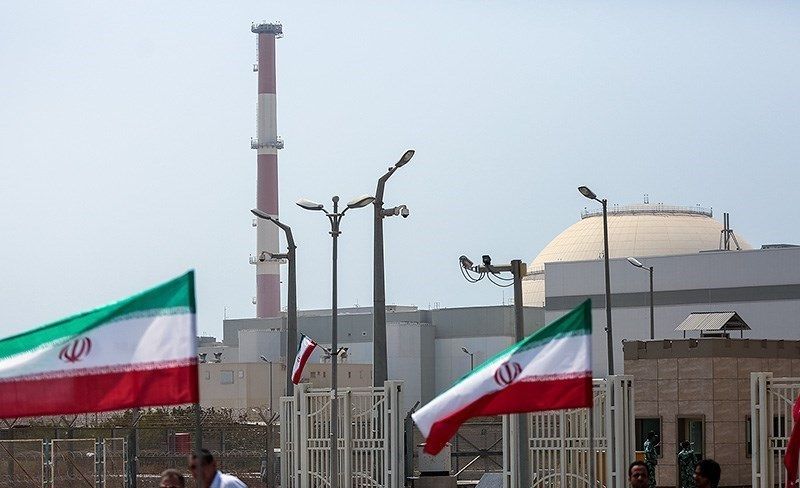 The Bushehr nuclear power plant with its dome-shaped reactor building in the background. The theoretical existence of plutonium in spent fuel at Bushehr, which remains under comprehensive safeguards by the IAEA, does not mean Iran has the practical capability to manufacture a nuclear weapon. (Credit: Hossein Ostovar / Tasnim News Agency, CC BY 4.0, via Wikimedia Commons)
Listen to this article:
Listen to this article
--:--
This audio was generated using an automated voice. Learn more.
A recent Bulletin article presents a highly securitized interpretation of Iran’s civilian nuclear program. By framing the spent fuel inventory of the Bushehr nuclear power plant as an imminent proliferation threat, Henry Sokolski attempts to construct a new rationale for further political pressures on Iran at a moment when nuclear diplomacy remains fragile and unresolved. On June 17, the United States and Iran signed a memorandum of understanding, and the parties have until mid-August to find a new agreement.
Sokolski’s article attempts to employ technical terminology and quantitative estimates to convey scientific credibility. But its central claims overlook critical operational, legal, and technological realities of the Bushehr nuclear plant. More important, it conflates the theoretical existence of plutonium in spent fuel with the practical capability to manufacture a nuclear weapon. This alarmist narrative reflects a broader pattern of securitization that has long surrounded Iran’s nuclear activities: It transforms ordinary aspects of a safeguarded civilian nuclear fuel cycle into extraordinary security threats requiring exceptional international security and political responses.
Three dimensions need to be considered to offer a realistic evaluation of the proliferation risk at Bushehr: the technical characteristics of the plant’s spent fuel, the safeguards architecture governing the reactor, and the legal rights guaranteed to non-nuclear-weapon states under the Treaty on the Non-Proliferation of Nuclear Weapons (NPT).
No “weapon-ready” plutonium. Sokolski’s most dramatic assertion is that Bushehr’s existing spent fuel contains enough plutonium for more than 200 nuclear weapons. While technically true in a purely arithmetic sense—plutonium isotopes exist within irradiated fuel assemblies—this statement is deeply misleading because it ignores the distinction between “reactor-grade” and “weapons-grade” plutonium.
The plutonium produced in Bushehr is reactor-grade, which is produced under conditions of high burnup during normal power-reactor operations. This material differs fundamentally from weapons-grade plutonium in isotopic composition.
Technical studies, including research conducted at institutions such as Princeton University, demonstrate that reactor-grade plutonium typically contains roughly 60 percent plutonium 239 and approximately 23 percent plutonium 240, whereas weapons-grade plutonium contains around 93 percent plutonium-239 and only about 6 percent plutonium-240.
This distinction is not merely academic. The elevated concentration of plutonium 240 creates severe engineering complications because the isotope undergoes spontaneous fission, emitting neutrons at random times. These stray neutrons significantly increase the risk of pre-detonation, meaning that a nuclear device could begin fissioning prematurely before optimal compression is achieved. Any attempt to manufacture a reliable weapon from reactor-grade plutonium would therefore require extremely advanced implosion engineering, sophisticated diagnostics, and repeated nuclear testing.
Numerous Western technical assessments, including those by the US Energy Department and the National Academy of Sciences, acknowledge that while reactor-grade plutonium is not unusable in principle, producing a reliable and militarily credible nuclear weapon from it is exceptionally challenging and typically requires sophisticated design capabilities and extensive testing infrastructure. Iran has neither conducted nuclear tests nor demonstrated mastery of such advanced weapons engineering. Still, Sokolski largely treats the conversion of Bushehr’s plutonium into operational nuclear weapons as if it were a straightforward industrial process.
The omission becomes even more significant when considering the implications of high burnup.
After 15 years of reactor operations, the isotopic degradation of Bushehr’s spent fuel further increases the proportion of undesirable isotopes, including plutonium 240. This intensifies the technical barriers associated with implosion design.
In modern compact nuclear warheads, especially those intended for ballistic missile delivery, highly advanced “two-point” implosion systems are often discussed because they reduce weight and size. But such systems are extraordinarily sensitive to asymmetrical compression and stray neutron emissions. Reactor-grade plutonium, precisely because of its high content in plutonium 240, makes these challenges dramatically more difficult.
Historically, the United States’s “Fat Man” device used against Nagasaki relied on a complex 32-point implosion system to achieve symmetric compression of the plutonium core. A two-point system represents a far more advanced level of explosive lens engineering requiring extremely precise geometries and timing mechanisms. The idea that a state could simply extract reactor-grade plutonium and rapidly convert it into usable nuclear bombs overlooks the substantial scientific and engineering challenges involved, as demonstrated by decades of experience accumulated by established nuclear powers.
No credible evidence has ever demonstrated that Iran possesses validated designs for such advanced implosion systems or has successfully tested them under operational conditions. The mere presence of reactor-grade plutonium cannot reasonably be equated with an immediate weapons capability.
No industrial reprocessing capability. Another major flaw in Sokolski’s article is its treatment of the plutonium separation process itself. Plutonium embedded in spent nuclear fuel is not directly usable. Extracting it requires large-scale industrial reprocessing infrastructure involving highly complex chemical operations, radiation shielding systems, remote handling technology, and specialized waste management capabilities. The article briefly references small-scale Iranian laboratory experiments conducted decades ago, but this is fundamentally different from possessing a functioning industrial reprocessing plant.
While a minimal deterrent might not require a full-scale industrial reprocessing complex, even small-scale plutonium separation remains technically demanding, hazardous, and difficult to conceal. The challenge is not merely producing plutonium but producing it in a form and quantity suitable for reliable weapons. Without advanced engineering capabilities and testing infrastructure, translating limited reprocessing capacity into a credible nuclear deterrent remains highly uncertain.
Iran has neither declared nor been shown to possess any industrial-scale plutonium reprocessing facility. Constructing such infrastructure would require enormous financial investment, highly specialized technology, extensive personnel training, and considerable time. In addition, the creation of a covert industrial reprocessing capability would be extraordinarily difficult to conceal. Such facilities produce distinct environmental signatures and would almost certainly be detected through International Atomic Energy Agency (IAEA) inspections, satellite surveillance, or national intelligence monitoring long before becoming operational.
The Sokolski article also draws an oversimplified comparison between plutonium metallurgy and uranium metallurgy. In uranium weapons development, uranium hexafluoride can be converted into metallic uranium through comparatively well-established processes. Plutonium metallurgy, however, is substantially more complicated. Following chemical separation, plutonium must be stabilized in suitable crystalline phases, particularly the delta phase, before precision casting can occur. These processes involve exceptional technical sensitivity, high contamination risks, and elevated failure rates even within advanced nuclear programs.
The technical obstacles associated with reactor-grade plutonium, therefore, extend far beyond the simplistic assumption that “10 kilograms equal one bomb.”
Unreasonable demands. The Sokolski article’s legal and safeguards analysis is equally problematic because it downplays the extensive monitoring framework already in place for Bushehr.
The entire fuel cycle of the Bushehr reactor has remained under comprehensive safeguards administered by the IAEA. Fuel loading, unloading, storage, and inventory management are subject to regular verification procedures. According to publicly available safeguards reporting, IAEA inspectors conducted verification activities related to Bushehr’s spent fuel as recently as this month, while Iranian authorities stated that the associated Physical Inventory Verification process was completed in late 2025.
Claims suggesting lengthy periods without inspector presence at Bushehr are, therefore, misleading. The reactor operates within a routine safeguards schedule consistent with international practice for civilian nuclear power reactors.
The Sokolski article similarly neglects the longstanding fuel return arrangement between Iran and Russia. Under existing agreements, Russia committed to taking back spent fuel from Bushehr for reprocessing. Delays in implementation cannot reasonably be interpreted as evidence of weapons intent.
Particularly striking is the article’s suggestion that responsibility for spent fuel management should somehow be transferred to states such as Saudi Arabia or other Persian Gulf countries. While Sokolski does not explicitly propose that these countries take physical possession of the spent fuel, formulations like “assume responsibility” and “including” are vague enough to suggest that covering costs is only one component of a broader set of obligations. Responsibility for spent fuel management typically entails involvement—direct or indirect—in logistical coordination, regulatory oversight, liability frameworks, and security arrangements. These are not trivial extensions of a purely financial role.
Even if interpreted narrowly as cost-sharing, the proposal still raises questions about feasibility and precedent. Transporting and handling highly radioactive spent fuel requires extensive infrastructure, operational experience, regulatory systems, and security arrangements. Assigning these responsibilities—financial or otherwise—to third-party regional actors that are not directly involved in reactor operations or fuel ownership and have limited relevant experience would create significant safety and security concerns and have little precedent within established international nuclear practice. This proposal, therefore, appears more political than grounded in established technical or institutional practice.
The article also advocates forms of “real-time” monitoring that exceed normal safeguards standards. In practice, the IAEA does not require continuous five-minute live-feed surveillance for commercial power reactors, including in Western countries. Even the Additional Protocol does not mandate such extraordinary levels of intrusive monitoring.
Iran’s suspension of voluntary implementation of the Additional Protocol occurred in the context of the unilateral US withdrawal from the Joint Comprehensive Plan of Action (JCPOA) in 2018 and the subsequent failure of European parties to fully implement their commitments. Regardless of political disagreements surrounding that decision, demanding safeguards measures from Iran beyond internationally established norms creates a discriminatory standard inconsistent with the principle of equal treatment under the NPT.
A broader political objective. The policy recommendations advanced in Sokolski’s article ultimately reveal a broader strategic objective extending far beyond nonproliferation concerns.
Calls to halt construction of additional Bushehr reactors effectively amount to demands for permanent limitations on Iran’s civilian nuclear development. But the NPT’s Article IV explicitly recognizes the “inalienable right of all the Parties to the Treaty to develop research, production and use of nuclear energy for peaceful purposes without discrimination.”
Attempting to delegitimize the expansion of Iran’s civilian nuclear infrastructure, therefore, risks undermining one of the treaty’s foundational bargains: non-proliferation obligations in exchange for access to peaceful nuclear technology.
The article’s arguments regarding uranium metal and plutonium chemistry are similarly expansive. Neither the NPT nor existing safeguards agreements prohibit peaceful research involving these materials when conducted under safeguards. Even under the JCPOA framework, Iran did not permanently renounce all such activities.
Equally questionable is the suggestion that Bushehr reactor fuel could somehow be diverted, reprocessed, and transformed into nuclear weapons within 90 days. Such a timeline is operationally unrealistic. The transportation of spent fuel, construction or activation of reprocessing capabilities, chemical separation, metallurgical conversion, weapons fabrication, and integration into deliverable systems would require far longer—likely many months at minimum, if not years—while remaining highly visible to international monitoring systems throughout the process.
Any diversion attempt would almost certainly trigger immediate detection through safeguards inspections, satellite imagery, environmental sampling, or intelligence surveillance.
Focus on real issues. Sokolski’s article presents a technically selective and politically charged interpretation of Bushehr’s spent fuel inventory. By emphasizing theoretical plutonium quantities while ignoring the immense practical barriers associated with reactor-grade plutonium, industrial reprocessing, safeguards monitoring, and weapons engineering, the article constructs an exaggerated threat narrative disconnected from operational realities.
The broader implication is not merely analytical alarmism but the continuation of a longstanding effort to securitize Iran’s peaceful nuclear activities beyond the legal framework established by the NPT and previous negotiated agreements. Framing Bushehr as a latent “200-bomb” threat risks creating political justification for additional coercive measures, including expanded sanctions, indefinite technological restrictions, or even military escalation under the pretext of preventing an “imminent” diversion scenario.
Introducing the Bushehr plutonium issue into ongoing diplomatic negotiations would likely complicate and prolong ongoing talks without contributing meaningfully to realistic nonproliferation objectives. At a moment when achieving a credible and technically grounded diplomatic framework remains urgent, negotiations should focus on verifiable and practical arrangements rather than hypothetical scenarios lacking operational plausibility.
A balanced assessment of Iran’s nuclear program must distinguish between theoretical possibilities and realistic capabilities. Failure to preserve that distinction risks transforming technical discourse into political securitization—precisely the dynamic that has repeatedly weakened constructive nuclear diplomacy unilaterally over the past two decades.
Together, we make the world safer.
The Bulletin elevates expert voices above the noise. But as an independent nonprofit organization, our operations depend on the support of readers like you. Help us continue to deliver quality journalism that holds leaders accountable. Your support of our work at any level is important. In return, we promise our coverage will be understandable, influential, vigilant, solution-oriented, and fair-minded. Together we can make a difference.
Get alerts about this thread
0 Comments
Oldest

Sasan Karimi
Sasan Karimi is an assistant professor of global studies at the University of Tehran. Karimi is also the international politics program director of ... Read More