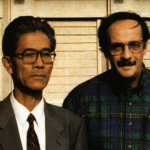
Thomas Graham Jr. helped build an arms control system now under strain
By Seth Grae | Personal Essay | September 25, 2026
 Thomas Graham, Jr.
Listen to this article:
Listen to this article
--:--
This audio was generated using an automated voice. Learn more.
Thomas Graham, Jr., a diplomat, arms control negotiator, and a critic of President Reagan’s “Star Wars” initiative, died on September 3, 2026, at age 92.
Graham spent 27 years negotiating limits on the world’s nuclear arsenals and successfully led the US effort to make the Non-Proliferation Treaty permanent. He played a key role in an era of arms control agreements that are now disappearing. His legacy is needed now as much as ever.
Tom got into nuclear arms control without any training in it. When he joined the Arms Control and Disarmament Agency as a young lawyer in 1970, it was in many ways a new field. He became one of its leading experts and trained many of the people who came after him. Between 1970 and 1997, he took part in every major arms control and non-proliferation negotiation that the United States signed, including the Strategic Arms Limitation Talks, the Intermediate-range Nuclear Forces Treaty, the Conventional Armed Forces in Europe Treaty, the Strategic Arms Reduction Treaty (START) I and II, and the Comprehensive Test Ban Treaty. He was the agency’s general counsel for 15 years, in office under four presidents, and served as its acting director in 1993.
In 1985, Tom wrote a legal memorandum concluding that the Reagan administration’s Strategic Defense Initiative, colloquially called the “Star Wars” program, technically violated the 1972 Anti-Ballistic Missile Treaty. The reaction was furious. Congress went on to block the administration’s efforts to reinterpret the treaty. No one can know exactly what went through his mind. But what is sure is that Tom had strong moral convictions, especially about what was best for the nation’s security, and he had solid information and access to people who knew the issues better than anyone else. He acted in ways he thought were for the good of the country.
The trust builder. In 1995, as President Bill Clinton’s special representative for arms control, non-proliferation, and disarmament, Tom led the US effort to extend the Nuclear Non-Proliferation Treaty indefinitely. The treaty had entered into force in 1970 with a 25-year term. The extension made it permanent, which has since been the bedrock of the global nuclear non-proliferation regime.
Tom’s relationships with the people on the other side are part of what distinguished him as a diplomat. During the Cold War, Tom had long-term relationships with Soviet negotiators, including those at the Conference on Disarmament in Geneva, where they met again and again. He told me a lot of people who weren’t negotiators thought they were wasting their time getting together as often as they did.
Tom saw it differently.
Those meetings built some trust, and he believed that trust was what would allow the two countries to reach agreements on arms control. And they did. When the Soviet Union collapsed, the United States and Russia moved quickly into meaningful arms control agreements. I remember Tom saying that it was possible because the ideas had been in the works for so long between the negotiators. In January 1993, he was at the Kremlin when Presidents George H.W. Bush and Boris Yeltsin signed START II.
Tom didn’t hide his regard for his Russian counterparts, saying they were “very capable, very professional, very serious people.” He described chief Soviet negotiator Vladimir Semyonov, in particular, as hard-line and difficult, but also as a professional who wanted to make progress in negotiations. Tom switched parties, and for him, serving as a US diplomat was never about ideology.
Those relationships lasted. Long after he left the agency, Tom was comfortable anywhere in the world. No matter where we travelled, there was always someone he knew incredibly well and could reach out to. Often these persons were former adversaries, and you could see right away how they were friendly to him.
The writer-entrepreneur. From 2009 to 2024, Graham chaired the board of Lightbridge, an advanced nuclear fuel technology company based in Virginia that I now lead. Tom strongly supported the idea of working in Abu Dhabi and sat on the International Advisory Board for the United Arab Emirates’ nuclear energy program from 2009 to 2016. Later, he was supportive of focusing the company’s work in the United States and furthering cooperation with the Energy Department and Idaho National Laboratory.
Our board worked by consensus. We usually worked things out ahead of meetings, which helped lead to unanimous votes. Much of that was due to Tom. He was respectful of other people’s views, and he liked to gather the directors for meals, which helped create an atmosphere where those with strong and sometimes divergent views could reach a consensus.

On our first trip to the UAE together, Tom and I went skiing indoors in Dubai. He was in his 70s, and I didn’t think he’d actually do it. But then he picked up his skis and got on the chairlift with me. He was a surprisingly good skier. I shouldn’t have been surprised. Tom played tennis and golf, hiked, and stayed vigorous for almost his entire life.
Outside the company, Tom kept writing, publishing more than 100 articles and 15 books, including Seeing the Light (Cambridge University Press 2017), with geoscientist Scott Montgomery, about how nuclear power can help combat climate change and lethal air pollution. Tom also co-chaired the Atlantic Council’s Nuclear Energy and National Security Coalition from its launch in 2019 until 2024. He argued that non-proliferation and civil nuclear energy were not inconsistent goals.
The size of the Cold War arsenals weighed on him. Between 1945 and 1990, the United States had built a total of more than 70,000 nuclear weapons, and the Soviet Union about 55,000. “In retrospect, it is just unbelievably preposterous what we did,” he said in a 2013 oral history. In 2001, he described the view that guided the 1970 SALT negotiations in words that still bear a strong relevance today as the last strategic arms control agreement with Russia, New START, expired in February, and the United States and China risk a full-speed weapons competition. “We’ve got to work out some arrangement with the Soviets to moderate this competition,” he said at the time, “or it would get out of control.”
Together, we make the world safer.
The Bulletin elevates expert voices above the noise. But as an independent nonprofit organization, our operations depend on the support of readers like you. Help us continue to deliver quality journalism that holds leaders accountable. Your support of our work at any level is important. In return, we promise our coverage will be understandable, influential, vigilant, solution-oriented, and fair-minded. Together we can make a difference.
Keywords: Obituary, arms control
Topics: Personal Essay
Get alerts about this thread
0 Comments
Oldest