Join us for the Bulletin's annual gathering on November 12

DIGITAL MAGAZINE

September 2026

DIGITAL MAGAZINE

September 2026

Cover by Thomas Gaulkin

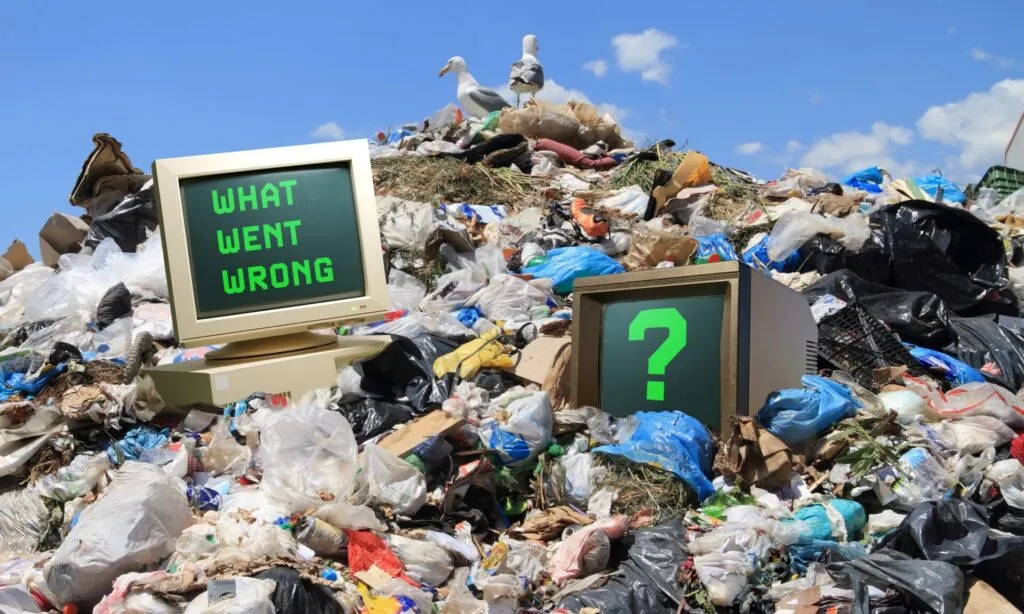
discarded computers on dump

Introduction: What went wrong with the internet—and how do we fix it

What went wrong with the internet, and how do we fix it—particularly in an era when data centers and AI seem poised to overrun the Earth? The premise of this issue of the Bulletin is straightforward—but the diagnoses and the proposed solutions are not. One thing our essayists do seem to agree on, however, is that things are getting worse.

discarded computers on dump

Introduction: What went wrong with the internet—and how do we fix it

What went wrong with the internet, and how do we fix it—particularly in an era when data centers and AI seem poised to overrun the Earth? The premise of this issue of the Bulletin is straightforward—but the diagnoses and the proposed solutions are not. One thing our essayists do seem to agree on, however, is that things are getting worse.

a large data center in Northern Virginia encroaches on some upscale suburban homes

The dirty parts of the computing world, revisited

Ten years ago in these pages, I argued that the environmental costs of computing were the dirty little secret of the digital economy. That secret is now out: Data centers have become the subject of public hearings, political campaigns, and congressional legislation. But the new environmental awareness has fixated on the measurable impacts of computation—such as water consumption, electric rates, and thermal pollution levels—while overlooking the bigger picture about what a data center actually is: a factory. And like every factory, a data center is a means of organizing labor, capital, land, and political power. So data centers require the same kinds of public institutions that earlier generations built to govern factories, utilities, and other industries.
old German monastery seen through window

Three reasons Europe learned to distrust Big Tech before America did

European attitudes toward digital privacy and technology regulation are dismissed in the US as technophobia. But there are distinct, historically grounded reasons why Europe has moved further and faster to regulate Big Tech: There’s the memory of the surveillance states run by the Nazis and the Stassi, the absence of a European version of Silicon Valley (with all of the Valley’s financial clout in domestic politics), and a fundamentally different idea about what personal data is and what can legitimately be done with it.
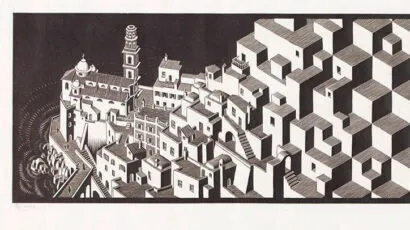
MC Escher print

“The internet is a giant copying machine”: Interview with Vint Cerf

Widely thought of as the “founder of the internet,” Vint Cerf talks about how to bring back a sense of trust to this new AI-dominated version, and the ideals behind the original internet—including the emphasis on the net being an open, neutral, level playing field, ideals which are under siege today. In this interview, Cerf talks about what needs to be improved, at a time when AI storms its way into what he sometimes calls “my beautiful internet.” And Cerf explores one of today’s greatest problems: Funding is not going to the creators of the content that AI is using.
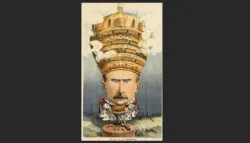
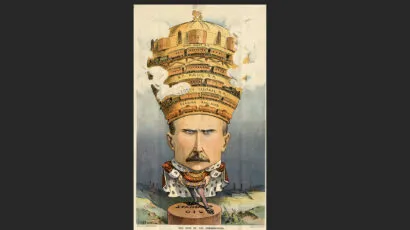
1901 Puck cartoon about monopolies

Opinion: The world has moved on. But it need not stay this way forever

In 2022, the author, Cory Doctorow, coined the term “enshittification” to describe how the internet is declining in value to its end-users, due to the prevalence of monopolies and an emphasis on short-term gain over upholding long-term standards and practices. He diagnosed a cycle that has become common to digital platform decay: Tech giants initially lure users, then gradually squeeze business clients and end-users, until the giants finally trash the entire experience to maximize profit for shareholders. In this reprint of a 2026 essay, he argues that enshittification is spreading to other areas as well—some of which are vital to the functioning of Western democracies in the 21st-century. Doctorow offers his opinion as to the specific sources of the problem, and how to combat them.
silhouette of man with planet in background

Who stands behind the words?

The internet severed speech from the relationships that made it trustworthy; AI severs it from the speaker. Fluent, personalized, institutionally usable speech can now be produced at mass scale with no chain of responsibility anchored in a person who answers for it, hollowing out the assumption that underwrites public trust: that behind every word that counts stands a person or institution that can be held to it. While a number of reforms can be made to the design of AI, the solution is not better machines alone but institutions that anchor every word in an accountable human being.
Chinese honor guard marching in Beijing

Quantum won’t protect critical telecom networks from massive attacks. Good old maintenance might

Since at least 2021, the Chinese state-sponsored campaign known as "Salt Typhoon" lived inside the telecommunications networks of America and its allies, reading call records and tracking the movements of millions. In the aftermath, vendors, expert witnesses, and industry analysts have promoted quantum security as the surefire new remedy. But a test revealed quantum protections could have prevented only 9 out of 42 attacks at most, because the attackers held valid administrator credentials and entered through vulnerabilities that went unpatched for years. Cybersecurity budgets and attention tend to follow flashy novelty solutions, while patch management and credential hygiene go unheralded.
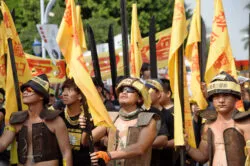
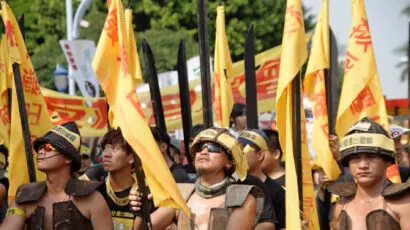
anti-nuclear waste protest by Taiwan indigenous tribe, in costume

Paradise lost? The framing of nuclear risk and its impact upon the Tao Community of Lanyu Island, Taiwan

In 1978, Taiwanese authorities began constructing a nuclear waste storage facility on the outlying island of Lanyu. The local community, the Tao people, were left unaware of the purpose of the site initially, believing it to be a food canning plant. Selected for its isolation and ease of maritime dumping, the state sought to downplay the risks, restricting the local people’s access relying on the community’s illiteracy to maintain a shroud of obscurity. Following the outlawing of marine dumping, storage barrels on the site were found to have severe corroded, leading to radiation leaks. Lanyu has become a case study in how political bodies manipulate the framing of the risk of nuclear hazards near minority populations
A large, black military submarine is partially submerged and moving through calm waters under a cloudy sky.

Indian nuclear weapons, 2026

As India expands its nuclear stockpile to an estimated 190 warheads and ramps up plutonium production with its new fast breeder reactor, major technological strides in MIRV-equipped Agni-V missiles, rail-mobile launchers, and a growing SSBN fleet mark a decisive maturation of its nuclear triad—pivoting primary long-range deterrence toward China while maintaining operational readiness against Pakistan.

Cover by Thomas Gaulkin

Subscribe now

We've relaunched the Bulletin's award-winning digital magazine. Get access to every issue and our archive going back to 1945.

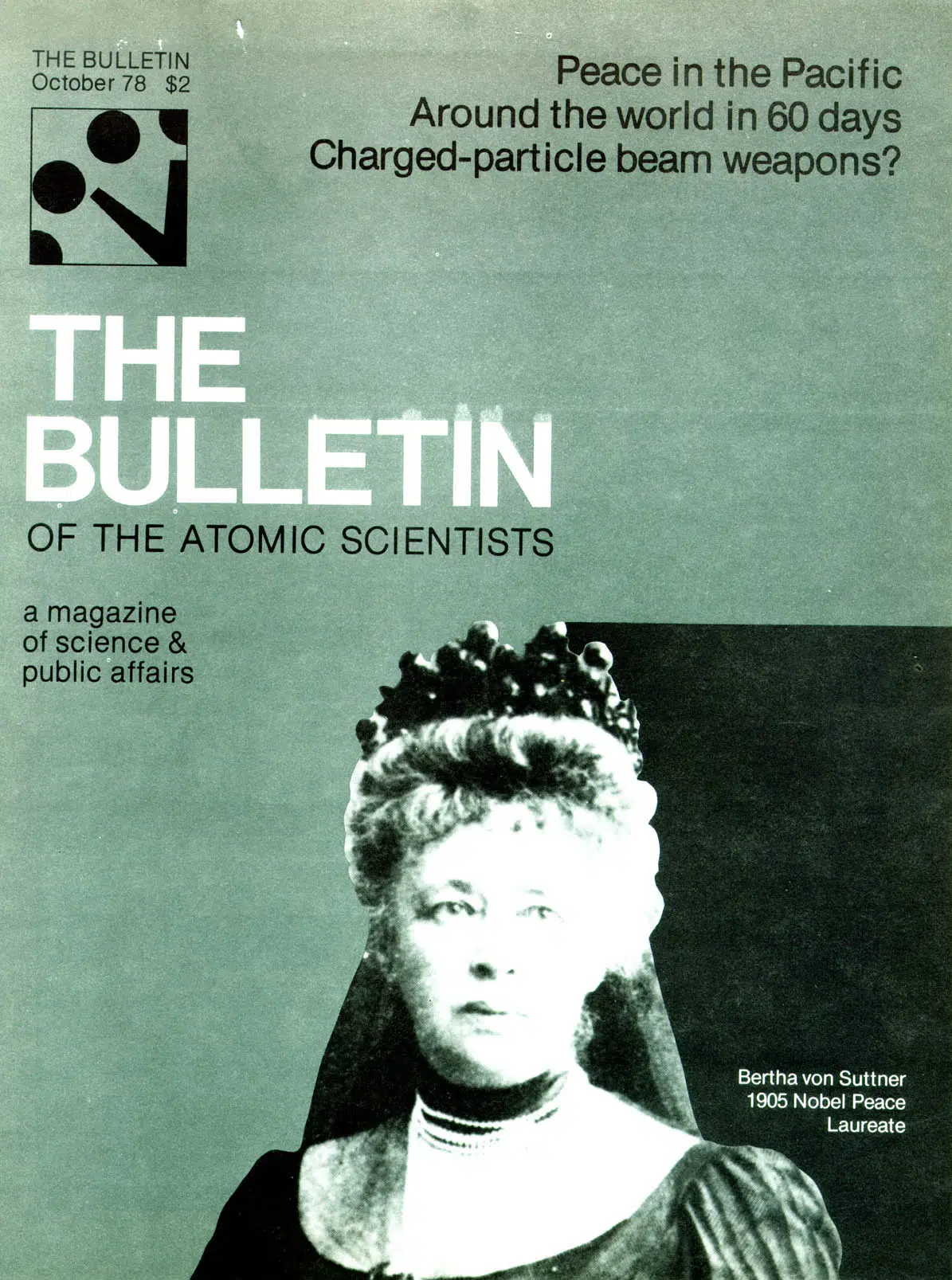
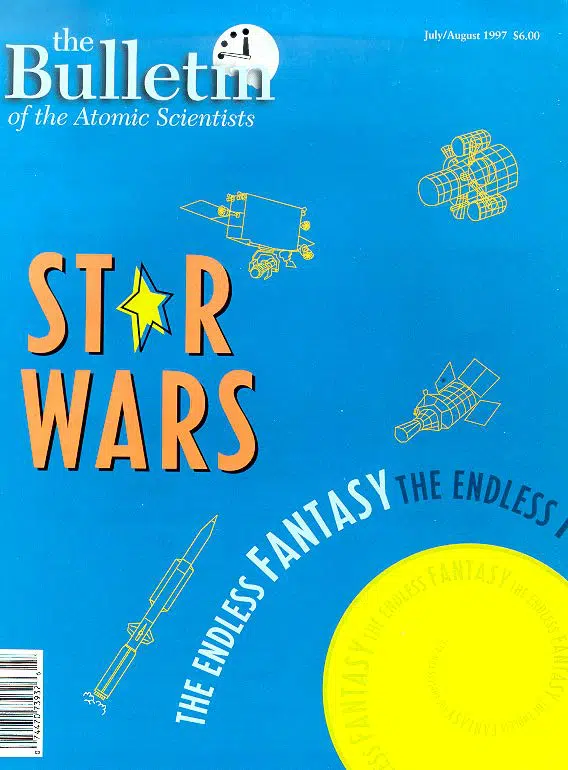
Magazine archive

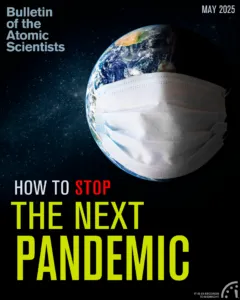
May 2025 cover of the Bulletin of the Atomic Scientists, featuring an illustration of the Earth wearing a surgical mask above the headline 'How to Stop the Next Pandemic'.
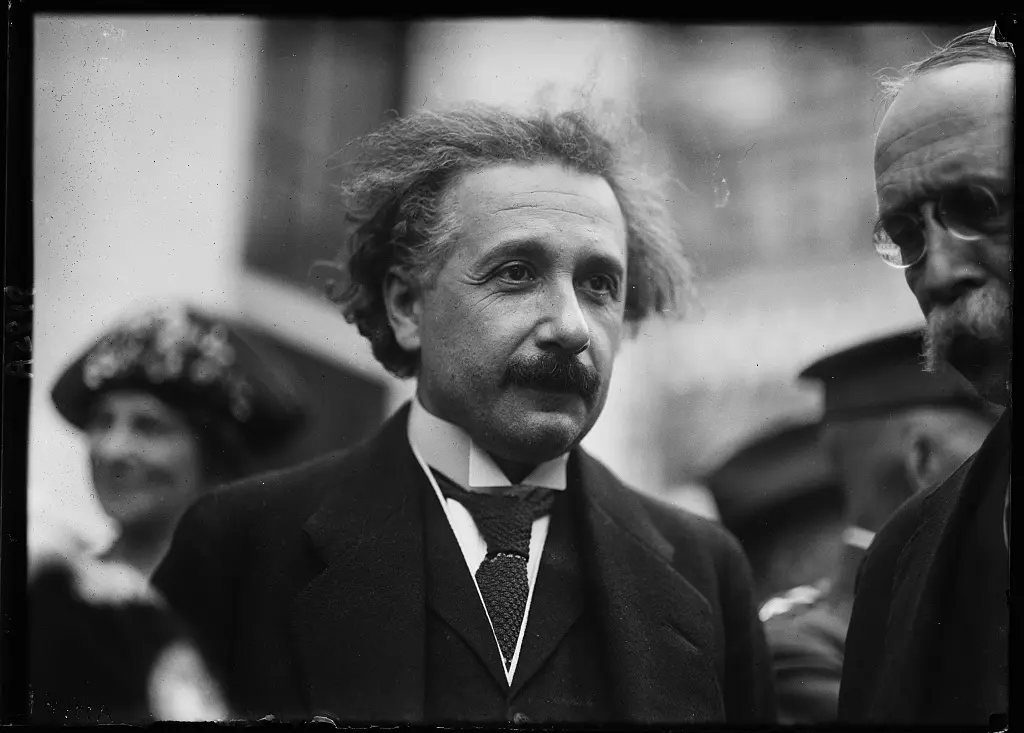
Albert Einstein in Washington, D.C., between 1921 and 1923. Harris & Ewing, photographers. Courtesy of the Library of Congress. https://www.loc.gov/pictures/item/2016885961/

Premium subscribers can read the complete Bulletin of the Atomic Scientists’ archive, which contains every article published since our founding in 1945.

This archive was created in honor of John A. Simpson, one of the Bulletin’s principal founders and a longtime member of its Board of Sponsors. This searchable archive provides exclusive online access to original interviews and commentary by luminaries like Albert Einstein, J. Robert Oppenheimer, Ruth Adams, John F. Kennedy, Stephen Hawking, Christine Todd Whitman, US Secretary of Defense William J. Perry, and multiple Nobel laureates.