By Jacqueline A. Dowling, Nathan S. Lewis | November 15, 2021
Because a very cold polar vortex swept through much of Texas in February of 2021, everything from dispatchable natural gas facilities to intermittent wind turbines froze.[1] The power outage produced food, water, and heat shortages that either directly or indirectly led to hundreds of deaths. During the same polar vortex, natural gas plants and wind farms in Minnesota—much farther north and much colder than Texas—continued to operate. Texas electricity operators had bet on warm weather and didn’t spend the extra money to winterize equipment. Nature warned them—and us—how damaging electricity blackouts can be.
In a world of increasing climate variability, it pays to spend money on reliability. In electricity systems dominated by wind and solar generation, long-duration storage is a way to obtain it.
In this new climatic world, the reliability of variable renewable energy sources—primarily wind and solar—will require consideration of extremes over decades. Without planning, Dunkleflaute—the German word for dark, windless times when wind and solar power are unavailable—could well undermine electricity systems of the future.
Several American states have adopted 100 percent clean electricity mandates with mid-century deadlines, requiring large amounts of wind and solar power to be deployed. Wind and solar energy can provide large amounts of cheap carbon-free electricity to many areas, but only on mother nature’s terms. Wind and solar power can experience multi-day resource “droughts” when the available electricity is far lower than expected (Rinaldi et al. 2021). In the United States, wind power is especially susceptible to a seasonal low during the summer doldrums. Long-duration storage may fill in for the variability of wind and solar resources and help meet demand during unexpected Dunkleflautes and expected seasonal lows.
Even with this inherent variability, about 80 percent of US decarbonization could likely be obtained with wind and solar power alone. But getting that last 20 percent or so of reliable electricity supply requires some form of technology that can provide multiple days or weeks of electricity at a time (Shaner et al. 2018). American states that have access to geothermal, hydroelectric, or nuclear power could potentially use them as clean and reliable resources. For other parts of the United States, long-duration energy storage—in the form of stored hydrogen, pumped hydropower, compressed air, and other technologies—could be key to unlocking affordable and reliable clean electricity.

Needed: more than one type of storage
How long is long-duration energy storage? An energy storage technology’s duration is its energy capacity (in kilowatt hours) divided by its discharge power capacity (in kilowatts). The Energy Department’s Long Duration Storage Energy Earthshot aspires to cut long-duration energy storage costs by 90 percent below lithium-ion battery costs to about $15 to $30 per kilowatt-hour by 2030, defining “long-duration” as 10 hours or more. But multiple academic researchers find that hundreds of hours of long-duration storage are needed to ensure reliability over many years in least-cost wind-solar-battery systems (Jenkins and Sepulveda 2021).
Energy storage technology will look entirely different, depending on scale. Battery storage is best suited for a cell phone, whereas underground hydrogen storage in salt caverns or other geologic reservoirs may be more appropriate for an entire country for a whole summer.
Think of an energy storage system as a sort of bathtub. Storage technologies can be characterized by their rate of charging (that, is, how quickly the faucet will fill the tub) and discharging (or how long it takes to drain the tub); in this metaphor, the volume of energy held in the storage reservoir is analogous to the size of the bathtub. Cell phones have power capacities (faucet and drain rates) that are high relative to their energy capacities (tub size), facilitating quick charging. The opposite is true for seasonal storage technologies that have lower power capacities (faucet and drain), but much higher energy capacities (i.e., a larger tub).
To put it simply: Seasonal energy storage for a country’s electricity grid can be charged up slowly over the off season but will need to store large amounts of energy.
There is likely a need for at least two storage technologies, one for power and one for energy. The hybrid Prius automobile can serve as a familiar analogy. A hybrid car uses a battery to run an electric motor and a gasoline engine to provide power when the battery runs low. Similarly, inter-storage transfer allows the electricity system to take advantage of the strongest characteristics of each storage type. Lithium-ion batteries can charge quickly to capture sharp peaks in wind and solar generation and then transfer energy to a large energy reservoir for long-term storage.
Storage technologies are defined by a variety of characteristics, including charge and discharge cost, charge and discharge efficiency, leakage rate, lifetime, and energy cost. But the most important parameter for competitive seasonal energy storage is the capital costs of energy capacity. Long-duration energy storage requires capital costs as low as $50 per kilowatt-hour before utilities will begin to use it. And capital costs for long-duration energy storage may need to fall as low as $10 or even $1 per kilowatt-hour before a storage method becomes the dominant technology used in reliable, multi-year wind and solar electricity systems (Jenkins and Sepulveda 2021, Albertus 2020).[2]
If the capital cost of storage is $100 per kilowatt-hour and the storage system lasts 10 years, spreading the cost over those years and allowing for one cycle (that is, one filling and emptying of the “tub”) per year would require that the utility owning the system recover $10 per kilowatt-hour per annual cycle to break even. That means a customer would need to pay about $10 per kilowatt-hour to make up just the cost of building the storage system—an extremely high cost, given that customers now pay electricity costs of about $0.05-$0.10 per kilowatt-hour. It follows that lithium-ion batteries would need to come down two orders of magnitude (from about $200 per kilowatt-hour currently) to be cost-effective for seasonal storage. But some long-duration energy storage technologies such as hydrogen have very low energy capacity costs.

Our research shows that using excess solar and wind electricity to produce hydrogen, and then storing that hydrogen in geologic repositories, would be valuable not just for seasonal but also for multi-year storage (Dowling 2020). In the past, grid operators could ensure reliability by simply dispatching more natural gas-fired electricity when demand increased. With variable renewables in the mix, grid operators will have to plan years in advance for unexpected lows in electricity generation to ensure reliability. We found that reliable systems planned increasingly to rely on energy storage for a period of years
What are the realistic options for long-duration energy storage?
Multiple proposed technologies for long-duration energy storage have achieved energy capacity costs lower than lithium-ion batteries, making them potentially competitive candidates for long-duration energy storage.
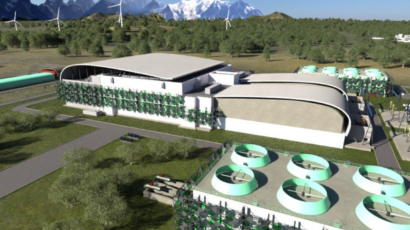
Underground hydrogen energy storage in salt caverns is the cheapest scalable energy storage available today, with capital costs of $0.10 to $1 per kilowatt-hour. The Utah Intermountain Power Plant is constructing the largest energy storage facility in the world in the form of a salt dome for hydrogen energy storage.[3] Hydrogen may be piped in from Montana where renewable electricity is used to produce it via electrolysis of reclaimed water. Then, after storage in a salt dome, the hydrogen will be burned to power turbines in Utah that will provide summertime electricity to the project’s largest customer—the Los Angeles Department of Water & Power (LADWP). The Advanced Clean Energy Storage Project in Utah will teach the United States a great deal about the value of long-duration storage via several technologies, including hydrogen stored in salt caverns, large flow batteries, and solid oxide fuel cells.[4]
Other forms of long-duration storage include pumped hydro storage and compressed air energy storage. Pumped-hydro accounts for over 90 percent of the United States’ current grid energy storage, but major future cost reductions are not expected because it is a very mature technology. Pumped-hydro has capital costs of from $5 to $100 per kilowatt-hour and is typically used for four to 16-hour duration storage. Compressed air energy storage is another form of long-duration energy storage that relies on underground salt caverns and can be used for hundreds of hours of storage at costs from $2 to $50 per kilowatt-hour.[5]
Compressed air, pumped hydro, and underground hydrogen storage technologies are geographically constrained to places with suitable geological features. The geographical constraints may be eased by cross-country electricity transmission or hydrogen pipelines.
Other forms of storage are not geographically constrained and can be built anywhere. Form Energy recently announced its iron-air energy storage chemistry for approximately 100-hour duration batteries that are projected to have capital costs of around $20 per kilowatt-hour.[6] Vanadium redox flow batteries have separately scalable power and energy components but cost $300 to $500 per kilowatt-hour and generally compete with lithium-ion batteries for short-duration storage.
Thermal energy storage—generally using molten salt as a medium—can be paired with concentrated solar power in suitable locations, typically in the desert. Although thermal energy storage is cheaper than lithium-ion batteries ($30 to $80 per kilowatt-hour), thermal energy storage tied to concentrated solar power still competes primarily with lithium-ion batteries for daily storage, and not with hydrogen for seasonal storage. Cambridge, Mass.-based Malta Inc. uses pumped thermal energy for storage independent of generation source. Malta is currently aiming for 10- to 12-hour durations but claims it could build for durations up to 200 hours of storage.[7]
Energy Vault uses a gravitational storage idea in which robot arms stack heavy blocks in a tower to store energy and then let the blocks fall to release the energy. Energy Vault’s projected energy capacity costs (approximately $200 per kilowatt-hour) are similar to lithium-ion batteries and will possibly play a role in daily storage as opposed to providing cost-effective scalable seasonal storage.[8]

When will long-duration energy storage become important?
Long-duration energy storage is only needed when other sources of dispatchable electricity (like fossil fuels) are tightly constrained by policy. The state of California already requires 60 percent renewable electricity by 2030 and 100 percent clean electricity by 2045. That means the scale-up of long-duration energy storage may be necessary in California within a decade. In general, the more variable renewable energy that is installed, the larger the need for charge/discharge power capacity. As the share of renewable capacity increases and fossil emissions decrease, more energy storage capacity is needed (Guerra, Eichman and Denholm 2021).
Of the long-duration technologies discussed, hydrogen may be best suited for seasonal energy storage. Incorporating hydrogen energy at scale may also require scaling up electrolyzers that take carbon-free electricity and produce “green” hydrogen from water. Earth-abundant catalysts could replace the scarce iridium used in commercial polymer-electrolyte-membrane electrolyzers. Leveraging existing natural gas infrastructure will also be key for affordability of hydrogen transport and storage; repurposing depleted natural gas reservoirs for underground hydrogen energy storage and retrofitting natural gas pipes and fittings for use with hydrogen is less expensive than building new infrastructure. In addition to hydrogen, a portfolio of seasonal and long-duration energy storage technologies would facilitate an affordable transition to meet wind and solar mandates beyond 80 percent and open a path to 100 percent carbon-free electricity.[9]
Decarbonizing the last 20 percent of the US electricity sector will require flexibility in generation, demand, and storage, probably in a combination of strategies (Ruggles et al. 2021). But nothing now available in terms of battery storage or demand shifting can compensate for seasonal variability of the wind and the sun—much less Texas-freeze style weather events and their associated blackouts. In this context, long-duration energy storage presents one way to build for reliability during the transition to clean electricity.
Endnotes
[1] See: https://www.nytimes.com/2021/02/17/climate/texas-blackouts-disinformation.html
[2] See https://www.nytimes.com/2021/07/14/climate/renewable-energy-batteries.html
[3] See https://www.greentechmedia.com/articles/read/how-to-build-a-green-hydrogen-economy-for-the-u.s-west
[4] See https://www.greentechmedia.com/articles/read/utah-aims-to-shatter-records-with-1000-mw-energy-storage-plant
[5] Current compressed air energy storage facilities rely on natural gas to pre-heat expanding air, and so are not carbon-free. Future designs that are carbon-free are not yet in operation, and the energy density of compressed air is much lower than the energy density of compressed hydrogen, affecting scalability of the technology.
[6] See https://www.wsj.com/articles/startup-claims-breakthrough-in-long-duration-batteries-11626946330
[7] See https://www.energy-storage.news/long-duration-pumped-heat-energy-storage-startup-malta-raises-us50-million-in-series-b-round/
[8] See https://www.greentechmedia.com/articles/read/energy-vault-lands-110m-from-softbanks-vision-fund-for-gravity-energy-stora
[9] See https://pubs.rsc.org/en/content/articlelanding/2021/ee/d1ee01835c
The Bulletin elevates expert voices above the noise. But as an independent nonprofit organization, our operations depend on the support of readers like you. Help us continue to deliver quality journalism that holds leaders accountable. Your support of our work at any level is important. In return, we promise our coverage will be understandable, influential, vigilant, solution-oriented, and fair-minded. Together we can make a difference.