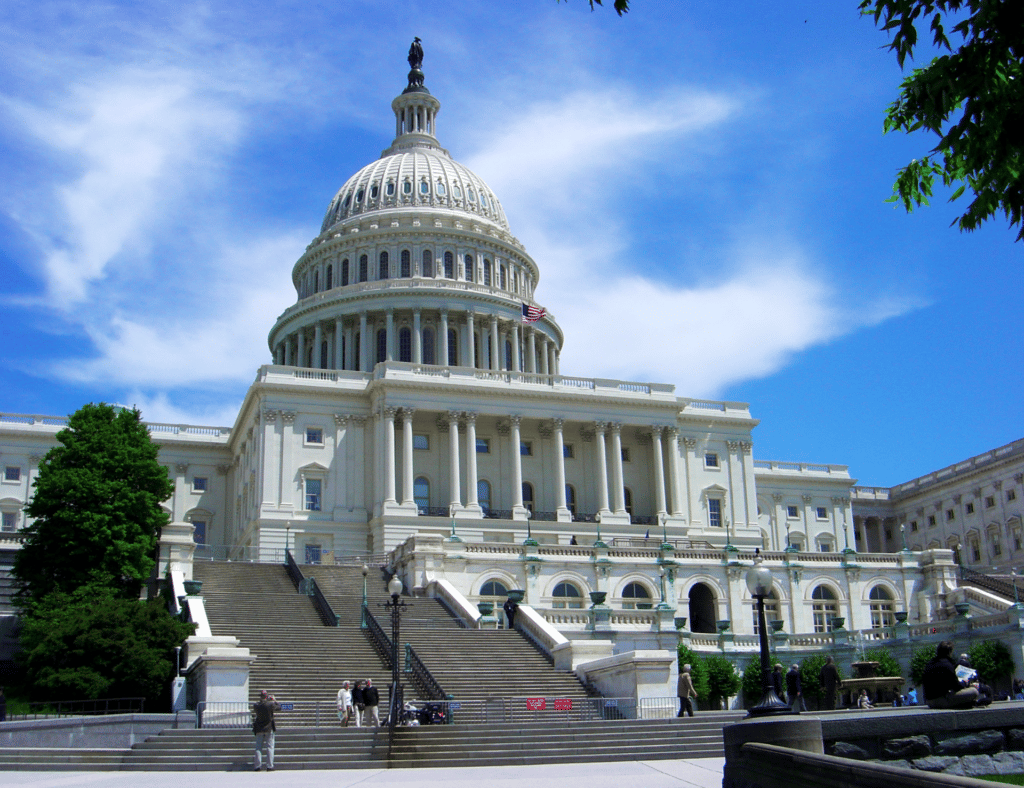
 The US Capitol. Credit: Kevin McCoy. CC BY-SA 2.0.
Pandemic preparedness is often associated with stockpiles, emergency declarations, and specialized response teams. But the real frontline of any outbreak response—whether it involves novel or known pathogens—is the routine, often overlooked infrastructure of primary health care: community clinics, public hospitals, mobile vaccination teams, telehealth checkups, and health workers embedded in neighborhoods. This first line of defense is what catches the first fevers, fills the first prescriptions, or hears the first stories that don’t sound quite right.
Much of this system is funded by social-safety net programs like Medicaid—programs that the so-called “big, beautiful bill” that Republicans in Congress passed Thursday takes an axe to. The $900 billion in health care cuts in the bill—whether through limiting eligibility, reducing federal contributions, or slashing outreach programs—will dismantle the very mechanisms that enable the rapid identification and containment of health threats. Ultimately, this bill could lead to 12 million people losing their health care coverage. Other policy changes, including that the bill lets tax credits for Affordable Care Act health insurance expire, could lead to an additional 5 million people losing coverage.
As I have argued with colleagues in The Lancet, access to primary health care is the cornerstone for preventing disease outbreaks and responding to health crises. Before an outbreak, primary health care providers manage chronic conditions that otherwise increase susceptibility to severe infection and provide early warning of budding threats. During a crisis, those providers help maintain continuity of care, deliver countermeasures, and support community engagement. After a crisis, they provide catch-up services and strengthens long-term recovery.
Outbreaks or pandemics involving novel pathogens, like the 2009 “swine flu” pandemic or H5N1 avian influenza, often affect rural and poor communities first—communities that disproportionately rely on social safety net programs to access care. These are precisely the communities that the bill targets for savings through reduced safety net spending. If local systems are unable to detect and contain outbreaks quickly, the consequences can escalate for public health and the economy. A poorly contained outbreak could prompt other countries to restrict travel, suspend trade, or sever supply chains—decisions that could deepen economic instability and erode the United States’ global credibility.
The United States has already seen more than 130 rural hospitals shut down since 2010, many of them in states that declined to expand Medicaid under the Affordable Care Act. Each closure can leave an entire county without ready access to care, delaying detection of everything from foodborne illness to respiratory outbreaks.
In Kansas, Hutchinson Hospital, which relies heavily on Medicaid reimbursements, estimates that it will need to prepare for the bill’s proposed cuts by reducing its budget by over $7.5 million, along with shouldering costs for patients without insurance. In seeming recognition of the bill’s failings, Republicans inserted a rural stabilization fund into the bill, but this buffer will merely delay the pain.
Black and brown communities—already disproportionately impacted by poor access to care, discriminatory coverage policies, and underinvestment in public health programs—will once again bear the brunt of cost-reductions should the bill pass. These communities suffered some of the highest COVID-19 hospitalization and death rates. Without a robust safety net, they will again be the most vulnerable when systems fail during the next health emergency.
Of course, these risks extend beyond rural and marginalized communities. Many urban medical facilities also rely on Medicaid and Medicare funding to sustain operations. In New York, state officials warn that changes to federal funding formulas in the bill could cost the system billions, affecting care for millions of residents. And in just about every state, additional cost burdens will likely lead to cuts in services or staffing, or both. That means longer wait times, fewer services, and closed doors—whether you’re on Medicaid or not.
Less access to primary care leaves society more vulnerable to public health threats.
In early 2025, a measles outbreak in West Texas led to several hospitalizations and two preventable deaths. Public health officials linked the outbreak to low vaccination rates in counties where many families had lost Medicaid coverage during eligibility re-determinations. It’s easy to see that if doctors, nurses, or lab techs are laid off, or if a clinic never sees a patient because he or she lost coverage, threats can go undetected until it’s too late. If that is paired with diminished Centers for Disease Control and Prevention (CDC) staffing and delayed lab reporting, the window to contain an outbreak closes even more quickly. Because of these delays, children are hospitalized. Schools close. Economic losses mount
The cuts in the bill are compounded by broader challenges and come at a time when public health infrastructure is already under pressure.
Federal agencies like the CDC and the Food and Drug Administration (FDA) are facing staff reductions. State and local public health departments, already underfunded and burned out from the COVID pandemic, are being asked to do more with less. Foreign assistance programs have been rendered largely obsolete, halting support for global programs that strengthen pandemic preparedness in other countries and improve international coordination across the global health security architecture.
When funding cuts land across all levels at once—from community clinics to national labs to international disease surveillance networks—critical functions fall through the cracks. And in outbreak response, even one crack can be enough to let disease spread.
This is what makes the One Big, Beautiful Bill Act, which President Donald Trump signed into law on July 4, so dangerous and short-sighted—even aside from its moral, economic, and strategic failings. Reducing Medicaid in the name of budget efficiency will create long-term risks that are harder and more expensive to contain later. Once these programs are cut, they don’t bounce back easily. Rural hospitals that close rarely reopen, and health workers who are laid off may not return. Trust that is lost—particularly among historically excluded communities—can take decades to rebuild, if it ever can be rebuilt.
There is still time to change course. Federal agencies should ensure that any restructuring efforts protect the core capacity of the health system, especially at the community level. And pandemic preparedness plans (both national and international) should explicitly include support for primary health care as a foundation of effective outbreak response. Finally, we must continue pressing to protect what remains, treating the nation’s health coverage programs currently under threat not as burdens, but as the very infrastructure that keeps us safe.
Perhaps most important, we must carefully track the impacts of this legislation on the people most affected—for the millions of Americans who will lose health coverage, for the rural towns who will lose their only hospital, for the families priced out of basic care, and for a country that keeps learning the same public health lesson the hard way.
The next biosecurity failure may not come from an untraceable virus or a sophisticated bioweapon. It may come from a missed case of listeria in a rural county, or a breakdown in local lab capacity that delays response to an unusual respiratory illness. These moments of failure are preventable, but only if the infrastructure is there to catch them.
Editor’s note: This story was updated to reflect that Trump signed the “One Big Beautiful Bill Act” into law.
Together, we make the world safer.
The Bulletin elevates expert voices above the noise. But as an independent nonprofit organization, our operations depend on the support of readers like you. Help us continue to deliver quality journalism that holds leaders accountable. Your support of our work at any level is important. In return, we promise our coverage will be understandable, influential, vigilant, solution-oriented, and fair-minded. Together we can make a difference.
Keywords: pandemic risks
Topics: Biosecurity







Penny wise pound foolish!!
What amazes me is that the people with more to lose with trump politics are the very people that voted trump. And it was evident what he was going to do.
I also believe that the democrats have a huge part of responsibility, both in their unpreparedness in the whole year before the election, and in their passivity after trump’s victory.
Even if a little schadenfreude might be applicable to the naive adult trump voters, I pity the innocent children that will be sacrificed on the altar of vaccino sceptic, climate deniers and sycophants in the actual government.