Europe’s desire for strategic autonomy is a ‘fait accompli.’ It just needs to decide what that means
By François Diaz-Maurin | Analysis | February 20, 2026
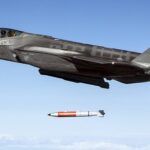
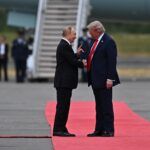
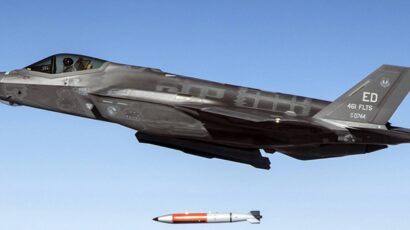
 Illustration by F. Diaz-Maurin, via Jastrow / Wikimedia Commons.
At the Munich Security Conference last week, Europeans focused on meeting their own security needs in the face of continued threats from Moscow and rapidly eroding trust with Washington. Among the discussions, nuclear deterrence was high on the agenda, with several countries announcing bilateral talks on the issue.
But to achieve a credible deterrent to Russia that is no longer—or at least less—dependent on the United States capabilities, European countries will have to work out their different strategic visions. This process will include attempts to find common ground between two proposals for a strategic posture that would rely entirely on either conventional or nuclear deterrence to counter Russia’s threats. Those proposals, however, are insufficient. A European deterrence strategy will need to offer an integrated and holistic approach to the security of the continent.
To reach strategic autonomy, Europeans have started working on closing what some view as a deterrence gap. One difficulty with defining a unified security strategy at the European level is that it requires simultaneous discussions—and agreement—among European NATO members, between the United Kingdom and France, and among the nuclear powers and non-nuclear-weapon states about what deterrence means. Although these discussions are already underway, they are at an early stage, which means it is unclear whether Europeans can overcome their differences on security matters. Whatever form European strategic autonomy may take, it will be Europeans who must decide how much they want their deterrence posture to rely on nuclear weapons.
Between a rock and a hard place. Europe finds itself in the middle of two threats: Vladimir Putin’s Russia, which questions the post-Cold War order and uses aggression and coercion against its neighbors, and Donald Trump’s United States, which openly criticizes its transatlantic allies, threatens Greenland, a NATO territory, and also uses economic coercive tactics. The recent Greenland debacle has raised doubts in European capitals over the credibility of the United States’ security commitment.
In response, European leaders now appear determined to reduce Washington’s leverage, so they are not forced to accept political demands in exchange for security guarantees. “The United States is already kind of bullying Europe, in some very specific aspects, to which [Europeans] will say, ‘Okay, we will reduce your nuclear arsenal, and we will keep the same number of warheads, and then we will reach together the number of warheads that is deemed acceptable by Russia,'” said Héloïse Fayet, a research fellow at the French Institute of International Relations (Ifri) and member of the European Nuclear Study Group which presented its report at the Munich Security Conference.
Europe seeks to reduce its dependence on the United States’ extended deterrence to avoid two situations in particular: One in which the United States would decide not to deploy certain weapon systems in Europe—either because it refuses to do so or is too distracted by a crisis elsewhere; and another in which Russia would be allowed to deploy certain capabilities in Europe that do not pose a security threat to the United States but could be potentially destabilizing to European countries.
What deterrence? The United States’ extended deterrence in Europe relies on the presence of about 80,000 troops and forward-deployed nuclear weapons in six NATO countries (Belgium, the Netherlands, Germany, Italy, Turkey, and possibly the United Kingdom) with dual-capable aircraft in five of them. An extended deterrence provided solely by European capabilities could certainly take different forms, but many observers in Munich believe it can’t be based on a silver-bullet approach. French President Emmanuel Macron understands that to provide a credible deterrent, “it is important to take into consideration all the capacities.”
In recent months, Paris has been pushing for more conventional weapon systems that would make the European deterrent more credible because it would not rely solely on nuclear forces. “Today, when we see the kind of threats that Russia is causing to Europe—hybrid warfare, drone incursions, and maybe one day a couple of soldiers crossing the border—it’s not the kind of threats that can be deterred by nuclear deterrence,” Fayet says. “In that case, you’re not going to nuke Russia.”
In Munich, Macron mentioned long-range missiles and deep precision strike capabilities and vowed to ramp up their production in Europe, saying that these are essential to be able to come to the negotiating table as equals with Russia. “This is very important because it is something, despite the end of the INF Treaty, which will allow us to close the gap.”
Early in the conference, six European countries (France, Germany, Italy, Poland, Sweden, and the United Kingdom) announced they had signed a letter of intent to advance long-range strike and defense capabilities. “I think this is the most significant and official announcement of the Munich Security Conference,” said Camille Grand, Secretary General of the European Aerospace, Security and Defense Industries Association (ASD) and former Assistant Secretary General for defense investment at NATO. The European Long-range Strike Approach is indeed a significant development. For the first time, six European countries have agreed to develop a weapon system based on European technology, and with a range above 500 kilometers—above the threshold of INF—“this is fixing the conventional gap,” Grand said.
In parallel, Europeans are talking about air and missile defense systems that would deny a potential adversary—primarily Russia—the possibility of conducting a successful strike with a nuclear or non-nuclear missile on European soil. “Having a proven capability of intercepting one or several of them—even if a dome is probably out of reach, technically and financially—is something that contributes to deterrence, too.”
At a press briefing of the Sovereign Europe Forum last week, Martin Schoeller (an entrepreneur and a co-founder of the forum) said that if Germany is not going to own nuclear weapons, “France can build mid-range [weapon] systems in Germany and agree that these can be used for the whole of Europe.” Macron went further and opened the possibility of having “perhaps some command capacities at the European scale,” adding, “we should think about that.” But agreeing on producing and deploying certain weapon systems and deciding how to use them and under what conditions are two different things.
“Here we are entering a bit of uncharted territory,” Grand said.
Nuclear deterrence. Experts I talked to see nuclear deterrence as another contributing factor to a holistic European security framework. And a separate discussion is already happening on the type of European nuclear deterrence the continent needs, wants, and can achieve. But “we are at a very early stage of such a conversation,” Grand says.
In Munich, German Chancellor Friedrich Merz and Macron each confirmed that they were having private conversations about extended nuclear deterrence. This was not totally new: Last year, Merz said, “We should talk with both countries [France and the United Kingdom] always, and in addition, from the perspective of supplementing the American nuclear shield, which we of course want to see maintained.” While Germany is barred by treaty from possessing nuclear weapons, Merz added that “the sharing of nuclear weapons is an issue we need to talk about,” and that “we have to become stronger together in nuclear deterrence in Europe.”
What’s new this year is the level of interest that nuclear deterrence is receiving again in Europe. This resembles the situation of the 1960s, when the United States was under enormous pressure from its European allies to make the extended deterrent more credible by deploying additional weapons in Europe after the Soviet Union became a nuclear power. Today, some European countries, like Poland, are asking France to do the same.
The Munich Security Conference had one of its two major publications this year focus on Europe’s nuclear options. “This is very telling,” Grand says. In addition, President Macron mentioned that he’d had private discussions with the United Kingdom and Sweden, and that he was ready to do the same with other European countries “on a selective approach.”

France walks a fine line. In Paris, the issue of sharing its nuclear arsenal is a sensitive one. Presidents since de Gaulle have insisted that France retains the sole authority over its arsenal to maintain its full strategic autonomy. At the same time, they have also signaled that France’s nuclear deterrent has a European dimension.
In Munich, Macron went further, declaring that “part of the vital interests of France was precisely its European footprint.” By footprint here, Macron doesn’t mean that the French nuclear arsenal has some sort of European origin. Experts of the French doctrine told me that the French president meant France would consider using its nuclear arsenal before its territory came under attack. That sounds very much like extending nuclear deterrence.
Another complication for the French debate involves what extended deterrence covers. In the current French doctrine, deterrence includes only a nuclear component. But from what we have seen in Munich, France’s offer of extended deterrence to other Europeans is not limited to nuclear deterrence; it includes deploying conventional systems that have some strategic value at the European level. (In this context, strategic value doesn’t refer to the intercontinental-range weapons covered by New START, but those that can strike deep into Russia or into Europe.) Macron himself sees the French approach as “a way to articulate nuclear deterrence in a holistic approach of defense and security.”
Politically in France, some will see the possibility of extending or sharing the nuclear deterrent as diluting France’s strategic autonomy and credibility. But from a strategic and diplomatic perspective, it may indeed be a working proposal that can fit both France’s security interests and address the differing views about nuclear weapons among Europeans.
France was probably right all along about greater European strategic autonomy, and it may have a shot this time. But Macron knows that not all Europeans are on board with a European version of extended nuclear deterrence. In Munich, for instance, Spanish Prime Minister Pedro Sánchez said that “nuclear rearmament is not the right way” to build Europe’s security strategy, adding that he was “hardly the first one thinking that nuclear deterrence was a far too costly and risky way of avoiding conflict between nations.”
In the coming weeks or months, the French president is expected to deliver a speech that will hopefully clarify the French offer after consulting with European leaders. Timing might be of the essence in this endeavor. Experts and former officials I talked to think that Macron is trying to act fast, to avoid the possibility that European countries lose interest in France’s offer the moment the US administration suddenly decides to appear more Euro-friendly again.
Risks of transitioning away. So far, France and the United Kingdom have been reluctant to explain precisely how much their own nuclear arsenals contribute to deterrence for the rest of Europe. That reluctance has its roots in the US nuclear umbrella that has been so central to the NATO construct. Both European arsenals undoubtedly significantly contribute to the overall deterrence on the continent and are complicating Moscow’s calculations, as would remain the case in a new version of European extended nuclear deterrence.
But the UK and French nuclear deterrents have never been put to any form of stress test, Grand explains. During the Euro Missile Crisis in the 1980s, it was the United States that stretched its deterrent further: After the Soviet Union forward-deployed intermediate-range SS-20 nuclear missiles, threatening Western Europe, NATO responded by announcing the deployment of US Pershing II and ground-launched cruise missiles. The US-Soviet standoff ended in 1987 with the Intermediate-Range Nuclear Forces (INF) Treaty. Now, with the INF and New START treaties gone, Moscow could perceive an opportunity to deploy more nuclear warheads and weapons systems that could directly threaten Europeans.
This is why the two European nuclear powers are cautious: If Paris and London seek to project their own deterrence too fast and too far before Europe closes its conventional strategic gap, they might undermine the credibility of existing US extended deterrence. That US nuclear umbrella continues to receive unaltered bipartisan support in Congress, despite the hostile rhetoric of the Trump administration.
At the same time, if Europe wants to assert more strategic independence from the United States and agrees on the idea that it cannot rely only on conventional forces to counter Russia’s nuclear coercion or tactical nuclear use, Paris and London will inevitably have to find a way to expand their nuclear deterrent contributions. And that will come with high financial costs and political and strategic risks.
“The United States, in a very friendly way, is saying, ‘We are handing over European security to the Europeans,’” says Klaus Regling, a co-founder of the Sovereign Europe Forum. “We’d like it to be an orderly takeover.”
No return. Nobody knows what will emerge from the private discussions on nuclear deterrence going on among Europeans. Nor is it clear what proposals the United Kingdom and France will make to their partners, and how Europeans will work out their differences over the issue of nuclear weapons.
My impression from Munich, however, is that Europeans are at work, seriously exploring their security options—with and without the United States. Even though US Secretary of State Marco Rubio received a standing ovation after his reassuring speech, most Europeans remain unconvinced. They continue to doubt the credibility of the US commitment to the continent. And when trust in credibility is lost, it directly affects how deterrence is perceived by an adversary, who might see an opening.
Europe is already seeking to close its deterrence gap before it opens. No matter what comes next from the US administration, Europe’s pursuit of more strategic autonomy now seems irreversible.
Together, we make the world safer.
The Bulletin elevates expert voices above the noise. But as an independent nonprofit organization, our operations depend on the support of readers like you. Help us continue to deliver quality journalism that holds leaders accountable. Your support of our work at any level is important. In return, we promise our coverage will be understandable, influential, vigilant, solution-oriented, and fair-minded. Together we can make a difference.
Get alerts about this thread
0 Comments
Oldest

François Diaz-Maurin
François Diaz-Maurin is the editor for nuclear affairs at the Bulletin of the Atomic Scientists. Previously, Diaz-Maurin was a MacArthur ... Read More