Listen to this article:
Listen to this article
--:--
This audio was generated using an automated voice. Learn more.
Editor’s note: This article is intended to be read alongside “Is there a nuclear world order?”
The Cold War-era nuclear order—in which the United States and the Soviet Union held sway, establishing treaties that set the nuclear rules for the whole world—has clearly and irreversibly come to an end, but a new order to replace it has not yet coalesced. With the rise of China, India, and other powers, the world has drifted toward multi-polar power dynamics. But with that drift has come a heightened risk of nuclear conflict, the resurgence of arms racing, the proliferation of nuclear weapons, and the erosion of the longstanding nuclear taboo.
These developments make a reshaping of the current world order imperative. To be effective, that reshaping should be accomplished via incremental reform, enabling the nuclear order to be continually refined and corrected in response to evolving global power configurations. To initiate such a process of reform, a composite international mechanism—one that includes bilateral and multilateral arrangements—should be instituted in a dedicated summit of the world’s five nuclear-armed states that focuses on nuclear risk reduction and includes invitations to all other nuclear-weapon states. Within and alongside this summit, the United States, Russia, and China should establish their own bilateral dialogues to enhance nuclear transparency and minimize the risk of miscalculation. And because technological change increasingly affects strategic stability, the intersection of emerging technologies and nuclear weapons should explicitly be a key component of all the aforementioned dialogues.
The order that was. The contemporary international nuclear order stems from the nuclear competition between the United States and the Soviet Union during the Cold War. To safeguard their hegemonic status while averting global catastrophe, these two superpowers established a series of international norms, institutions, and agreements to regulate nuclear activities, promote non-proliferation, and facilitate arms control. This Cold War-era nuclear order was characterized by several key components. First, the United States and the Soviet Union achieved strategic stability through the doctrine of “mutually assured destruction.” Second, arms control negotiations resulted in significant bilateral treaties, such as ABM, INF, SALT, and START, preventing an endless arms race.[1] Finally, the normative prohibition on nuclear weapons use became a widely accepted international taboo, supported by numerous non-governmental organizations and scientific communities highlighting the catastrophic consequences of nuclear warfare.
However, this nuclear order was inherently contradictory. The United States and Soviet Union sought strategic stability while competing for nuclear dominance. Since nuclear deterrence relies on manipulating risk, any security architecture based on deterrence carries the danger of escalation into nuclear conflict. Meanwhile, the nuclear Non-Proliferation Treaty (NPT) regime aimed to curb proliferation while reinforcing nuclear hegemony, allowing dominant powers to maintain their deterrence capabilities and prevent others from developing similar arsenals, thus preserving their strategic advantages and influence in international affairs.[2] Non-proliferation thus consolidates hegemonic control over allies[3] and prevents weaker adversaries from provoking major powers with nuclear weapons.[4] This inherent inequality has led to persistent criticisms of the NPT regime, which institutionalizes a hierarchical distinction between nuclear and non-nuclear states, despite the UN charter’s principle of sovereign equality.
Both China and France strongly criticized the international nuclear order when that treaty was being adopted. During the Korean War and the Taiwan Strait Crisis in the 1950s, China faced nuclear coercion from the United States, and in the 1960s, a nuclear threat from the Soviet Union as Sino-Soviet relations worsened. In response, Chinese leaders asserted that China must develop nuclear weapons to safeguard itself from nuclear blackmail, while simultaneously denouncing the US-Soviet nuclear arms race and their pursuit of nuclear hegemony. After its 1964 nuclear test, China immediately adopted a policy of unconditional no first use and pledged not to use nuclear weapons against non-nuclear states, demonstrating a commitment to self-restraint in nuclear strategy. In China’s strategic culture, nuclear weapons are regarded primarily as political tools to deter nuclear war and counter blackmail, not battlefield weapons. Consequently, China has maintained a limited, credible nuclear force and deterrence, without engaging in an arms race.[5]
Throughout the Cold War, China remained outside the NPT, viewing it as a tool of US-Soviet hegemony that reinforced nuclear inequality. However, by the 1980s, aiming to integrate into the international system, China recognized the adverse effects of nuclear proliferation on its peaceful development and the diplomatic and reputational challenges of refusing to join the NPT. Accepting the difficulty of achieving global nuclear disarmament in the short term, China decided to accede to the treaty. Nevertheless, China’s views on nuclear weapons diverged significantly from those of the United States and the Soviet Union. In the 1990s, China proposed a global no-first-use treaty and urged the U.S. and Russia to lead nuclear disarmament efforts.
Why is the current nuclear order being challenged? Evolving multipolarity, intensifying geopolitical tensions, and rapid technological advancements have profoundly shaped the current and future nuclear order. The interplay of these three factors fuels the arms race and heightens nuclear risks.
First, the global power structure has shifted significantly, with multipolarity becoming more pronounced. The traditional nuclear order, historically dominated by the United States and the Soviet Union, is no longer sufficient to address these evolving dynamics. After the Cold War, the international community entered the
“second nuclear age,” marked by more nuclear-armed states and the rapid development of missiles, weapons of mass destruction, and disruptive technologies. Simultaneously, the proliferation of weapons of mass destruction (WMD) among non-state actors has become a persistent threat. During the Cold War, the United States and the Soviet Union established nuclear deterrence and strategic stability through mutual assured destruction. Today, countries like China, France, the U.K., India, Pakistan, Israel, and North Korea have diverse views on nuclear deterrence and have adopted distinct strategies. Moreover, nuclear deterrence against non-state actors can be very difficult, adding uncertainty to the traditional framework of nuclear stability.
It is important to highlight that the multipolarity in global politics is advancing faster than in the nuclear domain, placing the existing nuclear order under dual pressure from the Global South. For instance, following its expansion, the BRICS bloc now represents approximately half of the world’s population and a third of global GDP.
On critical issues like the global economy and climate change, the Global South is shifting from a “passive norm taker” to a “norm shaper.”[6] In the nuclear domain, the Global South has long criticized the discriminatory nature and persistent nuclear risks associated with the NPT. Today, nuclear weapon states not only neglect their disarmament obligations but are also caught in new arms races and heightened nuclear threats. If non-nuclear-weapon states’ concerns remain unaddressed, the Treaty on the Prohibition of Nuclear Weapons (TPNW) will increasingly challenge the NPT. Moreover, some Global South states may pursue nuclear proliferation to enhance their security and international standing and to achieve strategic influence and recognition. These developments collectively exert immense pressure on the stability of the international nuclear order.
Second, geopolitical tensions have significantly disrupted the global nuclear order. The US withdrawal from the ABM Treaty in 2001 marked a turning point, triggering a crisis in US-Russia strategic stability. NATO’s eastward expansion and US missile defense systems in Europe have prompted Russia to rely more on nuclear deterrence, while the United States and NATO have reinforced their own deterrence and missile defense, escalating a cycle of competition.
The Ukraine crisis further exacerbated tensions, eroding the political trust between the United States and Russia. Geopolitical crises have derailed some arms control agreements, culminating in the collapse of the Cold War-era arms control architecture and a reversal of the nuclear disarmament process. Simultaneously, the longstanding nuclear taboo is increasingly being challenged. Russia has signaled its willingness to use nuclear weapons in the Ukraine crisis, revising its nuclear doctrine, while the United States has proposed a cross-domain deterrence strategy, ready to employ nuclear strikes in response to major non-nuclear attacks. Amid this renewed arms race, the United States and Russia are developing new nuclear weapons, such as low-yield, precision warheads, and exploring doctrines for their “limited use” in conventional conflicts. This shift poses a significant risk by lowering the threshold for nuclear use, increasing the likelihood of escalation.
This strategic interaction between the two nuclear superpowers deeply affects the global nuclear order, posing major challenges to both that order and the non-proliferation regime, encouraging other nuclear-armed states to strengthen their deterrence. This escalates regional proliferation risks, particularly in South Asia, Northeast Asia, and the Middle East, where nuclear challenges persist.
Particularly in the wake of the Ukraine crisis and the resurgence of the Trump administration, countries such as Japan, South Korea, Poland, Türkiye, and Saudi Arabia have actively debated the possibility of deploying or acquiring nuclear weapons. These discussions stem from growing concerns over future regional conflicts and the credibility of extended nuclear deterrence. Meanwhile, the United States’ increasingly inward-looking policies and the potential for prolonged populist governance have compelled European nations to reassess their strategic autonomy.
European leaders are alarmed by the potential for the United States to pressure Ukraine into accepting a subordinate geopolitical role, seeing it as a sign of broader international order erosion. As a result, Europe has entered a “moment of awakening” characterized by substantial increases in defense expenditures and the expansion of long-range missile programs to strengthen military capabilities. France has explicitly declared its willingness to extend a nuclear umbrella over Europe, but some European nations question whether the nuclear arsenals of France and the UK alone can provide adequate security. The ongoing militarization of Europe, especially the proliferation of long-range missile systems, is likely to provoke countermeasures from Russia, increasing the risks of nuclear proliferation and military escalation.
A similar trend is unfolding in the Asia-Pacific region. North Korea’s ongoing nuclear threat has intensified discussions in Japan and South Korea about nuclear sharing or developing independent nuclear capabilities. Doubts about the reliability of external security guarantees have fueled these debates, reflecting broader changes in regional security dynamics. In addition, Western countries are increasingly concerned about China’s evolving nuclear posture. Over the past two decades, China has rapidly expanded its economy and military, significantly enhancing its strategic nuclear capabilities. Owing to differences in strategic culture, China has traditionally kept a small nuclear arsenal and maintained low transparency to bolster its deterrence. Consequently, Western countries frequently speculate about the trajectory of China’s nuclear development and the strategic intentions underpinning its modernization efforts. The United States has categorized China and Russia as nuclear peers, asserting that future conflicts in the Taiwan Strait pose significant nuclear risks and advocating for China’s inclusion in the nuclear arms control framework alongside the United States and Russia.
However, China regards such concerns as misunderstandings and distortions and an inherently unfair assessment. Historically, China and the United States have never established a strategic stability framework comparable to that between the United States and the Soviet Union/Russia. Until the Obama administration, the US Nuclear Posture Review acknowledged the necessity of maintaining mutual vulnerability between China and the United States. However, this concept was never institutionalized or reinforced through formal agreements. China has long been apprehensive that its relatively limited nuclear arsenal could be vulnerable to a preemptive US strike, while the United States has consistently refused to assure that it would avoid military actions targeting China’s nuclear retaliatory capabilities. Due to domestic political constraints and opposition from its Asia-Pacific allies, the United States has been unwilling to officially recognize a stable strategic relationship with China based on mutual vulnerability. Under the Trump administration, the United States reoriented its defense strategy toward great power competition, initiated nuclear force modernization, and expanded its missile defense capabilities. Additionally, escalating trade tensions and deteriorating bilateral relations between China and the United States further undermined opportunities for meaningful dialogue on strategic stability.
The evolving multipolarity and escalating geopolitical tensions have driven nations to advance emerging technologies, intensifying technological competition and further reinforcing multipolarity and geopolitical rivalries. The risks and uncertainties associated with emerging technologies and nuclear weapons underscore the fragility of nuclear deterrence. Conventional military advancements, such as missile defense systems, conventional prompt global strike weapons, and hypersonic missiles directly challenge the survivability of nuclear arsenals. Meanwhile, emerging domains like space, cyber technologies, and artificial intelligence introduce additional risks of accidental escalation. Major military powers are fiercely competing over these emerging technologies. However, the absence of effective international regulations governing state interactions in these fields exacerbates the risks of spillover effects and conflict escalation.
For instance, in missile defense, China’s long-standing security concerns have not been adequately addressed by the United States.[7] Given its smaller nuclear arsenal, China is more vulnerable than Russia to the adverse consequences of the US withdrawal from the Anti-Ballistic Missile Treaty. Furthermore, the US deployment of the THAAD system in South Korea, claimed to be aimed at the North Korean nuclear threat, has weakened the credibility of China’s nuclear deterrent. While the United States could mitigate China’s concerns through public commitments and technical safeguards, ensuring that THAAD is not aimed at China, it has chosen not to do so. Instead, President Trump stated in the Missile Defense Review that the United States reserves the right to intercept missiles targeting its territory from anywhere and at any time. The expiration of the Intermediate-Range Nuclear Forces (INF) Treaty has worsened regional tensions, with the United States deploying intermediate-range missiles near China through regional allies, increasing the risk of nuclear escalation stemming from conventional missile strikes. A similar dynamic is unfolding in Europe, where NATO and Russia face analogous challenges. Consequently, China, Russia, and the United States are locked in a continuous cycle of offensive and defensive competition in hypersonic weapons and missile defense, directly influencing their nuclear postures and strategic adjustments.
In space, the Trump administration established the US Space Force and announced the “Golden Dome” initiative, increasing the likelihood of expanded missile defense capabilities and undermining strategic stability. The United States has also strengthened the resilience of its space infrastructure with revolutionary technologies like Starlink. It has explicitly stated that Starlink can be repurposed as a “star shield” for military use, blurring the line between military and civilian space assets.
China has already observed two instances when Starlink satellites exhibited “abnormal approaches” to its space station. Looking ahead, the Starlink project aims to deploy over 40,000 satellites, while China currently operates only about 900. This vast asymmetry alone poses a potential threat to China’s critical space assets and could significantly impact military operations on Earth. Furthermore, China has observed Starlink’s crucial role in the Ukraine conflict and is increasingly concerned about its potential use in future Taiwan contingency. However, existing international regulations impose no restrictions on Starlink, exacerbating the risks of escalation in space and increasing the likelihood of spillover effects into nuclear deterrence dynamics.
In cyberspace, the United States adheres to a doctrine of “persistent engagement” and “hunt forward” operations, which emphasize proactive cyber defense by extending operations into adversary networks. This approach blurs the line between cyber offense and defense. Additionally, the US military maintains the “left of launch” strategy, aiming to disrupt adversaries’ missile capabilities through cyber intrusions and preemptive missile interception.
Finally, artificial intelligence has introduced greater complexity to the calculations underlying strategic stability. On one hand, AI-powered sensors and space technologies enhance intelligence gathering, improve transparency, reduce strategic miscalculations, and aid crisis communication, supporting strategic stability and non-proliferation efforts. On the other hand, AI-enabled satellite reconnaissance and cyber operations can more effectively detect concealed nuclear weapons and conduct targeted strikes, increasing the perceived risk of preemptive disarmament for states with smaller arsenals and lower survivability. Additionally, AI-integrated missile defense systems improve decoy identification, boosting interception rates.
Moreover, AI’s broad military applications are speeding up decision-making, increasing uncertainty, and escalating nuclear risks.
Amid rising multipolarity and geopolitical tensions, rival states increasingly suspect one another of leveraging emerging technologies to erode their strategic advantages. As a result, major military powers are expected to intensify their competition over these technologies, amplifying the intersection of emerging technologies and nuclear risks. Traditional arms control treaties and mechanisms are ill-equipped to address these new challenges. Geopolitical frictions have also hindered meaningful international dialogue on emerging technologies, preventing collaborative efforts to mitigate risks and manage conflicts in this evolving security landscape.
Policy recommendations. While the Cold War-era nuclear order has ended, the emergence of a new, multipolar global nuclear order remains incomplete. To address the growing risks of nuclear conflict and proliferation, a gradual and systematic reshaping of the nuclear regime is essential, emphasizing incremental reforms, bilateral and multilateral dialogues, and the integration of emerging technologies to maintain global stability. Such a reshaping could include these elements:
- The five nuclear powers identified in the Non-Proliferation Treaty (P5) should convene a dedicated summit on nuclear risk reduction, inviting all nuclear-armed states to participate. Given the gravity of nuclear issues, heads of state must take primary responsibility for nuclear policy and war prevention. With the current geopolitical polarization, traditional diplomacy alone is inadequate. The P5 should reaffirm the principle that “a nuclear war cannot be won and must never be fought” and commit to a “no first test” policy to strengthen the nuclear testing moratorium. Additionally, they should enhance negative security assurances to non-nuclear states, alleviating nuclear threat concerns and reducing proliferation risks. Non-nuclear states should also unite in calling for a global dialogue on nuclear risk reduction. The United States and Russia must resume strategic dialogue at the earliest opportunity, while China and the United States should also establish strategic dialogues to enhance transparency and minimize miscalculation risks. The absence of mutual understanding regarding each side’s strategic intentions has fueled US concerns over China’s nuclear capabilities, often driven by worst-case scenario assessments. Concurrently, China remains deeply apprehensive about the credibility of its nuclear deterrent due to the United States’ expanding missile defense systems, forward deployment of intermediate-range missiles, and strategic community discussions on limited nuclear war and escalation. To mitigate these risks, both sides must prioritize sustained high-level engagement to dispel misconceptions, build trust, and reduce tensions. The intersection of emerging technologies and nuclear weapons should be a key focus of the dialogue. The agreement between China and the United States on ensuring human control over critical nuclear decisions sets a valuable precedent for global governance. Building on this, China, the United States, or the P5 could explore AI’s impact on strategic stability and establish a responsible framework for AI use in the nuclear domain. However, the challenges of verifying emerging technologies complicate traditional arms control mechanisms. Therefore, dialogues should include experts from emerging technology fields and the private sector, fostering innovative approaches to address technological risks. Where bilateral or multilateral negotiations are not feasible, states should adopt unilateral risk-reduction measures, such as “fail-safe” reviews, to mitigate nuclear risks from accidents and errors, paving the way for future collaboration.
- Regarding regional non-proliferation challenges, it is imperative to address both the symptoms and root causes, balancing security concerns with economic development. The P5, alongside regional stakeholders, should collaborate to provide credible security assurances and establish political and economic engagement mechanisms that alleviate proliferating states’ security concerns, reducing their perceived need for nuclear weapons. Furthermore, the international community must remain vigilant about emerging nuclear proliferation risks. The P5 should engage in dialogue with these emerging proliferation-prone countries, working to restore regional strategic balance and address their security concerns through political commitments, security frameworks, and necessary conventional military cooperation.
- The future nuclear order should prioritize the indivisible survival and security of all humanity, requiring collective responsibility from all nations. In a multipolar world, the P5 must cooperate in managing nuclear risks rather than escalating nuclear competition or confrontation. These nuclear weapons countries should engage more closely with non-nuclear-weapon states, addressing their concerns and striving to rectify the inequities of the current nuclear order. In particular, the governance of emerging technologies must integrate the perspectives of non-nuclear-weapon states and the Global South. Security governance should not come at the expense of the development of southern nations. Instead, all countries must collaborate to foster a global security culture that unequivocally rejects the use of nuclear weapons, with the ultimate goal of achieving complete nuclear disarmament. Policies such as sole-purpose declarations or no-first-use commitments play a constructive role in this process by reducing reliance on nuclear weapons, lowering the risk of nuclear use, and mitigating overall nuclear threats. To enhance the credibility and practical implementation of such policies, experts and scholars should continue to conduct in-depth research and policy development.
Notes
[1] Anti-Ballistic Missile Treaty, Intermediate-range Nuclear Forces Treaty, Strategic Arms Limitation Treaty, and the Strategic Arms Reduction Treaty, respectively.
[2] Michael C. Horowitz, The Diffusion of Military Power: Causes and Consequences for International Politics (Princeton, N.J.: Princeton University Press), p. 106. See also Report by the Committee on Nuclear Proliferation, January 21, 1965, FRUS, 1964–1968, Vol. 11.
[3] Francis J. Gavin, Strategies of Inhibition: U.S. Grand Strategy, the Nuclear Revolution, and Nonproliferation, International Security (2015) 40 (1): 9–46.
[4] Mark S. Bell, “Beyond Emboldenment: How Acquiring Nuclear Weapons Can Change Foreign Policy,” International Security, Vol. 40, No. 1 (Summer 2015), pp. 87–119.
[5] 李彬:《中国核战略辨析》,《世界经济与政治》2006年第9期,第16-22页。
[6] 黄宇韬:《从自主争论到目标争论——新兴国家如何推动国际规范的转变》,《世界经济与政治》2023年第4期,第62-95页;徐进:《理念竞争、秩序构建与权力转移》,《当代亚太》2019年第4期,第4-25页。
[7] Within the framework of the China-U.S. Track 2 Strategic Dialogue, Chinese experts have persistently signaled their concerns to Washington, urging the United States to impose constraints on its missile defense capabilities. However, the United States refused to offer any assurances.
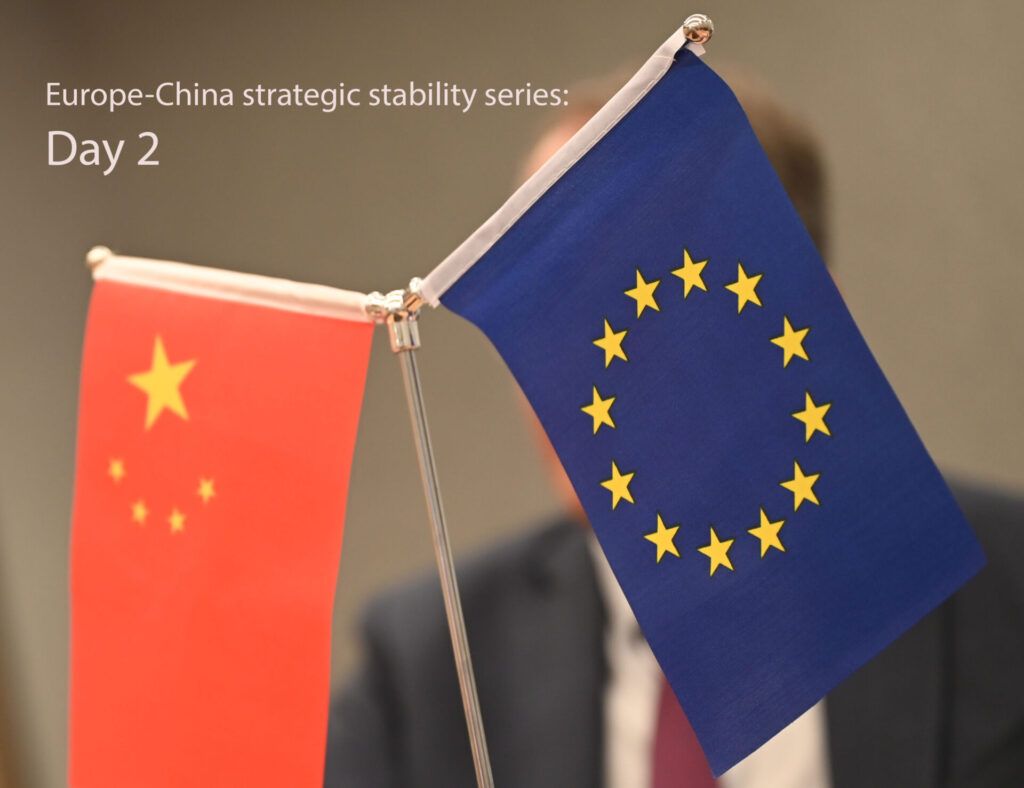
Europe, China, and strategic stability
A series that brings together European and Chinese experts in parallel and co-drafted articles examining key dimensions of contemporary strategic stability.
Together, we make the world safer.
The Bulletin elevates expert voices above the noise. But as an independent nonprofit organization, our operations depend on the support of readers like you. Help us continue to deliver quality journalism that holds leaders accountable. Your support of our work at any level is important. In return, we promise our coverage will be understandable, influential, vigilant, solution-oriented, and fair-minded. Together we can make a difference.
Keywords: China, Europe, series, strategic stability
Topics: Analysis, Nuclear Risk
Get alerts about this thread
0 Comments
Oldest
Tianjiao Jiang
Tianjiao Jiang is an associate professor at Development Institute of Fudan University and visiting fellow at Paul Tsai China Center of Yale Law ... Read More