UNSCOM’s work to uncover Iraq’s illicit biological weapons program: A primer
By Stephen Black, Henrietta Wilson, Filippa Lentzos | July 21, 2021
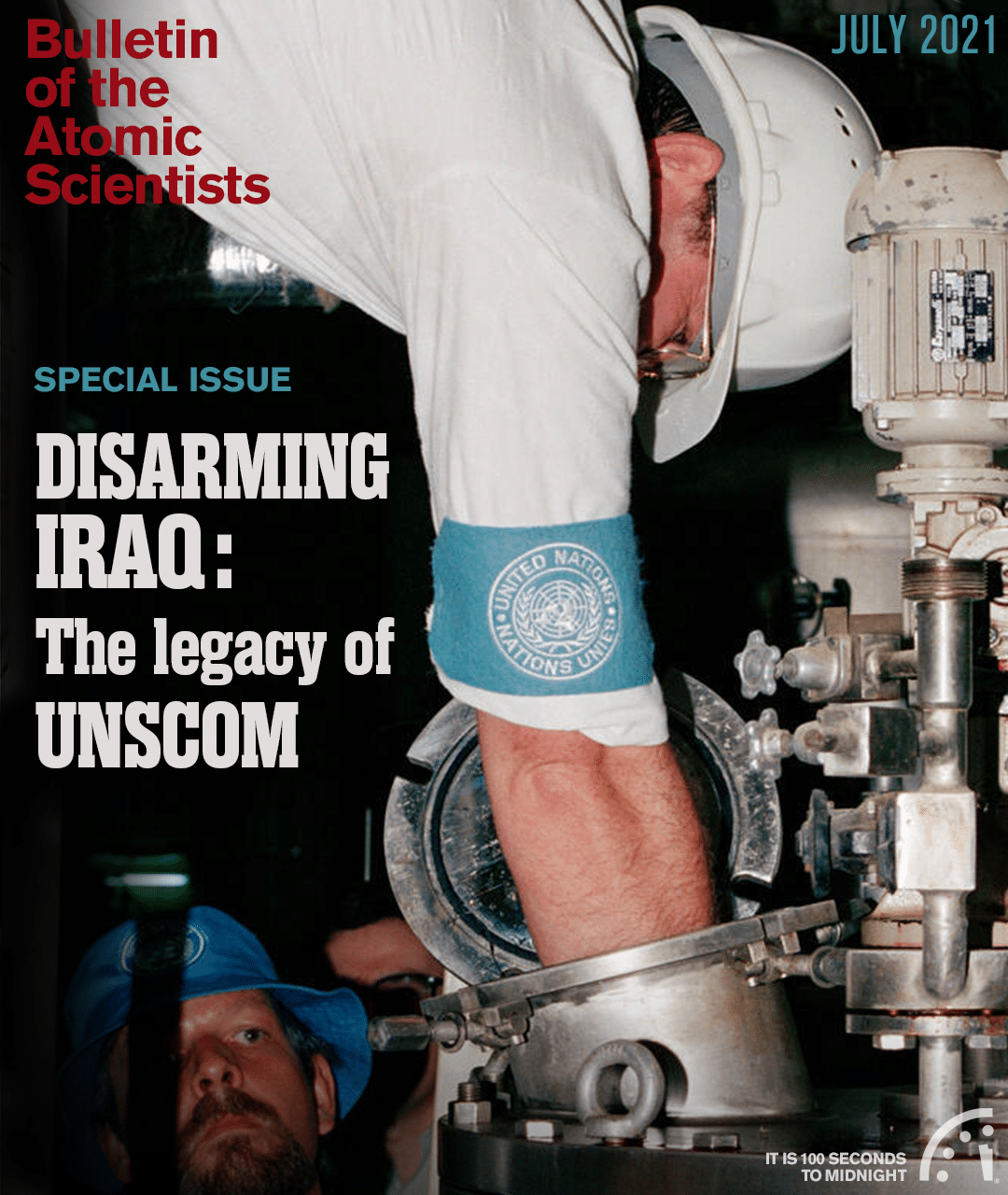
A UN inspector from the United Kingdom takes a sample of nerve agent from a container, October 7, 1991. (UN Photo)
UNSCOM’s work to uncover Iraq’s illicit biological weapons program: A primer
By Stephen Black, Henrietta Wilson, Filippa Lentzos | July 21, 2021
Loading...
Together, we make the world safer.
The Bulletin elevates expert voices above the noise. But as an independent nonprofit organization, our operations depend on the support of readers like you. Help us continue to deliver quality journalism that holds leaders accountable. Your support of our work at any level is important. In return, we promise our coverage will be understandable, influential, vigilant, solution-oriented, and fair-minded. Together we can make a difference.
Keywords: Iraq, UNSCOM, biological weapons, chemical weapons, verification, weapons of mass destruction
Topics: Chemical Weapons, Nuclear Risk, Special Topics

Stephen Black
Stephen Black worked for the United Nations Special Commission (UNSCOM), serving as Historian (1993–99), as well as Deputy Chief Inspector, ... Read More

Henrietta Wilson
Henrietta Wilson conducts policy-relevant research on armaments and arms regulations on a freelance and employed basis, and teaches undergraduate and ... Read More

Filippa Lentzos
Filippa Lentzos is an associate professor in Science & International Security at King’s College London, where she leads research projects on ... Read More