
How the movies (and the rest of the media) made me into an anti-nuclear weapons campaigner
By Helen Caldicott | July 8, 2026
VIP observers at Parry Island wear safety goggles as they watch the test of an 81-kiloton atomic bomb as part of Operation Greenhouse on Enewetak Atoll on April 8, 1951. It was the first test in a series designed to develop a thermonuclear weapons (the hydrogen bomb). The “father of the atomic bomb,” J. Robert Oppenheimer, strongly opposed the development of the hydrogen bomb—about a thousand times more powerful than its predecessor—which he felt was unnecessary, escalatory, and destabilizing. Credit: Brookings Institution/Defense Special Weapons Agency
How the movies (and the rest of the media) made me into an anti-nuclear weapons campaigner
By Helen Caldicott | July 8, 2026
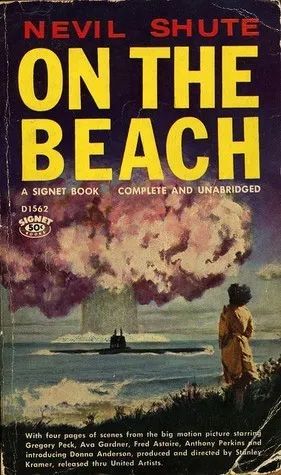
When I was 19 years old, I read a book that would profoundly influence the course of my life: On the Beach by Australian author Neville Shute. The novel, set in the southern city of Melbourne where I grew up, told the story of a nuclear war that began by accident in the Northern Hemisphere. The citizens of Melbourne awaited the arrival of radioactive fallout drifting down from the north, knowing it would soon envelop them. The haunting images from the book—people sipping their final gin and tonic at the Melbourne Club, parents obtaining cyanide capsules to spare their children the agony of acute radiation sickness, and the once bustling, beautiful streets of Melbourne left lifeless—never left my mind.
Years later, I watched the film adaptation of On the Beach, directed by Stanley Kramer (Gray 2015). The cast included Fred Astaire, Gregory Peck, Anthony Perkins, and Ava Gardner. Before leaving Australia, Gardner famously remarked that Melbourne was the perfect place to make a film about the end of the world—a comment that did not sit well with many Melbournians.
Though I have to say that my awareness of the dangers of war began much earlier. When I was seven, a loud fire siren sounded while I was at school. My teacher asked, “What’s that?” and I responded, “The war’s over.” This was a moment of great relief for my mother, who had lived in fear of invasion—convinced we might soon be speaking Japanese after their submarines entered Sydney Harbour. Those were frightening days.
At that young age, I did not yet understand that the war had ended when the Americans used a new type of weapon in Japan—a bomb so powerful it could melt people’s eyeballs and vaporize them. As I followed the news, I was both amazed and terrified by reports of the superpowers developing, constructing, and testing ever more powerful nuclear weapons. It seemed they were driven by bravado, never realizing that if these weapons were used, they would destroy themselves and everything they loved.
By the time I was 10, I had decided to become a doctor. Previously, I had wanted to be a teacher, but one Sunday morning, as I climbed into bed with my mother, I told her that I could help more people as a doctor. My heroes at the time were the Good Samaritan and Robin Hood.
When I was 15, my family moved from Melbourne to Adelaide after my father accepted a position as manager of a paint factory. We bought a beautiful house with a long veranda draped in wisteria and built a tennis court in the back, as Dad was a champion tennis player.
Unbeknownst to us, we arrived just in time to be exposed to radioactive fallout from British nuclear tests conducted in the north of the state, on Aboriginal tribal land, where even plutonium-laced bombs were detonated. The public was not informed about the fallout. However, Hedley Marston, a scientist at the Medical and Veterinary Institute, measured radioactive isotopes in the thyroids of sheep and cattle, finding high levels of contamination (Keane 2022). Similarly, the bones of Adelaide children contained elevated levels of strontium 90. Despite his findings, Marston was shunned by his colleagues and the establishment. Medical students and doctors were never informed of this radioactive danger, nor were surveys conducted to assess the long-term cancer risks—a total cover-up by the Australian government to protect their relationship with the British Empire.
During my first year of medical school, I had the privilege of learning from a wonderful genetics lecturer, Peter Martin. He taught us about the groundbreaking research of Hermann Muller, which showed that genetic mutations could be induced in fruit flies by exposure to radiation (Nobel Prize Foundation 1946). These findings applied to all living creatures: Radiation could cause genetic diseases, cancer, and leukemia in both animals and humans.
At the time, deadly isotopes like strontium 90 and cesium 137 blanketed the northern hemisphere, contaminating the food supply from atmospheric nuclear testing by the United States and Russia. Yet, the media and the public seemed oblivious to the biological and medical consequences. In my innocence, I would stand on a chair in the University Refectory during lunch, trying to rally my fellow students to take notice, but my efforts were in vain.
However, in 1971 I discovered that the French government had been testing nuclear weapons on the Mururoa atolls (BBC News 2021) in the Pacific Ocean and—God help us—someone handed me a leaked document that showed that the Adelaide water supply (which used rainwater for domestic use) had been exposed to particularly high levels of fallout from them.
At that time I was working 80 hours a week as an intern in the Adelaide Children’s Hospital, seeking to gain a degree in the Royal Australian College of Physicians. But I managed to find the time to write a letter to the newspaper about this threat to the health of the Adelaide population, particularly children, from the imbibing of nuclear isotopes. That night I was asked to present the facts on TV—and the suddenly the whole country became enraged about the “bloody French.”
Spontaneous marches of thousands of people occurred in city streets, whole pages of letters were sent to the editor, people stopped buying French wine and cheese, and mail workers refused to deliver French letters.
I was asked by the Australian Labor Party to go with a delegation to see the French government in Tahiti, but we were refused permission to disembark when we arrived—so the next minute I was on the plane to France with a person named Jim Cairns, who went on to become Australia’s deputy prime minister. When we talked to the relevant French minister, he said their bombs were perfectly safe, so Jim replied “Well, blow them up in the Mediterranean.” The French minister’s face blanched and he replied: “There are too many people living around the Mediterranean.”
For the first time in my life I sat opposite men who didn’t give a damn about killing children.
At the same time, I discovered that our own prime minister, Gough Whitlam, was keen to start exporting uranium from Australia. I went to the university library and took out a book called “Poisoned Power: The Case Against Nuclear Power,” by two physicists who had been asked by the Atomic Energy Commission to explore the medical dangers emanating from the nuclear power industry (Gofman and Tamplin 1971). As I read it my hair nearly fell out, so shocked was I.
I tried to warn the press about these dangers and even went to Parliament House to speak to Whitlam, but to no avail. However, I did know a railway engineer who was a member of the Australian Council of Trade Unions, who suggested that we write to all the trade unions in Australia about my medical concerns and request that I speak to them. So I travelled around the country addressing workers at 6 am before they left for work, drawing genes and sperm on old blackboards and educating them about the biological dangers of radiation. Soon after, the Australian Council of Trade Unions passed a resolution banning uranium mining throughout the country. (This was important, because what they declaimed would be followed by all the unions in Australia.)
To me, the whole incident exemplifies the statement of Thomas Jefferson that “An informed democracy will behave in a responsible fashion.” Which has been my dictum throughout my life, as I practice Global Preventive Medicine (Jeong 2026).
Around this time I came upon the satiric movie, Dr. Strangelove, starring my favorite actor, Peter Sellers—a movie which also had a memorable scene with his fellow actor, Slim Pickens, who played the role of the cartoonishly over-patriotic and excessively gung-ho plane commander who rode a nuclear weapon like some kind of crazed cowboy on a bronco bull, making a mockery of the notion of the safe use of nuclear weapons.
All these events spurred on my commitment to anti-nuclear activism—but it wasn’t until I immigrated to the United States to take up a position at the Boston Children’s Hospital that I became involved in the medical consequences of nuclear weapons and nuclear power. I was asked to speak at a local neighborhood meeting about nuclear power, and a local publisher then asked me to write a book outlining these facts. Consequently, the book Nuclear Madness was born (Caldicott 1978)—and was serendipitously published during the accident at Three Mile Island. (At that time, I was on a speaking tour of Australia. I remember my sister burst into the bathroom saying there had been an accident in a reactor.)
My God! I came back to the US and was asked to speak to a terrified crowd in Harrisburg—the nearest city of any size to the Three Mile Island nuclear power plant—trying to reassure them while also outlining what the dangers could be. Portions of this speech were played on national TV.
A young doctor who worked at the Cambridge City Hospital, Ira Helfand, came to talk to me about a referendum in Cambridge to ban all nuclear activities. As we discussed the implications I turned to Ira and said “This is really a medical problem”—and thus we re-started Physicians for Social Responsibility (PSR), with the goal of educating the American public about the medical consequences of nuclear power and nuclear war (Drollette 2017). I travelled the country giving grand rounds at many hospitals, educating my colleagues, and recruiting them to PSR.
In the mid-80s we accrued 125 chapters and 25,000 members, as well as symposiums on the medical consequences of nuclear wars—which were very popular. At one of these events in California, a Hollywood agent named Pat Kingsley heard me talk and offered to help me get interviews in Vogue, Ladies Home Journal, and on popular TV shows such as Phil Donohue, Merv Griffin, and others, educating the public (Galloway 2013).
Such was the response that a million people marched in New York demanding nuclear disarmament. And in 1985, the International Physicians for the Prevention of Nuclear War (parent organization to PSR) was awarded the Nobel Peace Prize. And I’ve been told that our work helped to initiate the film The Day After, which was viewed by millions of Americans— including President Reagan (Stover 2018). It had such an impact on Reagan that he agreed to meet with Soviet Premier Gorbachev in Reykjavik, setting the stage for disarmament treaties like START and New START (Drollette 2026).
It all inspired me to give a speech in 1982 in Plattsburgh, New York—a city which had long been home to a large and important Strategic Air Command Base. A film of the speech was made by a young Canadian filmmaker, Terre Nash, who was still in college at the time. Titled If You Love This Planet; it was labeled as so-called “foreign propaganda” by the Reagan Administration’s Justice Department in an attempt at censorship—which only served to create a media firestorm of interest (Hays 2023). The film went on to win an Oscar for best short documentary. In her Oscar acceptance speech, Nash thanked the US Justice Department for the extra publicity (Academy Awards 1983).
According to The Washington Post, “The Canadian environment minister, John Roberts, said the move was something he expected from the Soviet Union, not the United States, and the Canadian government requested that the propaganda label be removed” (Hays 2023).
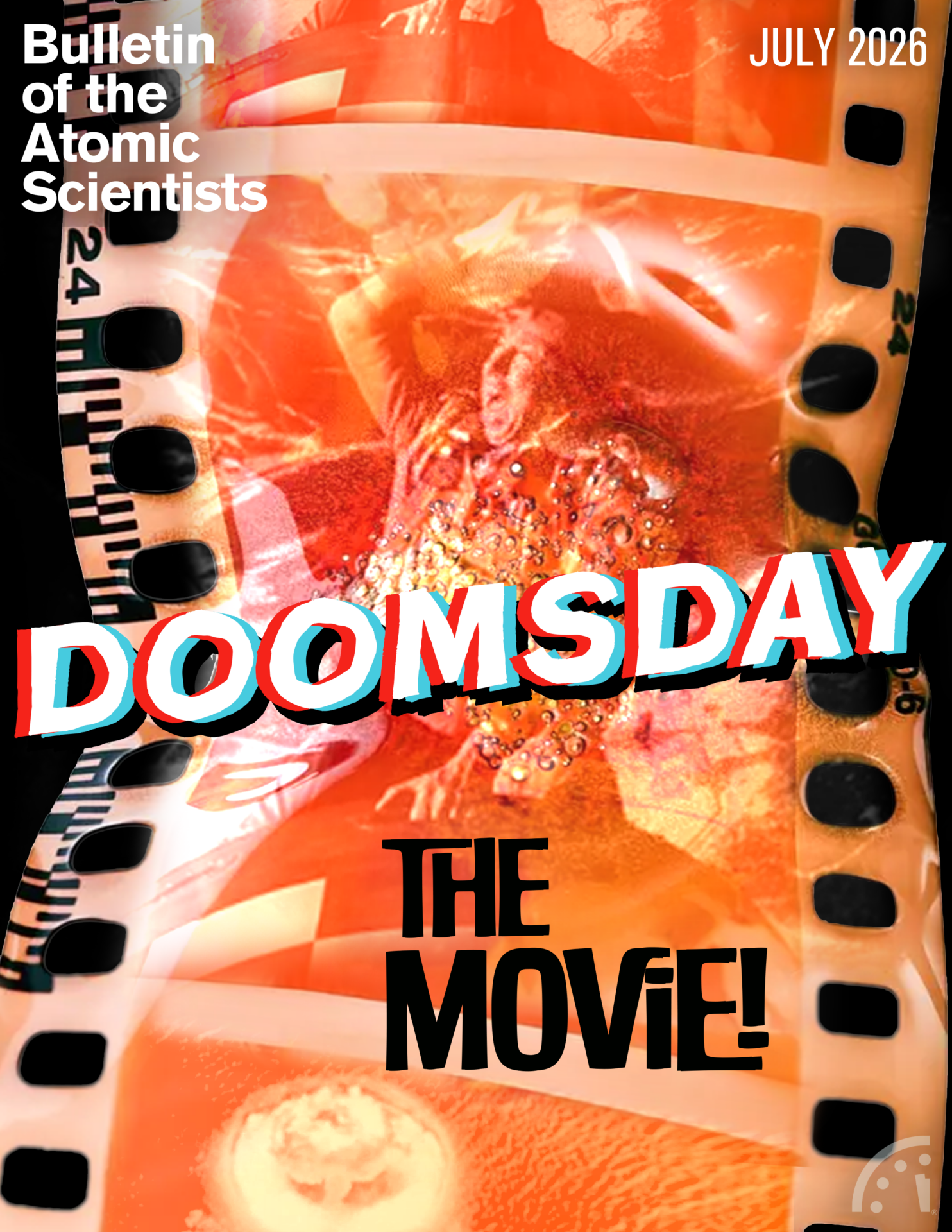
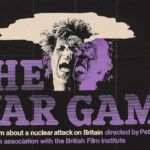
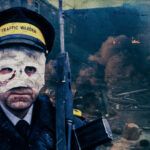
In summary, when I look back, I can see that films—and all media—have certainly played a constant role in my anti-nuclear work. Thus I feel they can sometimes determine the course of history.
Editor’s note: Readers can find more in this no-holds-barred Bulletin interview with Helen Caldicott conducted on May 14, 2018: https://www.tandfonline.com/doi/full/10.1080/00963402.2018.1461976
Together, we make the world safer.
The Bulletin elevates expert voices above the noise. But as an independent nonprofit organization, our operations depend on the support of readers like you. Help us continue to deliver quality journalism that holds leaders accountable. Your support of our work at any level is important. In return, we promise our coverage will be understandable, influential, vigilant, solution-oriented, and fair-minded. Together we can make a difference.
Keywords: anti-nuclear activism, disarmament, memoir, nuclear tests, nuclear weapons, protest, radiation
Topics: Magazine, Opinion, Personal Essay
Helen Caldicott
Helen Caldicott is a prominent Australian physician, author, and anti-nuclear advocate. Born in 1938 in Melbourne, she specialized in pediatrics and ... Read More






It is truly shocking how politicians can turn their backs on humanity.
One movie my high school in Canberra showed us kids that had a similar effect on my was Silo 15, the Aussie version of it – there’s a West German version of it as well. And lately I’ve discovered Threads; but I saw The Day After in 1984, and Special Bulletin in 1988 and Dr Strangelove in 1990. It’s hardly a Christchurch Call, but are there any budding filmmakers out there willing to make movies on the current nuclear war threats? I could imagine there are young Indians and Pakistanis who are deeply concerned about the risk of nuclear war… Read more »
I heard Helen Caldicott speak when I was a student at the University of Vermont in 1975 or ’76. I’ve never forgotten her message.