Follow our Iran coverage

The brutal, powerful legacy of Threads

By Daniel W. Drezner | July 8, 2026

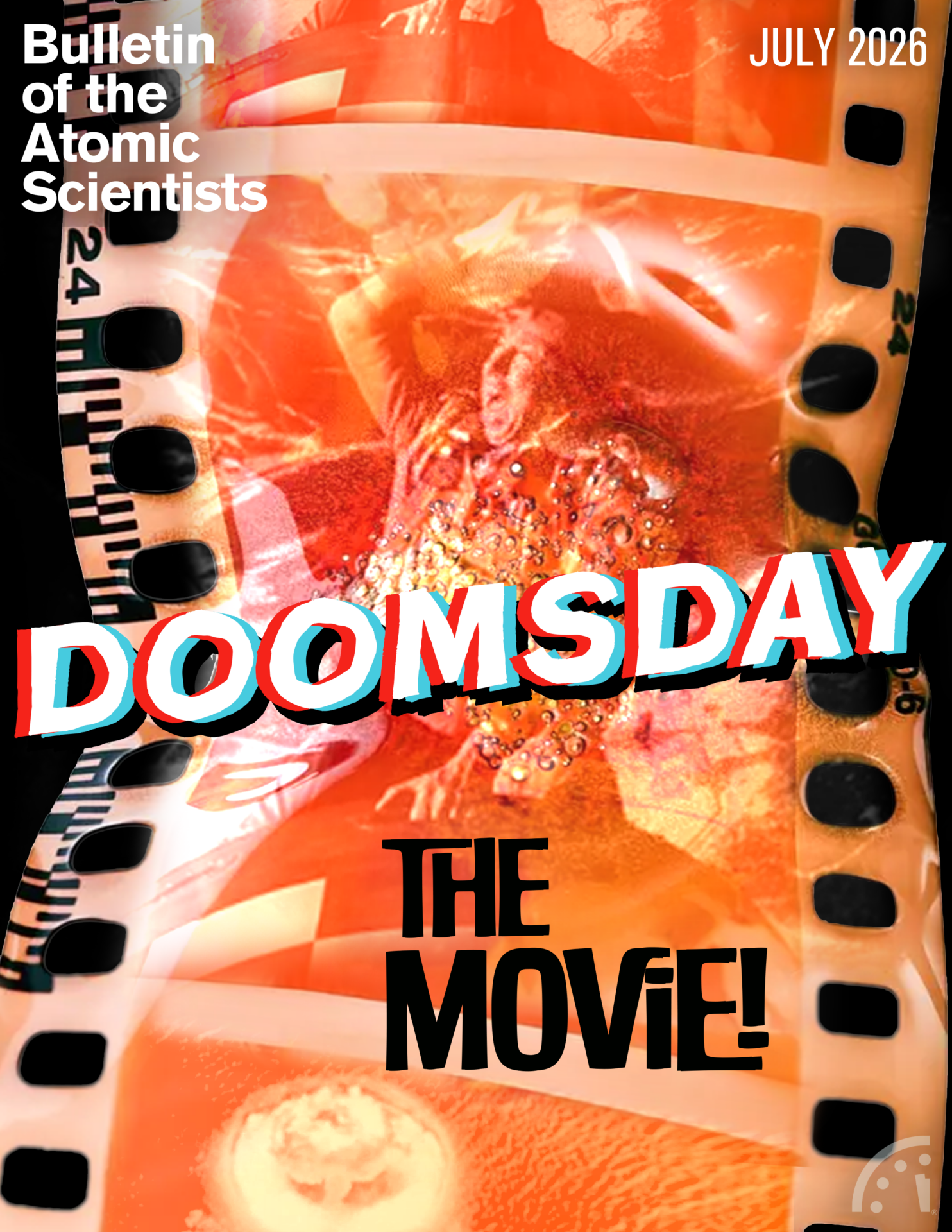
An iconic scene from “Threads.” BBC screen capture.

The brutal, powerful legacy of Threads

By Daniel W. Drezner | July 8, 2026

In the annals of apocalyptic cinema, the nuclear war subgenre might have the widest possible variance of quality. There are universally acknowledged classics, like Stanley Kubrick’s Dr. Strangelove. There are important but flawed films, like Sidney Lumet’s Fail Safe. There are movies that focus more on the post-apocalyptic phase that include some unintentionally goofy offerings, like Jack Smight’s Damnation Alley or the Hughes brothers’ The Book of Eli. After a temporary lull in this genre, Kathryn Bigelow’s recent A House of Dynamite offered a pungent reminder that the risk of nuclear war remains nonzero.

Among devotees of this particular subgenre, however, there is one movie that is venerated above all others: Mick Jackson’s 1984 UK film Threads, currently available to watch on Tubi and to rent on Amazon Prime. Threads traces the slow march towards global thermonuclear war stemming from a crisis in the Middle East—and the devastating effects such a conflict would inflict on Great Britain. The reason aficionados venerate it is simple but harsh: Of all the films in the genre, Threads has, by far, the grimmest ending. Threads is the very epitome of an apocalyptic narrative in which the living would envy the dead. The movie is so unrelenting that a recent documentary about the making of the film concluded that some of its cast and crew “suffered with the trauma of being involved” (Aslett, 2025).

Is that a good thing? For apocalyptic cinephiles, the answer would be an unqualified “yes”—and that was certainly Jackson’s intent.

For discerning readers of the Bulletin of the Atomic Scientists, however, the answer is slightly more muddled. Threads is a difficult watch—and therefore somewhat less effective in attracting viewers who are not fans of apocalyptic cinema. The evidence that Threads influenced public sentiment or public policy about nuclear weapons at the time of its release is limited at best. This is in stark comparison to two films that came out a year earlier: Nicholas Meyer’s The Day After and John Badham’s WarGames. Unfortunately, however, Threads’ scenario about how a nuclear war might break out has acquired new relevance in the 21st century. Furthermore, as a statement about the futility of nuclear war planning, the film is mordantly effective.

Like its American doppelgänger The Day After (Stover 2018), the plot of Threads is roughly divided between pre-war scenes of quotidian life mixed with rising panic, a terrifying sequence in which the missiles launch and mushroom clouds engulf the horizon, and then post-war scenes of despair and destruction. Another parallel is that both films eschew paying attention to high-level policy makers, focusing instead on a single community’s reaction to nuclear brinkmanship followed by nuclear war. In The Day After, it is Lawrence, Kansas; in Threads, it is Sheffield, England.

The pre-war plot of Threads mostly follows Ruth and Jimmy, portrayed by Karen Meagher and Reece Dinsdale, respectively. They are two Sheffield teens who let a makeout session in Jimmy’s car go a bit too far. Ruth winds up pregnant. Deciding to keep the baby, Ruth and Jimmy decide to get married and rent out a flat. This leads to some considerable British awkwardness. The dinner between Ruth and Jimmy’s parents following the revelation of Ruth’s pregnancy is as stilted and discomfiting as one would expect from middle-aged English parents meeting each other under such circumstances. The class differences between the two families—Ruth’s family is middle-class while Jimmy’s is more working class—only heighten the awkwardness.

As the nuclear crisis unfolds, all of the Sheffield characters begin preparing for the worst—including Ruth and Jimmy’s families. Large demonstrations and counter-demonstrations emerge as the prospect of war nears. Hospitals decide to discharge patients so they can prepare for those wounded in the war. The British government cracks down on dissent, arresting a swath of protest leaders. The government also broadcasts some truly ghastly advice of what to do in case of a nuclear attack. Local leaders start organizing for a war footing (more on this later). Ruth’s family prepares their cellar as a bomb shelter, whereas Jimmy’s family constructs a flimsier lean-to from mattresses and wood. As the global conflict escalates from conventional to nuclear exchanges, the film announces that the Soviet Union has dropped 210 megatons on the United Kingdom. The nuclear weapons have a devastating effect, killing tens of millions, destroying two-thirds of the housing stock, and unleashing fires and devastation across the country.

The effect on the film’s protagonists is equally severe. Jimmy, attempting to find Ruth as the missiles are flying, is never seen again after the first nuclear explosion and is presumed dead. Jimmy’s parents barely survive the initial attack. Ruth’s family has somewhat better initial luck: Ruth, her parents, and her grandmother survive in their basement for a spell.

British society collapses after the nukes are dropped. Survivors are mostly left to fend for themselves (again, more on this later). Food becomes scarce as a result of looting and nuclear winter-induced crop failures. Declaring martial law, the government attempts to use food as currency, awarding it for hard labor and withholding it as punishment. Summary executions occur to deter looting.

The fate of Jimmy and Ruth’s families is equally severe. Jimmy’s brother is killed in the initial nuclear strike, his mother dies from radiation burns, his father dies soon after from radiation poisoning, and his sister is arrested and imprisoned. As for Ruth, following the death of her grandmother, she flees her family’s shelter. Sojourning to Jimmy’s house, she finds only his mother’s corpse. When she returns to her family’s home, she discovers that looters have murdered her parents. Still pregnant, she escapes Sheffield and makes her way to the countryside. Ruth gives birth to her daughter Jane alone in an abandoned barn, using her teeth to cut the umbilical cord.

Up until this moment in the film, the structural differences between Threads and The Day After are relatively minor, mostly reflecting the cultural differences between rural America and industrial England. In both movies, ordinary families are torn apart from the horrors of nuclear war and the ensuing nuclear winter. At this point, however, Threads begins its brutal final act, daring to go to a level of despair far beyond The Day After’s more graceful ending.

Threads flash forwards a decade, notifying viewers that Great Britain’s surviving population has plummeted to a medieval level of 4,000,000 to 11,000,000 people. (By comparison, Great Britain has about 80,000,000 people today.) With no fuel or electricity, the survivors have little choice but to cultivate crops by hand. The children born after the war are developmentally delayed for multiple reasons: fetal radiation exposure, a dearth of organized schooling, and parents traumatized by the war. Jane is no exception, possessing only a rudimentary vocabulary. Ruth and Jane till agricultural fields along with everyone else. Ruth, prematurely aged and blinded by cataracts from exposure to nuclear radiation, dies when Jane is 10. Jane is completely unmoved by her mother’s passing, simply taking the last of Ruth’s possessions and heading out to explore the countryside.

Threads then flash-forwards another three years. Some industry and electricity has returned but living conditions remain appalling and food is still scarce. Jane gloms onto two boys, Gaz and Spike, and as a group they steal food to stay alive. When they are caught in the act, one of the boys is shot dead. Jane and the surviving boy fight over the remaining food, a fight that quickly turns into rape. Nine months later, Jane gives birth in a makeshift hospital. The nurse wraps Jane’s mute baby in a bloody sheet and gives it to Jane. She looks at her new child with dumbfounded disgust—at which point the film ends.

The final act of Threads makes its message clear: as devastating as the initial nuclear war would be to an advanced developed society, successive generations would face even greater challenges. Threads basically predicts that even if nuclear war was not an immediate extinction-level event, devolution over the next few generations would likely bring an end to human civilization.

While Threads retains a cult following to this day, it would be difficult to claim that it was as influential as The Day After. The latter film, which starred Oscar-winner Jason Robards and aired on ABC following weeks of controversy and public debate, garnered more than 100 million viewers, earning the highest ratings ever recorded for a made-for-television movie in American history (McKairnes 2023). Despite criticism from the Reagan administration, President Reagan watched the film, and it clearly had an impact. Viewing it at Camp David, Reagan wrote in his diary, “It is powerfully done… It’s very effective & left me greatly depressed… My own reaction was one of our having to do all we can to have a deterrent & to see there is never a nuclear war” (Ronald Reagan Presidential Library and Museum 1983). Four years later, when Reagan signed the Intermediate Nuclear Forces treaty, he reportedly telegrammed director Nicholas Meyer to say, “Don’t think your movie didn’t have any part of this, because it did” (The State Journal-Register 2015).

To be sure, Threads generated waves in the United Kingdom, but its global effect was far more muted. It was not reviewed widely in the United States—and, because it came out a year after The Day After, occupied familiar ground for American audiences. Although director Mick Jackson has claimed in interviews that he knows from first-hand sources that Reagan also watched Threads, there is no contemporaneous evidence to buttress that claim (The Scotsman 2009).

While The Day After was hailed for its brutal depiction of life after a nuclear war, its portrayal was relatively gentle compared to Threads. Most of its major characters are portrayed sympathetically—and most survive the initial nuclear exchange. The hospital where the protagonist worked continued to function, albeit at a bare-bones level. The final scene, in which Jason Robards’ character returns to his home to see squatters occupying a pile of rubble, treats all of the characters humanely. In interviews, Meyer has noted that his film presented “nuclear war on a good day as opposed to what the reality is likely to be” (Alter 2022).  In contrast, there are few characters to root for in Threads—Jimmy cheats on Ruth after she’s pregnant, for example. Post-nuclear authoritarianism is also more evident. The unrelenting downward spiral of Threads might be more accurate—but that makes watching it all the more painful.

a fictional nuclear bomb explodes over Sheffield England
In 1982, Mick Jackson produced and directed a short documentary for a science program called “A Guide to Nuclear Armageddon.” This provided the grist for a later, two-hour drama, that was to be called “Threads” a few years later. Both films focused on the subject of nuclear war from the viewpoint of everyday people. BBC screen capture.

That said, Threads’ cult following is deserved—though not merely for the bleakness of the final section. In retrospect, the film’s depiction of the run-up to nuclear war holds greater contemporary relevancy. And Threads’ depiction of emergency planning in case of nuclear war might be its greatest and most powerful legacy—a darkly humorous tribute to the absurdity of planning for the end of the world.

The Day After’s origin scenario for the start of World War Three was centered on the then-controversial placement of Pershing II missiles in West Germany and the Soviet Union’s bellicose response to it. While extremely relevant to the early 1980s, that particular scenario has obviously been overtaken by events.

Threads, on the other hand, posits a crisis escalation that feels all too contemporary. The trigger for the start of nuclear war is US-backed regime change in Iran. The Soviet Union invades northern Iran in response. The crisis escalates when the nuclear submarine USS Los Angeles sinks in the Persian Gulf. American troops are then deployed to western Iran’s oilfields, and the United States sets an ultimatum for a joint withdrawal. US and Soviet forces engage in a limited nuclear exchange in Mashhad, in northeastern Iran. US and Soviet warships subsequently exchange fire, and the aircraft carrier USS Kitty Hawk is sunk in the Persian Gulf, where it is stationed along with elements of the Israeli navy. The United States then enforces a blockade on Cuba, and the USSR orders the departure of NATO forces from Berlin. The global launch of ICBMs ensues.

The parallels to geopolitics in 2026 are mildly discomfiting, to say the least. As of the spring of this year—at the time of writing this article—the United States is bombing Iran in a haphazard effort to foment regime change. The Trump administration is also enforcing a blockade of Cuba following military action in Venezuela to cut off its energy sources. In response to the joint US-Israeli bombing, the theocratic regime in Iran is launching missiles and drones across the region from Cyprus to Saudi Arabia. Israel is expanding the war by bombing Beirut repeatedly in an effort to diminish Hezbollah. Iran’s functional closing of the Strait of Hormuz threatens to have ripple effects across the global economy.

The obvious difference, of course, is the absence of the Soviet Union as a superpower rival to the United States. To date, US bellicosity in the Middle East has mildly exacerbated tensions with the People’s Republic of China (Chia 2026)—but the risk of a military crisis escalation remains muted. Nonetheless, the end of the rules-based, post-World War II liberal international order has heightened the danger of a regional conflict unexpectedly escalating into a more global conflict. Less than three weeks into the Iran war, President Trump publicly referenced the possibility of nuclear weapons (Trump BlueSky 2026). It is noteworthy that all of the actions described in the previous paragraph took place after what Canadian Prime Minister Mark Carney described in Davos in January of this year as “a rupture in the world order, the end of a pleasant fiction and the beginning of a harsh reality, where geopolitics, where the large, main power, geopolitics, is submitted to no limits, no constraints” (Carney/World Economic Forum 2026). In other words, anything could happen and the parallels between the Threads scenario and the present day are more than a little unsettling.

The more darkly amusing legacy of Threads is that it is perhaps the best fictional rendering of what sociologist Lee Clarke labeled “fantasy documents”—disaster planning for worst-case outcomes that alter the underlying system, in which the plans seem detached from reality. In fantasy documents, unrealistic assumptions are often made about catastrophic outcomes in order to promulgate standard operating procedures for such contingencies. As Clarke noted in his book Mission Improbable: Using Fantasy Documents to Tame Disaster, preparing for nuclear war—particularly in the area of nuclear civil defense—often leads to absurd assumptions and plans. Clarke explained, “To mount an effective case that it makes sense to talk about defending against thermonuclear bombs and restoring to normalcy a society devastated by nuclear destruction demands that the singularity of nuclear war be dispensed with…. [thereby offering] the potential to transform the rarefied world of nuclear war planning into something more mundane and hence more rational” (Clarke 1999).

Any large organization needs to engage in planning in order to convert radical uncertainty into more psychologically manageable forms of risk—a point that Clarke noted in his book. As Dwight Eisenhower famously said, “plans are worthless, but planning is everything” (Dwight D. Eisenhower Presidential Library Quotes 1957). Clarke, however, is hardly the only social scientist to note the absurdity of how governments plan for contingencies surrounding a nuclear war (Ellsberg 2017). Sociologist Lynn Eden concluded in her 2004 book Whole World on Fire: Organizations, Knowledge, and Nuclear Weapons Devastation that for decades, US nuclear planners radically underestimated the damage that would occur from a thermonuclear war from uncontrollable nuclear fire (Eden 2004). As Eden explained in a 2021 article for the Journal of Peace and Nuclear Disarmament: “As they work, planners strip out the human meaning of the consequences of the hypothetical actions they are planning. They do this because the complex and detailed tasks that command their attention have already removed vivid references to human society” (Eden 2021).

All of these tropes are on vivid display in a subplot of Threads that follows Sheffield city comptroller Clive Sutton, played by Harry Beety. Sutton is tasked by the British central government with forming an emergency preparedness response committee in case a nuclear war does occur. Sutton obliges, performing his duties like any diligent bureaucrat, to the point of ignoring his wife’s entreaties to stay with her as the crisis escalates. Clive and his team head to their emergency bunker as the crisis worsens, securing stores of food to distribute if war breaks out. They ride out the attack in their bunker, trying to reach other government units while getting buried under a mountain of rubble.

Despite the committee’s preparations, they offer no immediate public response. At first this is to avoid radioactive fallout. However, as the committee’s plight becomes more desperate with no conceivable means of exit from their bunker, their callousness towards the other survivors increases. At one point, an exasperated Clive responds to a request to distribute food with, “What’s the point of wasting food on people who are going to die anyway?!” Another official suggests providing workers only 1,000 calories a day and everyone else only 500 a day. At the end of their tether, the committee bickers with one another as the situation continues to deteriorate. They accomplish little during their time in the bunker. A month after the attack, Clive’s committee is found dead in their bunker, having achieved nothing of consequence. The entire subplot is a vivid demonstration of what happens when fantasy planning meets brute reality.

As the memory of Cold War nuclear brinkmanship recedes, it is all too easy to dismiss The Day After and Threads as historical artifacts with little relevance to the 21st century. That would be a mistake. Leaders like Trump and Russia’s Vladimir Putin are now brandishing nuclear threats in response to military setbacks (Mills 2024). Such threats might sound unrealistic and detached from reality, but as this journal notes, it is now 85 seconds to midnight (Bulletin of the Atomic Scientists 2026). In a world in which there has been no actual historical parallels to envision a thermonuclear war, leaders may have no choice but to rely on fictional narratives to guide their thinking (Jones and Paris 2018). If that is the case, then the apocalypse cinephiles are right to advocate for Threads. Leaders need to know just how bleak the aftermath of a real nuclear war would be.

References

Alter, E. 2022. “The Day After director addresses the prospect of a nuclear war between America and Russia: ‘These are very scary times.’ ” April 8. Yahoo Entertainment. https://www.yahoo.com/entertainment/the-day-after-nicholas-meyer-america-russia-ukraine-nuclear-war-130354918.html

Aslett, C. 2025. “Threads cast and crew suffered ‘trauma’ after film.” August 29. BBC News. https://www.bbc.com/news/articles/cg7jxr4pgp1o

Bulletin of the Atomic Scientists. 2026. “The Clock Shifts—Doomsday Clock Timeline.” Bulletin of the Atomic Scientists. January 27. https://thebulletin.org/doomsday-clock/timeline/

Carney, M. “Davos 2026: Special address by Mark Carney, Prime Minister of Canada.” January 20. World Economic Forum. https://www.weforum.org/stories/2026/01/davos-2026-special-address-by-mark-carney-prime-minister-of-canada/

Chia, O. 2026. “Trump seeks to delay meeting with Xi in China.” March 17. BBC News. https://www.bbc.com/news/articles/cn9e0z7v3nxo

Clarke L. 1999. Mission Improbable: Using Fantasy Documents to Tame Disaster. Chicago: University of Chicago Press, p. 93

Dwight D. Eisenhower Quotes. 1957. “Remarks at the National Defense Executive Reserve Conference, 11/14/57.” Dwight D. Eisenhower Presidential Library, Museum & Boyhood Home. https://www.eisenhowerlibrary.gov/eisenhowers/quotes

Eden, L. 2004. Whole World on Fire: Organizations, Knowledge, and Nuclear Weapons Devastation. New York: Cornell University Press.

Eden, L. 2021. “U.S. Planning for Pandemics and Large-Scale Nuclear War.” January 26. Journal for Peace and Nuclear Disarmament. Vol. 4. pp 368-377. https://www.tandfonline.com/doi/full/10.1080/25751654.2021.1887553

Ellsberg, D. 2017. The Doomsday Machine: Confessions of a Nuclear War Planner. December 5. New York: Bloomsbury USA/Macmillan Publishers. https://academic.macmillan.com/academictrade/9781608196708/thedoomsdaymachine/

Jones, C.W., and Celia Paris. “It’s the End of the World and They Know It: How Dystopian Fiction Shapes Political Attitudes.” November 23. Perspectives on Politics. Cambridge University Press. https://www.cambridge.org/core/journals/perspectives-on-politics/article/abs/its-the-end-of-the-world-and-they-know-it-how-dystopian-fiction-shapes-political-attitudes/3853105561CB840EAB79258DC2575849

McKairnes, J. 2023. “A slice of television history: Why 100 million viewers tuned in to watch a TV movie in 1983.” November 20. USA Today. https://www.usatoday.com/story/entertainment/tv/2023/11/20/the-day-after-1983-movie-turns-40/71570792007/

Mills, C. 2024. “Russia’s use of nuclear threats during the Ukraine conflict.” December 20. House of Commons Library, UK Parliament. https://commonslibrary.parliament.uk/research-briefings/cbp-9825/

Ronald Reagan Presidential Library and Museum. 1983 The Diary of Ronald Reagan. October 10. Ronald Reagan Presidential Foundation and Institute. https://www.reaganfoundation.org/ronald-reagan/white-house-diaries/diary-entry-10101983

The Scotsman. 2009. “End of the world revisited: BBC’s Threads is 25 years old.” September 5. https://www.scotsman.com/arts-and-culture/end-of-the-world-revisited-bbcs-threads-is-25-years-old-2443424

The State Journal-Register. 2015. “A few recollections of Ronald Reagan on the day after his 104th birthday.” February 7. https://www.sj-r.com/story/news/columns/2015/02/07/a-few-recollections-ronald-reagan

Stover, D. 2018. “Facing nuclear reality: 35 years after The Day After.” December 13. Bulletin of the Atomic Scientists.https://thebulletin.org/facing-nuclear-reality-35-years-after-the-day-after/

Trump, D. 2026. BlueSky post. March 19. https://bsky.app/profile/rothschildmd.bsky.social/post/3mhgmpmvgms2e


Together, we make the world safer.

The Bulletin elevates expert voices above the noise. But as an independent nonprofit organization, our operations depend on the support of readers like you. Help us continue to deliver quality journalism that holds leaders accountable. Your support of our work at any level is important. In return, we promise our coverage will be understandable, influential, vigilant, solution-oriented, and fair-minded. Together we can make a difference.


Get alerts about this thread
Notify of
guest

0 Comments
Oldest
Newest Most Voted