Climate change exacerbates nuclear risks in the Arctic. And we are not ready
By Nikita Gryazin, Iren Marinova | Analysis | July 29, 2026
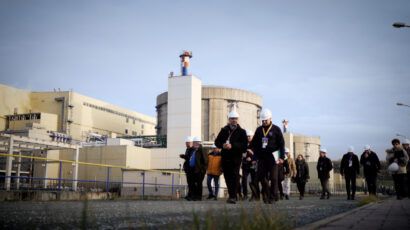
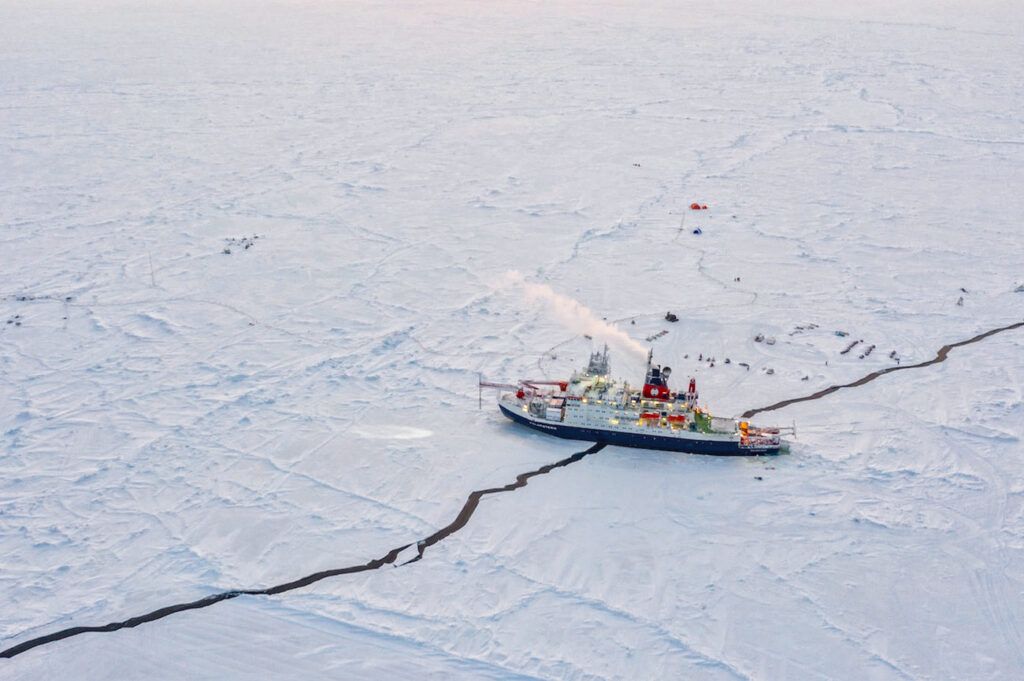 Climate change is physically altering the operational environment of nuclear deterrence in the Arctic, but the institutions capable of managing these risks are fragmented and frozen in place. (Photo by Manuel Ernst / UFA-Filmteam for NASA)
Listen to this article:
Listen to this article
--:--
This audio was generated using an automated voice. Learn more.
Editor’s note: This article is published as part of a continuing collaboration between the European Leadership Network and the Bulletin of the Atomic Scientists.
Climate change is transforming the Arctic: Melting sea ice, thawing permafrost, and changing maritime accessibility are opening new territories, resources, and shipping routes while reshaping the region’s strategic landscape. These changes have placed the Arctic at the center of a geopolitical competition between Russia, NATO states, and increasingly China. But the significance of these developments extends beyond economic interests and regional rivalry.
The Arctic hosts critical military infrastructure, strategic nuclear assets, and key pathways for power projection, making it a geopolitical magnifying glass in the evolving global security environment. But while climate change is widely recognized as a threat multiplier in the Arctic, regional governance has not yet adapted to this new reality. Climate change, geopolitical competition, and nuclear risk are typically treated as separate policy challenges, managed by separate institutions with different mandates. The global climate governance institutions approach the Arctic primarily through a focus on climate change effects and environmental management, while the Treaty on the Non-Proliferation of Nuclear Weapons (NPT), the bedrock of the global nuclear order, addresses nuclear risk through the traditional pillars of non-proliferation, disarmament, and peaceful uses of nuclear energy. At the regional level, the Arctic Council, the leading intergovernmental forum for Arctic governance and cooperation, explicitly excludes military security from its mandate. The result is a growing governance gap that no longer reflects the magnitude and complexity of issues in the Arctic.
The governance of the Arctic remains organized around institutional silos that treat climate, security, and nuclear issues as separate rather than mutually reinforcing threats. This disconnect leaves policymakers ill-prepared to manage the security consequences of a rapidly changing Arctic as global tensions are rising and the nuclear order is already under strain. Addressing the governance deficiency in the Arctic is now both a regional and a nuclear risk-reduction imperative. It requires a complementary risk-reduction dialogue—potentially structured as a Track 1.5 mechanism—alongside Arctic-specific planning within NATO, greater attention to regional risks through the NPT process, and renewed bilateral risk-reduction channels.
The Arctic under a nuclear umbrella. A main source of increased nuclear dangers in the Arctic is the intensified geopolitical competition among interested nuclear-armed powers. Increased cooperation between Beijing and Moscow and the expansion of NATO to encompass seven of the eight Arctic states have reshaped Arctic geopolitics around growing competition between Russia and, increasingly, China on one side, and the United States and NATO on the other. This happens as the entire Arctic region now finds itself under a nuclear umbrella.
This strategic competition carries important nuclear dimensions.
The Arctic remains central to Russia’s second-strike nuclear deterrent, hosts critical military infrastructure, including early-warning systems and two-thirds of its sea-based nuclear forces. The region also serves as a key operating environment for Russia’s strategic submarines, which have historically relied on Arctic ice cover for concealment from NATO anti-submarine warfare assets, using the region’s unique acoustic environment and under-ice operating conditions to reduce detectability. Climate change has begun to erode the very geography underpinning this strategy. At the same time, China has expanded its economic, scientific, and military footprint in the region through closer cooperation with Russia and growing interest in Arctic shipping routes and resource development.
For the United States, the Arctic is central to homeland defense and nuclear deterrence, serving as a key theater for missile warning, strategic surveillance, and submarine operations. In response to Russia’s growing Arctic posture, NATO has significantly expanded its own presence through exercises, deployments, and anti-submarine warfare activities.
Finland and Sweden, by joining NATO in 2023 and 2024, respectively, have altered deterrence dynamics and the broader nuclear balance in the Arctic. Their accession has changed the Nordic region from being a peripheral space of nuclear restraint to becoming a strategically integrated frontline of the alliance’s deterrence posture. For decades, both Nordic countries remained non-aligned and staunch promoters of non-proliferation, and even NATO members Denmark and Norway maintained cautious policies on the peacetime stationing of nuclear weapons on their territories. The extension of NATO’s nuclear umbrella resulting from their accession has marked a critical strategic shift in the Arctic. While nuclear stationing in the region remains politically sensitive, NATO’s expansion across the European Arctic increases the strategic significance of the High North and heightens the potential for escalation surrounding Russia’s Arctic-based nuclear assets.
In early 2026, the US administration’s coercive rhetoric over Greenland generated significant political tensions across the North Atlantic. But the Greenland crisis, combined with general shifts in US foreign policy towards Europe in the last year, has raised serious concerns among European allies over the long-term credibility of the US nuclear umbrella. The Nordic interest in complementary European deterrence arrangements involving France and the United Kingdom has also intensified as a result.
Nuclear dangers in the Arctic. A less predictable Arctic means a less predictable deterrence environment. Melting ice and increased maritime access raise the likelihood of submarine detection, close military encounters, and miscalculation between nuclear-armed powers operating in increasingly contested waters. These strategic changes in the Arctic extend beyond deterrence calculus and into an urgent need for regional cooperation.
Novaya Zemlya, the archipelago hosting Russia’s nuclear test infrastructure, sits atop a far older problem. Between 1955 and 1990, the Soviet Union conducted 224 nuclear detonations there, releasing a total of around 265 megatons of explosive energy, and scuttled more than 100 decommissioned nuclear submarines in the surrounding Barents and Kara seas. Plutonium and cesium from both sources are detectable in regional sea sediments and soil beneath glaciers. Permafrost, which used to keep much of this contamination stable, is now thawing. Researchers showed that the Arctic’s Cold War nuclear legacy is one of the least-understood consequences of global warming, as radioactive isotopes locked in frozen soil for decades are now finding new pathways in the environment. Novaya Zemlya remains largely closed to independent researchers, and Russia has offered minimal transparency about current contamination levels at the test site.
The Arctic is also increasingly becoming a theater for nuclear signaling. Russia has repeatedly invoked its nuclear capabilities in the context of confrontation with NATO, embracing more aggressive forms of signaling and appearing more willing to blur the thresholds surrounding potential nuclear use. The result is a region where climate disruption, military competition, and nuclear deterrence are becoming mutually reinforcing pressures.
A fragmented governance system frozen in place. Existing governance institutions have not yet adapted to the rapidly evolving nature of these multifaceted threats in the Arctic. The region’s governance remains reliant on a fragmented and complex ecosystem of international treaties, UN bodies, and regional forums that primarily dictate shipping, resource management, and environmental protection. But the unique complexity of challenges in the Arctic and the rising geopolitical tensions require a more integrated approach.
Geopolitical tensions have removed many of the mechanisms that historically helped manage Arctic issues. Since Russia’s full-scale invasion of Ukraine in 2022, the Arctic Council has been largely paralyzed, scientific cooperation has deteriorated, and global arms control structures have continued to erode. No treaty governs nuclear activities in the region, and the collapse of US-Russia arms control frameworks has left few institutional safeguards in place.
These overlapping gaps compound one another: Regional governance relies on multiple different institutional arrangements; the Arctic Council cannot discuss military activity; and the NPT review process does not address region-specific escalation risks. This results in a structural blind spot that leaves states without agreed rules of the road at precisely the moment when the risk of miscalculation is rising. The absence of any dedicated forum that brings together climate scientists, arms control experts, and defense officials means that the linkages between environmental change and nuclear risk remain invisible to policymakers until a crisis makes them undeniable.
Closing the governance gap. The disconnect between siloed governance bodies and self-reinforcing risks in the Arctic demands concrete responses across several institutional levels. Despite its current constraints, the Arctic Council remains the region’s most successful institutional forum for circumpolar cooperation. Institutional bridges should be built around it as a cornerstone. But cooperation through the Arctic Council has been resilient precisely because its mandate explicitly excludes military security and instead focuses on scientific cooperation, sustainable development, and participation of indigenous populations.
Rather than expanding the Arctic Council’s mandate to encompass military security, the Arctic states should instead focus on closing the governance gap between climate change, geopolitical competition, and nuclear risks. This could be achieved through a complementary Arctic risk-reduction dialogue, potentially structured as a Track 1.5 mechanism, that operates alongside the Arctic Council and brings together foreign ministers, defense officials, coast guards, scientific experts, and representatives of indigenous communities. It could potentially be convened by an Arctic state with a strong record of regional diplomacy, such as Norway or Iceland, or a UN-affiliated body. The purpose would be to bring together experts in different areas to discuss the changing and multi-faceted threat environment in the Arctic.
Initially, such a forum could focus on practical areas of shared concern, including maritime incidents, search and rescue, environmental problems, critical infrastructure, and nuclear risk mitigation. Creating formal channels of communication would provide a venue for identifying and managing the increasingly interconnected climate, geopolitical, and nuclear threats emerging in the Arctic.
Complementary institutional responses should be established above the immediate regional level as well. Building on the Strategic Concept’s recognition of climate change as a threat multiplier, NATO should translate this commitment into Arctic-specific planning by incorporating climate-driven deterrence instability into its strategic planning and pursue dedicated Arctic incident-prevention protocols, including direct communication channels modelled on existing incidents-at-sea agreements, to reduce the risk of miscalculation.
At the multilateral level, the NPT review process should give greater attention to the interconnected nuclear risks in the Arctic by encouraging voluntary transparency, expert assessment, and reporting on climate-related vulnerabilities, radioactive contamination and nuclear legacies in the region, including at sites such as Novaya Zemlya. Finally, even amid the current political environment, the United States and Russia should prioritize the Arctic by pursuing or renewing Arctic risk-reduction channels, including incidents-at-sea arrangements and joint environmental monitoring of thawing contaminated sites. While these are minimal confidence-building measures that do not require broader arms control consensus, they could meaningfully reduce the risk of miscalculation and escalation.
Rapid warming in the Arctic has opened the door to intense geopolitical competition in the High North at the same time that the region is being placed under a broader nuclear umbrella. In the Arctic, these issues can no longer be addressed as separate concerns but rather as reinforcing one another and heightening regional and global insecurity. Existing governance institutions in the region must adapt to these new security challenges.
Together, we make the world safer.
The Bulletin elevates expert voices above the noise. But as an independent nonprofit organization, our operations depend on the support of readers like you. Help us continue to deliver quality journalism that holds leaders accountable. Your support of our work at any level is important. In return, we promise our coverage will be understandable, influential, vigilant, solution-oriented, and fair-minded. Together we can make a difference.
Keywords: Arctic, Arctic Council, European security, Greenland, NATO, NATO Strategic Concept, NPT, Russia, climate change
Topics: Analysis, Climate Change, European Security Outlook, Nuclear Risk

Nikita Gryazin
Nikita Gryazin is a policy fellow at the European Leadership Network (ELN). ... Read More

Iren Marinova
Iren Marinova is a Deutsche Akademischer Austauschdienst (DAAD) Postdoctoral Fellow at the Henry A. Kissinger Center for Global Affairs at the Johns ... Read More








…scuttled more than 100 decommissioned nuclear submarines in the surrounding Barents and Kara seas…
Really? Your source, please.