1990: The H-Bomb: Who Really Gave Away the Secret?
By Daniel Hirsch, William G. Mathews | December 10, 2025
Explosion of the first hydrogen bomb, during a test on Eniwetok Atoll in the Marshall Islands, as part of Operation Ivy Mike on November 1, 1952. Sometimes called the “Super” bomb at the time, this was to be the first full-blown test of what was to become known as the Teller-Ulam design for a fusion device. Edward Teller pressed for the first hydrogen bomb test, which was conducted just days before a presidential election. Public domain image, courtesy of US Department of Energy, Office of Public Affairs, via Wikimedia Commons
1990: The H-Bomb: Who Really Gave Away the Secret?
By Daniel Hirsch, William G. Mathews | December 10, 2025
(Article originally published in the January/February 1990 issue of the Bulletin of the Atomic Scientists, Vol. 46, Issue 1, pages 22-30, https://doi.org/10.1080/00963402.1990.11459779)
A secret conference was held in April 1946 at Los Alamos, chaired by Edward Teller, to review wartime work on the thermonuclear or hydrogen bomb—the so-called “Super” bomb. Participants at this highlevel meeting reviewed the latest design concepts “for completeness and accuracy and [made] suggestions concerning further work that would be needed in this field if actual construction and test of the Super were planned.”[1] Among those present at this meeting was Klaus Fuchs, a German-born physicist who had been working at Los Alamos since 1944 as part of the British delegation.
Less than four years after the Los Alamos H-bomb conference, Fuchs dictated and signed a written statement at the War Office in London confessing that he had passed top secret information to the Soviet Union about the design of nuclear weapons developed at Los Alamos during and shortly after the war. Four days after the written confession from Fuchs, President Harry S. Truman directed the Atomic Energy Commission on January 31, 1950, to continue its program to develop the Super.
Whatever effect the Fuchs espionage may have had on this initial presidential decision, the revelations of the Fuchs case definitely influenced Truman’s second directive six weeks later to proceed with an all-out program for an H-bomb. As Teller has written, “Ironically, the man who gave our atomic secrets to the Soviet Union also had an important influence on the decision to proceed with the hydrogen bomb.”[2]
It is commonly held that Fuchs gave useful H-bomb secrets to the Soviets, and only by the determined efforts of Teller and his colleagues, opposed by J. Robert Oppenheimer and others, did the United States succeed in beating the Russians to the H-bomb.
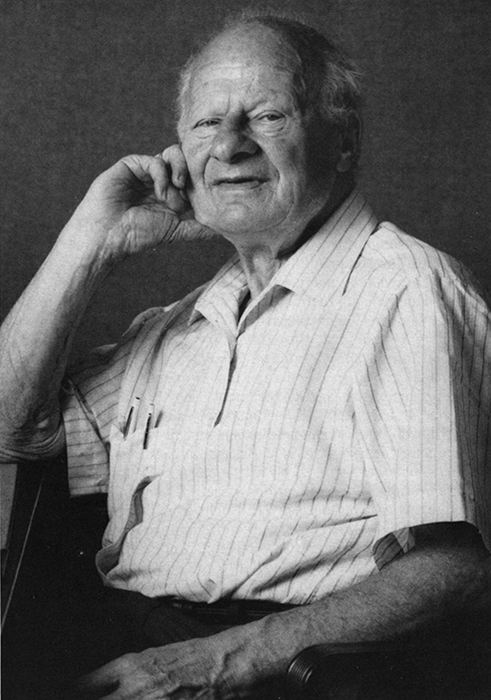
This popular version of history is nonsense, Hans Bethe, the physicist who led the Theoretical Division at Los Alamos during the war, said in a recent interview.[3] Newly declassified material and interviews with several scientists involved in early weapons development contribute significantly to a full understanding of how the Americans, the British, and possibly the Soviets actually obtained the hydrogen bomb. Teller declined to be interviewed.
The key document is a top secret technical history of the U.S. H-bomb development written by Bethe in 1952. It was partially declassified by the U.S. government in response to a Freedom of Information Act request by the authors. This remarkable document demonstrates that within months of Truman’s decision to proceed with the Super, nearly every important assumption about H-bomb design at that time—and known to Fuchs—had been found to be wrong. Bethe wrote: “If the Russians started a thermonuclear program on the basis of the information received from Fuchs, it must have led to the same failure.”[4] Bethe’s historical memorandum details how the classical Super design was abandoned after serious work on it began and how a series of “accidental” events, occurring long after Fuchs left Los Alamos, led to an entirely new concept for thermonuclear weapons, known today as the Teller-Ulam hydrogen bomb.
If the information about the H-bomb known to Fuchs was misleading and if subsequent U.S. H-bomb development was in part serendipitous, did the Soviet Union’s rapid acquisition of H-bomb technology occur through entirely independent effort, or was some other source of information about the U.S. program available to them? Our research shows that the essential secret of the Teller-Ulam invention—that the thermonuclear reactions had occurred under conditions of strong compression—may well have been transmitted to the Soviets in the fall out debris from the first U.S. H-bomb test. The fact that atmospheric fallout can contain important secret information is supported by our finding that the British did learn the key to H-bomb design from analysis of debris of the 1955 Soviet test—debris which, ironically, the United States provided them.
One of the accusations raised against Oppenheimer during his security hearings was that he, along with Vannevar Bush, had urged Secretary of State Dean Acheson to delay the United States’ first hydrogen bomb test, code-named Mike. However, their concerns about information contained in the fallout debris now appear to be well-founded: “We thought that [the Soviets] would get a lot of information out of it.”[5] U.S. H-bomb tests not only prodded other nuclear powers to develop thermonuclear technology, but provided them with essential information to duplicate it.
Although the United States built the H-bomb in part because of claims that Fuchs gave the Soviets the secrets, he could only have given the Soviets the erroneous assumptions and incomplete calculations of Teller’s Los Alamos group. If there was a transfer of H-bomb secrets, it was by those, including Teller himself, who insisted on the earliest possible test of the new H-bomb.
The new Bethe history
The recently released 15-page “Memorandum on the History of the Thermonuclear Program” by Bethe is dated May 28, 1952, about five months prior to the first successful test of the U.S. H-bomb. This memorandum should not be confused with Bethe’s 1954 history published in 1982 in Los Alamos Science.[6] While the 1954 account, intended for public release, provided a general history of thermonuclear weapons research, the 1952 history is more technical and specific, intended for senior government officials with the highest clearances.
Bethe’s intention in preparing the memorandum, he wrote, was to correct two erroneous but “apparently widespread” impressions: “(1) that the progress of this program, since the Presidential directive of January 1950, has been slower than was technically feasible, and (2) that the Russians may have been able to arrive at a usable thermonuclear weapon by straightforward development from the information they received from Fuchs in 1946.” The first point was in response to the well-known schism that erupted between Teller and others at Los Alamos concerning the timing of the first H-bomb test. Bethe’s memorandum continued: “In September 1951, when the initial calculations had shown promise, disagreement arose between Teller and the rest of the Los Alamos Laboratory as to the date for a full-scale test. Los Alamos proposed November 1952, whereas Teller demanded a date four to six months earlier. It will be shown in the following that Teller’s date could not have been met.”
Although significant words and phrases of the 1952 memorandum remain classified, it is nevertheless possible to unambiguously interpret most of the text. In many instances text expurgated in one section of the memorandum is repeated intact elsewhere or in the completely uncensored cover letter from Bethe to Gordon Dean, then-chairman of the Atomic Energy Commission (AEC). Nevertheless, some parts of Bethe’s history, such as detailed descriptions or quantitative attributes of nuclear weapons, remain classified. Otherwise unattributed quotes in the following account are taken from Bethe’s 1952 memorandum.
Downfall of the classical Super
The 1952 Bethe memorandum clarifies the early technical history of the H-bomb, distinguishing clearly between the unsuccessful Super concept and the successful Teller-Ulam design. It is important to understand the distinction between these two approaches in order to evaluate how information about the latter design may have been transmitted to other nations. The demise of the Super is of interest in assessing Truman’s decision to embark on a crash program. The construction of the Teller-Ulam bomb is of interest because of the distinctive signature of compression in its fallout debris.
The “classical Super,” Teller’s conception of thermonuclear weapons from 1942 until 1950, was essentially a cylinder of liquid deuterium which, when heated, would release great quantities of additional energy by nuclear fusion reactions between pairs of deuterium nuclei. Deuterium, a form of hydrogen with one neutron in its nucleus, is a gas at normal atmospheric temperatures and pressures but can be made into a liquid by cooling to very low temperatures. In the Super, some part of the deuterium would be heated to very high temperatures by a very large exploding fission A-bomb. The locally heated deuterium nuclei would be set into violent motion, undergo nuclear fusion reactions, and communicate enormous amounts of energy to additional nearby nuclei. If this flow of heat energy could propagate the nuclear reactions through the entire cylinder of deuterium, “energies equivalent to 1000 fission bombs or more” could be released. For the Super to work, it would be necessary first to ignite some of the deuterium and second to propagate this heat energy efficiently through the rest of the deuterium. Within months of Truman’s January 1950 decision, both ignition and propagation were determined to be insurmountable problems for the classical Super design.
Although an A-bomb was proposed to ignite the deuterium fuel, the temperature needed to initiate the deuterium-deuterium reaction (many hundreds of millions of degrees[7]) exceeded that available from an atomic bomb. As an attempt to circumvent this difficulty, tritium could be added to some of the deuterium to initiate the deuterium-deuterium reaction. Tritium, a hydrogen isotope with two neutrons, and deuterium react (fuse) at a lower temperature than does pure deuterium. It was hoped that tritium-deuterium reactions could be initiated by an A-bomb and in turn ignite the rest of the deuterium. Tritium would ignite the Super as kindling or lighter fluid helps light a regular fire.
Shortly following Truman’s decision to proceed with the Super, the mathematician Stanislaw Ulam and his assistant Cornelius Everett at Los Alamos conducted work “entirely separate from the [program’s] main theoretical effort.” They “undertook the important task of determining more accurately the amount of T [tritium] required,” Bethe wrote. Their conclusion was that “spectacular” quantities of tritium would be needed, far greater than that assumed by Teller’s group and enough to make “the economic soundness of the H-bomb highly questionable.” The amount of tritium required is important because tritium, unlike deuterium, is very costly and difficult to obtain. Since tritium exists in nature only in trace amounts, it can only be produced in quantity by neutron bombardment in military production reactors and at considerable expense to the nuclear arsenal. The same reactor that can produce a kilogram of tritium can, using the same neutrons, produce approximately 70 kilograms of plutonium, enough for more than a dozen A-bombs. Thus, any tritium needed for the Super would come at the expense of regular A-bombs, a circumstance that had been anticipated by the General Advisory Committee (GAC) of the AEC when they unanimously opposed the development of the Super in late 1949. Teller’s estimates of the amount of tritium required when the crash program was begun were much too low.
In addition to ignition, a second problem for the Super was whether nuclear fusion reactions would propagate through the rest of the liquid deuterium and be self-sustaining, assuming that the deuterium reaction could somehow be ignited in one region. Bethe points out in his 1952 memorandum that the Fermi-Ulam calculations of 1950 indicated that prospects for a propagating nuclear reaction were poor. The cross-sections that regulate the efficiency of the deuterium nuclear reaction were too small.
According to Ulam, “An important part of the story has been overlooked in the official accounts and concerns some quite fundamental work that Fermi and I did following the first calculation of the progress of the reaction, its propagation, and explosion. In numerous joint discussions we outlined the possibilities of propagation, assuming that some way or other (perhaps by the expenditure of large amounts of tritium) the initial ignition could be achieved.”[8] The Fermi-Ulam report stated its unpromising conclusion with great caution. “If the cross-sections for the nuclear reactions could somehow be two or three times larger than what was measured and assumed, the reaction could behave more successfully.” Even this remark underestimates the difficulty of sustaining deuterium burning in the Super since the cross-sections assumed by Fermi and Ulam were reduced further by the measurements of James Tuck in the following year. Evidently the heat energy produced by the nuclear reactions would escape faster from the deuterium than it could be supplied by further reactions—if heat losses exceed heat production, the bomb would be a fizzle.
According to Bethe’s memo, “Barring surprises from [a very detailed computer[9]] calculation, the theoretical work of 1950 had shown that every important point of the 1946 thermonuclear program had been wrong.” Teller has written that Ulam’s calculations were “proof that our ideas about bomb design were wrong,” ”that we were on the wrong track, that the hydrogen bomb design we thought would work best would not work at all.”[10] By the end of 1950, Teller was desperate for a workable H-bomb. A major U.S. weapons program had been initiated on the basis of incompletely considered science.
The realization that the classical Super would not work came just months after Truman’s commitment to a crash program. Although the public disclosure of Fuchs’s espionage was a major factor in rallying support for Truman’s decision, it is now clear that the “secrets” regarding the H-bomb known to Fuchs were worse than worthless. As Bethe noted in his cover letter to the 1952 memorandum, if the Soviets had followed the information received from Fuchs, ”we can only be happy because they would have wasted a lot of effort on a project without military significance.”[11]
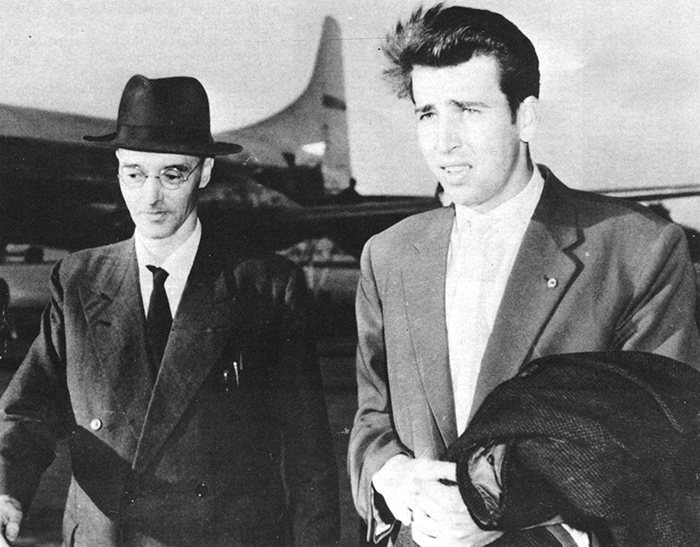
In retrospect it appears that the calculations of Ulam, Everett, and Fermi and the measurements of Tuck could have been completed before Truman’s decision if appropriate scientific priorities had been established. The calculations “could have been done earlier” according to Bethe, because ”the data that they used were available earlier.”[12]
Richard Garwin, who designed the experiment used in Tuck’s cross-section measurements, said that these vital measurements also could have been done earlier. “It seemed to me when I first became acquainted with this program that so much was predicated on the reaction rates that you ought to measure the process. I think some people, maybe Teller, were happier thinking of optimistic cross-sections than getting the facts in the matter.”[13]
Teller urged the United States to embark on a publicly declared crash program to build the Super before these relevant preliminary calculations and measurements had been done. According to Bethe, “nobody will blame Teller because the calculations of 1946 were wrong, especially because adequate computing machines were not then available. But he was blamed at Los Alamos for leading the Laboratory, and indeed the whole country, into an adventurous program on the basis of calculations which he himself must have known to have been very incomplete. The technical skepticism of the General Advisory Committee of the AEC on the other hand had turned out to be far more justified than the GAC itself had dreamed in October 1949.”[14]
The Teller-Ulam bomb
Compression turned out to be the key to resolving the classical Super impasse. If the deuterium is compressed to high densities, the energy released by the fusing deuterium nuclei, shared in a complex manner with electrons and the radiation, would not be lost as rapidly. The higher energy efficiency resulting from compression replaced the need for large amounts of tritium, allowed a self-sustaining reaction in the deuterium, and resulted in a radically different and ultimately successful approach to the H-bomb.
Although it had occurred to Teller and others, perhaps as early as 1946, “that compression of the fusion fuel could be of great help,”[15] it was not ”known to Teller how to achieve that compression. He thought of TNT.”[16] Compressions generated by chemical explosives are insufficient to appreciably improve the efficiency of the fusion reactions.
A remarkable means of obtaining extreme compressions in the deuterium was first conceived by Ulam in connection with his work on increasing the efficiency of fission bombs.[17] His idea was to focus the mechanical energy released from an ordinary fission bomb onto the deuterium by appropriately directing the shock wave of high pressure that explodes away from the fission bomb through the surrounding material. In this manner the deuterium could be profoundly compressed. When Ulam told Teller of his scheme in their famous breakthrough meeting in early 1951, Teller proposed a variant in which radiation from the primary fission bomb, rather than the shock wave, would cause a convergence or implosion of energy to compress the deuterium. In their joint report, Ulam and Teller referred to these compression schemes as “hydrodynamic lenses and radiation mirrors.”[18] Although the latter scheme was finally adopted, the deuterium could be sufficiently compressed by either means to permit a secondary fusion bomb of unprecedented energy.
According to Bethe’s 1952 cover letter, “the new approach used high densities of deuterium rather than high temperatures and was based on two separate discoveries, (a) that high densities would be useful and (b) that they could be achieved by a radiation implosion.”
Fortuitously and without realizing its potential, the idea of transfer by radiation had been incorporated prior to the Teller-Ulam work as an aspect of the design of the “George” atomic test (in the Greenhouse series). In this design, a small amount of tritium and deuterium was to fuse together after being heated and compressed by radiation from a fission bomb, although the energy released by the fusion reactions would not dominate. This experiment was “designed primarily to confirm … the burning of D-T [deuterium and tritium], about which there had never been serious doubt,” according to Bethe’s memorandum. In addition, it was to ”try out … a particular mechanism [in which] the energy was conducted by radiation from a fission bomb.” It was “largely accidental that just this mechanism was chosen” since two other competing mechanisms had been under consideration. The George test was, according to one physicist, “more of a public relations stunt than a genuine experiment, because everyone knew beforehand that it was pretty certain to work; using a huge atomic bomb to ignite the little vial of deuterium and tritium was like using a blast furnace to light a match.”[19] Teller’s variant on Ulam’s scheme extrapolated from the use of energy transfer by radiation in the George test design.
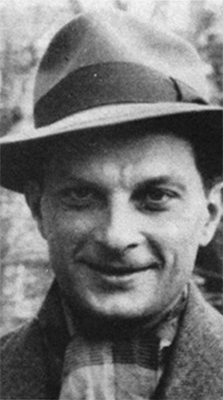
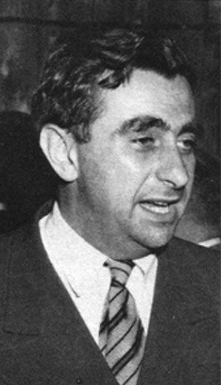
The Teller-Ulam idea to use ”radiation from a fission explosive … to transfer energy to com press and ignite a physically-separate component containing thermonuclear fuel”[20] was a radical departure from the classical Super design. In the cover letter to his 1952 memorandum Bethe remarked that ”the H-bomb designs for which we now expect success are almost exactly the opposite of those proposed in 1946.”
The final Teller-Ulam design, as described in Bethe’s memorandum, “came about by a series of accidents, the accidental choice of one particular device for the Eniwetok [George] test rather than two others, the ingenious extrapolation by Teller,” and Ulam’s key invention of using a fission primary to create a secondary compression “just at the right time.” Bethe continued: “None of these three steps was at all an obvious, logical development which would occur in every thorough scientific investigation of the problem. On the contrary, the results of the calculations of Ulam and Fermi (which were logical steps in the program) would have led nearly every scientist to give up the thermonuclear program altogether.” Because of the somewhat accidental nature of the Teller-Ulam discovery, Bethe noted, “It would be a most remarkable coincidence if the Russian project had taken a similar course.
Fallout
Although the Teller-Ulam design was successful as a bomb, it was flawed as an instrument of national security. With each atmospheric test the Teller-Ulam secondary left a telltale signature in the fallout debris. A careful study of fallout by competent scientists can provide extremely useful information including, in Bethe’s words, the “key to the whole business,” that an enormous compression had occurred in the secondary, far greater than that possible with chemical explosive.[21]
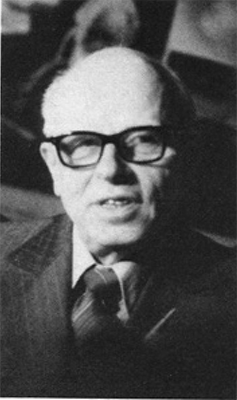
In a recent interview, Bethe confirmed that the Mike debris could “definitely” have been advantageous to the Soviets in learning “that there was a secondary implosion, and that means higher density and [Andrei] Sakharov could very easily have drawn the conclusion that … the reaction took place in compressed material from the ratio of various isotopes. After all, we now know that Sakharov was involved in this, but even without him, the Russians had very competent people in this business. A competent group working on this subject can analyze debris very, very effectively.”
Asked if the three-year period between the Mike test and the detonation of the first Soviet H-bomb in 1955 was about the expected interval required for the Soviets to assimilate the fallout information and to design and construct their own bomb, Bethe replied, “You are exactly right. That’s exactly what I think.”[22]
This realization gives new meaning to previously enigmatic statements by Oppenheimer and others as well as the effort by Vannevar Bush, who urged the Secretary of State to put off the test of the first U.S. H-bomb, “Mike.”
Vannevar Bush claimed the test “would be of advantage to Russia in the prosecution of their program.”[23] Oppenheimer, referring to concerns of an advisory panel to the secretary of state, said, ”We thought that they [the Soviets] would get a lot of information out of it.”[24] During Oppenheimer’s security hearings in 1954, at which his opposition to the Mike test was raised as evidence that he was a security risk, Vannevar Bush testified that he was “sure” that the Mike test would be of value to the Russians: “I am sure of it for one reason because when we reviewed the evidence of the first Russian atomic explosion, we didn’t find out merely that they had made a bomb. We obtained a considerable amount of evidence as to the type of bomb, and the way in which it was made.”[25] Bush had headed a panel that reviewed the findings of U.S. scientists who analyzed the fallout debris from the Soviet A-bomb test in 1949. In 1953, U.S. scientists determined from fallout studies that the Soviet explosion in August of that year was not a true H-bomb, as affirmed by Bethe: “as I know very well because I was chairman of the committee analyzing the Russian [fallout].”[26]
Herbert York, former director of Lawrence Livermore National Laboratory, has written that it is “very probable” that the Soviets would have produced their H-bomb “very much later” if the United States had not tested its H-bomb. In particular, York maintains that “a careful analysis of the radioactive fallout from the Mike explosion may well have provided them with useful information concerning how to go about it. Writings and discussions by and about Igor Kurchatov make very clear his special interest in the fallout from U.S. nuclear tests and the information that could be learned from it, and Oppenheimer, in fact, had anticipated the useful ness of fallout for exactly this purpose.”[27] (Kurchatov was a prominent scientist who led the Soviet atomic and H-bomb programs.)
Most of the fallout information revealing the high densities experienced by the secondary is contained in the ratios of isotopes among the heaviest elements,[28] especially any evidence that these nuclei were exposed to unusual excesses of neutrons. At the center of the H-bomb explosion great quantities of neutrons are created and their density is significantly increased by the pre-explosive compression. Any heavy nucleus exposed to such extremely high neutron densities would rapidly absorb neutrons and transform into isotopes dramatically different from those found in nature. One outcome is the creation of transuranic elements with atomic number Z greater than that of uranium 92.
According to Richard Garwin, the fallout would contain “high Z materials and what not, which would be the indication of compression with its very high neutron densities.”[29] This is supported by Bethe’s remark: “You look at the isotopes and elements which are produced, and well-informed scientists like Sakharov … might have come to the conclusion that the material was compressed, which is the key to the whole business.”[30]
In a later test of an improved Mike, U.S. scientists “measured very carefully all the transuranics which they could form and they got certainly up to Fermium, [atomic number] 100, and I think a little higher.”[31] In fact, the new elements Einsteinium and Fermium were discovered for the first time[32] in neutron-irradiated uranium from the Mike fallout. In addition, the nuclear physicist Alastair Cameron in a 1959 article on the Mike fallout, “Multiple Neutron Capture in the Mike Fusion Explosion,” suggested that the liquid deuterium had been significantly compressed.[33] It is surprising that this sensitive fallout material was made available for examination and publication in the open scientific literature.
By detonating Mike, the United States may have led the Soviets to the correct approach. According to Bethe, “I think this is probably true. I can’t prove it, and I’m sure Sakharov, although he is now free, is not going to tell us.”[34]
Other countries
Could other advanced nations have acquired essential information from fallout debris? “I know this was the case with the British,” Bethe affirms. ”They have said that they looked at the Russian debris and that gave them the idea …. It was the Russian debris of 1955 [the first Soviet H-bomb test] and we were in the habit of giving some of the Russian debris from every Russian test to the British—nobody else but to the British—because we wanted their opinion on what they would conclude from the debris.”[35]
In 1960, Bethe was told by the British that they had discovered the Teller-Ulam compression secret from an analysis of Soviet fallout. According to Bethe, the three-year delay between the Mike test and the Soviet H-bomb is similar to the time that was required for the British to construct their own version of the H-bomb following their study of Soviet fallout. What about other countries now possessing the H-bomb? Bethe notes that “the French didn’t [collect fallout] as well as we did because they collected it on the ground … in the old days. More recently they may have picked it from the air. We didn’t give any debris to the French. It took the French forever to get an H-bomb. They have it but it took them much longer than the Chinese, although the French were way ahead of the Chinese in atomic [fission] bombs. How the Chinese got it is a puzzle to which I have no solution. They got it very quickly.”[36]
Conclusion
Bethe’s 1952 memorandum clearly describes the complete and rapid failure of the classical Super H-bomb concept following the publicly announced presidential commitment for its development. Although the Fuchs espionage in part stimulated the Super project, in Bethe’s view, the Soviets could only have been led astray by any information that Fuchs may have provided them about the classical Super. The successful Teller-Ulam design was unlike the Super in every important respect. The Super project had begun before its scientific feasibility was established. In this particular instance, by serendipity and scientific ingenuity, an H-bomb was created and the desired end result was achieved. However, more recent experience, including the funding of the Strategic Defense Initiative, demonstrates that massive federal commitments to incompletely considered technologies can have less productive outcomes.
It was in the fallout, not in any information Fuchs may have transmitted, that other countries may have found the H-bomb secret. As Bethe was told, British scientists did in fact exploit information in fallout debris from the Soviet H-bomb tests, collected and provided to them by the United States, to construct their own H-bomb. The same information was there in the U.S. fallout for the Soviets to examine. Whether the Soviets took advantage of this fallout information we do not know—that it was available to them to do so is beyond dispute.
Those who advocated the earliest possible atmospheric test of the new H-bomb, particularly Edward Teller, may have helped propagate important bomb design information, especially concerning the compression of deuterium. In referring to his opposition to the atmospheric test ban at the Senate hearings of 1963, Teller later regretted one omission: “I failed to mention an important argument against the treaty. Atmospheric experiments produced a great deal of information about the nature and direction of Soviet progress. With the onset of underground testing, that source of knowledge dried up completely.”[37] Of course the communication of military secrets as fallout works in both directions.
The first hydrogen bomb was exploded by the United States just three days before the 1952 presidential election. Vannevar Bush, concerned about information contained in the fallout and an advocate of a test ban for thermonuclear bombs, had urged the secretary of state not to go forward with the Mike test as scheduled. His 1954 explanation still has a powerful ring: “I felt strongly that that test ended the possibility of the only type of agreement that I thought was possible with Russia at that time, an agreement to make no more tests. For that kind of an agreement would have been self-policing in the sense that if it was violated, the violation would be immediately known. I still think we made a grave error in conducting that test at that time, and not attempting to make that type of simple agreement with Russia. I think history will show that was a turning point that when we entered into the grim world that we are entering right now, that those who pushed that thing through to a conclusion without making that attempt have a great deal to answer for.”[38]
This article is abridged from an account which can be obtained from Daniel Hirsch, Committee to Bridge the Gap, 1637 Butler Ave., Los Angeles, CA 90025
*********************************
SIDEBAR: Who was Klaus Fuchs?
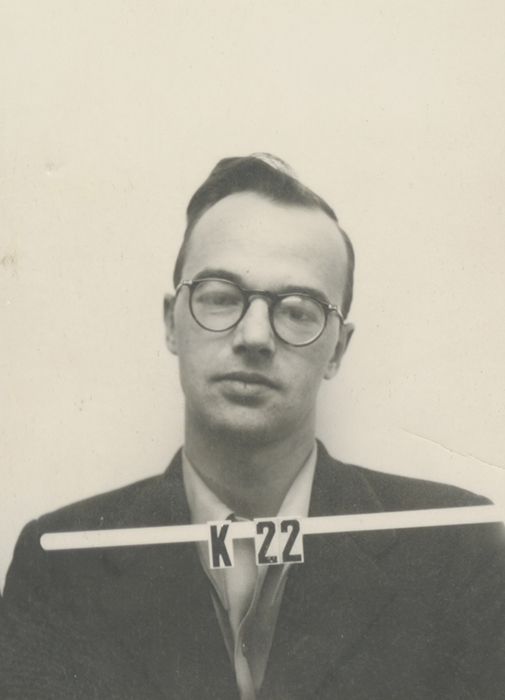
While working as a scientist at Los Alamos during World War II, Klaus Fuchs revealed to the Soviet Union, a war-time ally, critically important top secret information on the design and construction of atomic (fission) weapons. This information is thought to have accelerated the Soviet development of atomic bombs by one or perhaps two years. Following the discovery of this espionage, Fuchs was imprisoned for nine years in Britain and in 1959 was released to East German authorities. Fuchs resumed his scientific work as deputy director of the Institute for Nuclear Physics near Dresden, until retiring in 1979. He received many public and scientific honors from the East German government and served on the Communist Party Central Committee. He died in 1988.
While a student at the University of Kiel in 1932, young Fuchs joined the Communist party, the only significant political group in Germany that continued to resist the emergence of the Nazi government. Shortly after Hitler was elected in early 1933, Fuchs narrowly avoided arrest by the Gestapo and fled to England to continue his studies in physics. Like many other students at British universities at that time, Fuchs made no secret of his active participation in communist organizations. Such affiliations were not particularly unusual and in any case did not prevent Fuchs from being employed in 1941 by Rudolph Peierls in Birmingham to work on highly secret research related to the feasibility of a ”uranium bomb.” This group of scientists headed by Peierls and Otto Frisch demonstrated for the first time the possibility of a fast-fission uranium 235 bomb. By the time Fuchs became a naturalized British citizen in 1942 he was already passing secret information to Soviet intelligence agents. As Fuchs became more involved in weapons physics, he subsumed his political orientation into his reticent and uncommunicative personality.
Fuchs was a member of a group of British atomic scientists invited to join the work at Los Alamos in 1944. Although Fuchs was not among the first-rank scientists at Los Alamos, he clearly was an unusually gifted and industrious worker, and with time he acquired a complete understanding of the implosion and gun-type designs for fission bombs. As a valued member of the scientific team, Fuchs remained at Los Alamos throughout the war, departing for Britain June 15, 1946. It was during his last few months at Los Alamos that Fuchs learned about the design and status of the “Super” bomb.
Two recent biographies, Norman Moss’s Klaus Fuchs, the Man Who Stole the Atom Bomb and Klaus Fuchs, Atom Spy, by Robert C. Williams, review the career of this enigmatic nuclear physicist who betrayed his fellow scientists and his adopted nation.
—D. H., W. G. M.
Endnotes
[1] Edward Teller et al., “Report of Conference on the Super,” LA-575, Los Alamos Scientific Laboratory, 1950.
[2] Edward Teller, Better a Shield than a Sword (New York: Free Press, 1987), p. 75.
[3] Interview with Hans Bethe, Feb. 10, 1987.
[4] Hans Bethe, “Memorandum on the History of the Thermonuclear Program,” May 28, 1952, Department of Energy Archives; obtained pursuant to an FOIA request by the authors, May 30, 1984, and appeal Aug. 30, 1984.
[5] J. Robert Oppenheimer, “In the Matter of J. Robert Oppenheimer,” Transcript of Hearing before Personnel Security Board of the AEC (Washington, D.C.: U.S. Government Printing Office, 1954) p. 248.
[6] “Comments on the History of the H-Bomb,” Los Alamos Science (Fall 1982), p. 43; William Broad, “Rewriting the History of the H-Bomb,” Science, vol 218 (Nov. 19, 1982), pp. 769.
[7] AEC Thermonuclear Weapons Program Chronology, p. 13, Department of Energy Archives.
[8] Stanislaw M. Ulam, Adventures of a Mathematician (New York: Charles Scribner’s Sons, 1976), p. 218.
[9] Bethe indicated in his 1952 memorandum that the Fermi-Ulam calculations were “not definitive” and the final decision about the propagation of fusion reactions in liquid deuterium will only come when a computer can include all important processes. Indeed, the authors understand that such a detailed computer calculation performed many years later has indicated that a self-propagating reaction may be marginally possible, but the ignition problem would remain unsolved.
[10] Edward Teller, The Legacy of Hiroshima (New York: Doubleday, 1962), pp. 47-48.
[11] Cover letter to 1952 Bethe memorandum, Department of Energy Archives. The letter was obtained by David Rosenberg.
[12] Interview with Hans Bethe, Jan. 5,1989
[13] Interview with Richard Garwin, Jan. 22, 1989.
[14] Hans Bethe, Los Alamos Science, 1982, p. 47.
[15] Edward Teller, “Scientists and National Defense: An Open Letter to Hans Bethe,” Policy Review (Winter 1987), p. 20.
[16] Bethe interview, Jan. 5,1989.
[17] Ibid. Bethe says: “Ulam had the idea of using a second compression, that is, having an ordinary bomb and using that to compress a second device and getting fission from that second device.”
[18] Edward Teller and Stanislaw M. Ulam, “On Heterocatalytic Detonations I,” Los Alamos Report LAMS- 1225 (Mar., 9, 1951). Thomas Cochran and Robert S. Norris brought this to the authors’ attention.
[19] Robert Jastrow, “Why Strategic Superiority Matters,” Commentary, vol. 75 (March 1983), p.27.
[20] Official Declassification Action of the Department of Energy implemented in Sept. 1980 by Duane C. Sewell, Assistant Secretary of Energy for Defense Programs; as cited in Chuck Hansen, U.S. Nuclear Weapons: The Secret History (New York: Crown, 1988), p.29.
[21] Bethe interviews, Feb. 10 1987 and Jan. 5 and 27, 1989; Garwin interview, Jan. 22, 1989.
[22] Bethe interview, Feb. 10, 1987.
[23] Vannevar Bush,”In the Matter of J. Robert Oppenheimer,” Transcript of Hearing before Personnel Security Board of AEC, U.S. (Washington, D.C.: Government Printing Office, 1954), p. 563.
[24] J. Robert Oppenheimer, Transcript of Hearing, p. 248.
[25] Vannevar Bush, Transcript of Hearing, p. 564.
[26] Hans Bethe, Los Alamos Science.
[27] Herbert York, The Advisors: Oppenheimer, Teller, and the Superbomb (San Francisco: W.H. Freeman and Co., 1976), p. 100.
[28] Bethe interviews, Feb. 10,1987, and Jan.5 and 27, 1989.
[29] Garwin interview.
[30] Bethe interview, Feb. 10, 1987.
[31] Bethe interview, Jan. 27, 1989.
[32] A. Ghiorso et al., Physical Review, vol. 99 (1955), p. 1048.
[33] Alastair G. W. Cameron, Canadian Journal of Physics, vol. 37, (1959), p. 322. See also David W. Dorn, Physical Review, vol. 126, (1962) p. 693.
[34] Bethe interview, Feb. 10, 1987.
[35] Bethe interview, Jan. 5, 1989.
[36] Ibid.
[37] Edward Teller, Better a Shield than a Sword, p.113.
[38] Vannevar Bush, Transcript of Hearing, p.562.
Together, we make the world safer.
The Bulletin elevates expert voices above the noise. But as an independent nonprofit organization, our operations depend on the support of readers like you. Help us continue to deliver quality journalism that holds leaders accountable. Your support of our work at any level is important. In return, we promise our coverage will be understandable, influential, vigilant, solution-oriented, and fair-minded. Together we can make a difference.
Keywords: Edward Teller, J. Robert Oppenheimer, Klaus Fuchs, atmospheric testing, fallout, h-bomb, nuclear weapons, spy
Topics: Magazine, Nuclear Weapons
Get alerts about this thread
0 Comments
Oldest

Daniel Hirsch
Daniel Hirsch (1950-2025) was a former director of the Program on Environmental and Nuclear Policy at the University of California, Santa Cruz, and ... Read More

William G. Mathews
William G. Mathews is professor of astrophysics at the University of California, Santa Cruz. ... Read More

ALSO IN THIS ISSUE